Following the fall of Sheikh Hasina's government, the ties between Bangladesh and India confronted challenges. Nevertheless, with the Bangladesh National Party (BNP) triumphing in the general elections, dialogues about potential bilateral relations are gathering momentum once more.
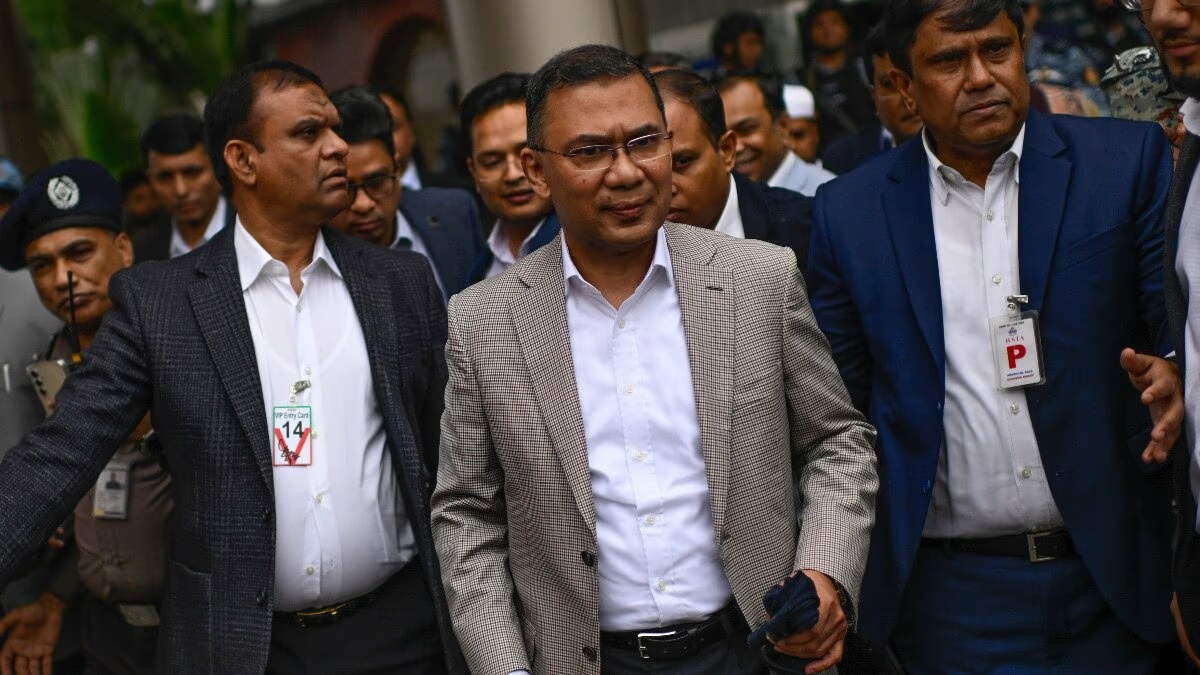
To delve into this topic, India Today engaged in a conversation with Humayun Kabir, the International Relations Joint Secretary of the BNP, known to be a close ally of the newly elected Prime Minister Tarique Rahman. Find the comprehensive interaction in the Q&A format below.
Question:
How do you perceive the relations between India and Bangladesh after BNP's historic victory, especially considering the past year and a half's tensions between the countries?
Answer:
The people of Bangladesh have expressed their faith in the leadership of Tarique Rahman with a decisive two-thirds majority. It's a clear mandate. However, India needs to acknowledge that today's Bangladesh isn't the same as before. With Sheikh Hasina and the Awami League no longer in power, India should consider a 'reset' in its relations. If India advances with this understanding, we too are ready to improve relations with positive intentions.
Question:
You mentioned a 'reset'. Does this directly pertain to Sheikh Hasina's presence in New Delhi?
Answer:
We don't desire activities from Indian soil that destabilize Bangladesh. If Sheikh Hasina involves in such activities while in India, and if the Indian government does not intervene, it becomes a matter of concern. India must refrain from supporting any form of instability.
Related Reading:
After the election victory, Tarique Rahman's first statement declares respect for the people's mandate.
Question:
Will seeking Sheikh Hasina's extradition become a priority for the BNP government?
Answer:
Matters concerning Sheikh Hasina will remain within the judiciary's domain. Any legal process will proceed transparently. The court's directive will guide government actions. While there is an extradition treaty between India and Bangladesh, the final decision will be grounded in judicial proceedings.
Question:
Does Prime Minister Narendra Modi's call to congratulate Tarique Rahman and Foreign Minister S. Jaishankar's visit to Dhaka indicate a new era's onset?
Answer:
We interpret these moves as positive signals. Our region requires stability and cooperation. We are neighbors, and collaboration should be the norm. Challenges will persist, but if addressed pragmatically, both nations can progress.
Question:
India is concerned that Bangladesh shouldn't be used for anti-India activities and religious extremism. What's your take on this?
Answer:
: Any form of extremism is unacceptable. Both countries should enhance security cooperation and exchange information. Communal harmony in Bangladesh is commendable. Dwelling on past events will hinder progress. We must focus on future aspirations.
Question:
India has expressed concerns about the safety of Hindu minorities in Bangladesh. What will be your government’s stance?
Answer:
Communal harmony in Bangladesh is robust. No temples were harmed during the power transition. We won't tolerate any communal tension. If both countries get caught up in allegations, no solution will emerge. It's best for each nation to address its internal issues and prioritize bilateral cooperation.
Related Reading:
Hope for revived friendship after Bangladesh's election results, experts see it as 'Good News' for India.
Question:
Will Tarique Rahman choose India for his first bilateral visit after taking the oath?
Answer:
The primary focus is on domestic economic growth and addressing internal challenges in line with the public mandate. Regional visits will follow, and India is among the countries with which we seek to build strong bilateral relations.