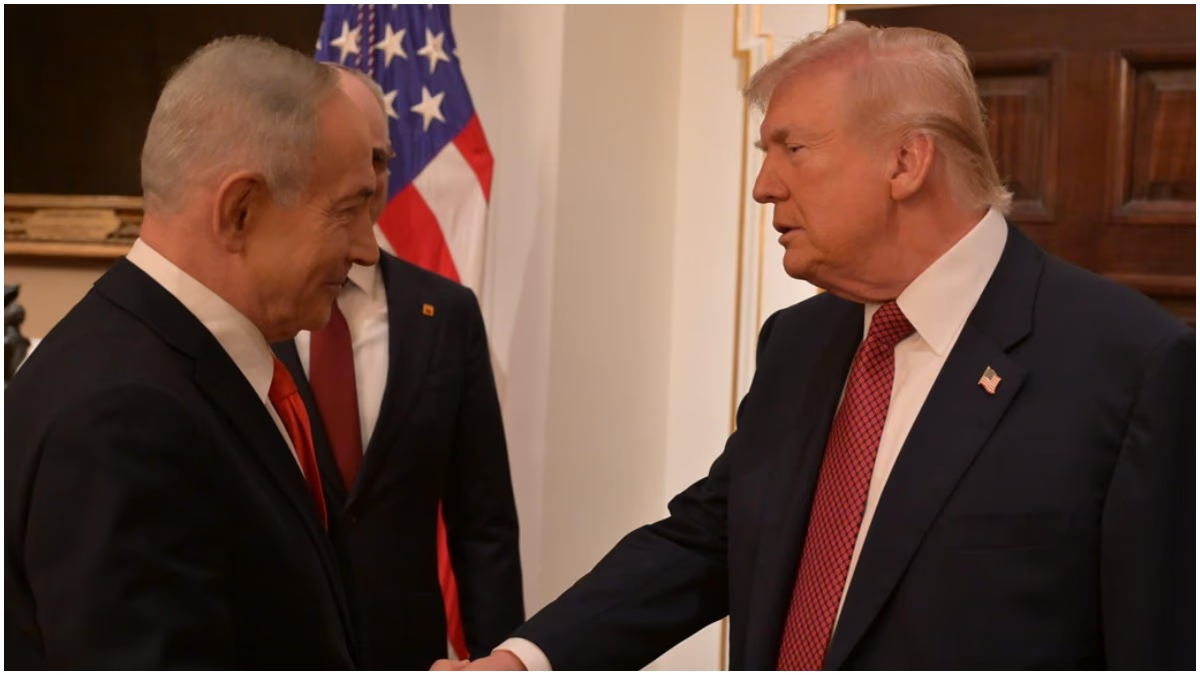
In a significant diplomatic exchange, Israeli Prime Minister Benjamin Netanyahu met with U.S. President Donald Trump on Wednesday. The purpose of this important meeting was to firmly present Israel's viewpoint on the ongoing talks with the United States regarding Iran's nuclear and missile initiatives. This visit marks Netanyahu's seventh trip to the United States since Trump's re-election, showcasing the strong ties between the two nations.
This meeting occurs against the backdrop of recent discussions between Iranian and American officials in Oman about a possible agreement, although substantial progress has yet to be made. Iran seeks to limit talks solely to its nuclear program. Before meeting with Trump in the Oval Office, Netanyahu also engaged in discussions with U.S. Secretary of State Marco Rubio at Blair House on Wednesday morning.
Moreover, on Tuesday evening, key players in the U.S.-Iran negotiations, including Steve Witkoff, a special envoy and Trump's advisor and son-in-law Jared Kushner, met with Netanyahu. Israel harbors concerns that the Trump administration might pursue a limited agreement with Iran that addresses only the nuclear program, potentially overlooking issues such as ballistic missile capabilities and regional support for groups like Hamas, Hezbollah, and the Houthis.
Explore More: Has Another Muslim Country Built a Nuclear Bomb? Iranian Commander's Claim, U.S. Silence, and Blackmail Politics!
Before departing from Tel Aviv, Netanyahu stated, 'I will lay down the fundamental principles concerning these talks, which are crucial not just for Israel but for everyone seeking peace and security in the Middle East.' Just hours before Netanyahu's meeting with Trump, the Israeli Defense Ministry announced successful tests in collaboration with the U.S. Missile Defense Agency of the David's Sling air defense system, jointly developed by Israel and the United States. This system was instrumental during the 12-day conflict in June to intercept incoming Iranian missiles.
It's noteworthy that Israel, alongside the U.S., targeted three Iranian nuclear sites, causing substantial damage. In response, Iran has prevented international monitors from accessing its highly enriched uranium reserves and bombed sites. In preparation for any necessary action, the U.S. has increased its military presence in the region to keep strategic options open against Iran.
Read Also: Waving Iran's Flag, Supreme Leader's Image... Millions Gather at Tehran's Azadi Square, Read the Ground Report
The Gulf nations have warned that any attack could ignite a widespread conflict. Another round of U.S.-Iran talks is expected later this month. Additionally, U.S. Vice President J.D. Vance, speaking with journalists in Azerbaijan, stated that if no agreement is reached, 'another option remains on the table.' He reiterated the primary focus is to prevent Iran from acquiring nuclear weapons.
Netanyahu also indicated plans to discuss the complex situation in the Gaza Strip, where the U.S.-led 'Board of Peace' and a technical Palestinian committee are working on challenging issues such as disarming Hamas and potential Israeli withdrawal from Gaza. During his meeting with Marco Rubio, Netanyahu formally agreed to join this board, which is scheduled to meet on February 19 in Washington.