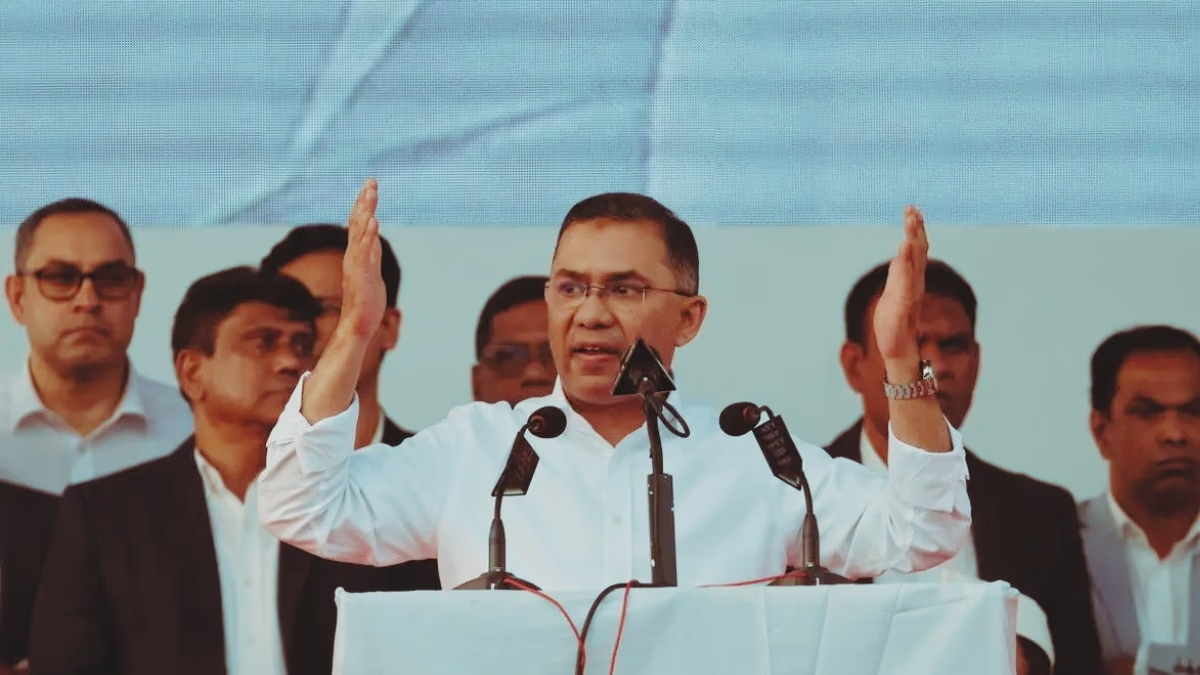
In Bangladesh's political arena, even if Tarique Rahman assumes power with a two-thirds majority, the initial picture may seem clear: a solid mandate, a strong government, decisive leadership. Yet, the on-ground realities are far more complex. A majority brings power on paper, but taking the helm and maintaining it in Bangladesh is another story.
Rahman’s party, the Bangladesh Nationalist Party (BNP), clinched victory in 212 out of 299 seats. Previously, the BNP has been the voice of opposition, organizing protests, boycotting elections, and challenging those in power. Now, they must transition from being critics to being the ruling party, which presents real challenges.
The primary challenge involves navigating Bangladesh's deeply divided domestic politics. The country has been bifurcated for decades, with the Awami League on one side and the BNP on the other. This isn’t just political; it involves ideological, historical, and identity rifts. The legacies of 1971 are seen through very different lenses by each party. The Awami League, during the interim government of Mohammad Yunus, dealt harsh actions to settle scores. Buildings of the Awami League's affiliates faced damage. Yet, will Tarique Rahman escalate hostility? A significant faction of Awami League supporters voted for the BNP instead of their traditional allies, Jamaat. Rahman must assure them they are not marginalized. The Awami League’s strong network can stir tensions if provoked. Rahman needs to offer inclusive politics, not driven by retaliation.
The second key issue is religious extremism. Historically, the BNP has allied with the Bangladesh Jamaat-e-Islami, accused of war crimes in 1971. Many leaders faced penalties. Awami League positioned itself as secular. Often, the BNP has been accused of giving political space to Islamist groups. As Rahman ascends, he must determine whether to distance himself from extremists or reconcile. Distancing might alienate old supporters, while collaborations could invite international scrutiny. It's a precarious choice, but marginalizing Bangladesh's minority Hindus cannot be ignored amidst rising extremism.
The third front involves coordination with the military and police. Bangladesh has a history of military interventions post-1975. Although the democratic framework appears solid, the military's influence remains significant. Sheikh Hasina was acutely aware of this, maintaining balance till her last days in power. A breach of trust between Rahman's government and the military can lead to instability. Legislative majorities do not affect barrack dynamics.
The fourth major question revolves around relations with India. Over the past 15 years, ties with New Delhi have improved, marked by boundary accords and enhanced security cooperation. Yet, BNP's image has been stern regarding India. Rahman must tread carefully. Prime Minister Narendra Modi has already extended engagement by sending condolences through External Affairs Minister Jaishankar after Khaleda Zia's demise, and offering best wishes post-election. A hostile stance against India for domestic politics can hinder trade, border management, and regional cooperation. Ameliorating ties may invite criticism from hardliners. Balancing will be no easy feat.
The fifth challenge is unemployment and economic troubles. Bangladesh's economy experienced impressive growth rates in recent years, but challenges have intensified. Forex reserves face pressure, inflation has surged, and the ready-made garment industry’s dependence is high. Global market downturns hit it hard. An overwhelming youth populace expects jobs annually. Without employment opportunities, dissatisfaction can lead to protests, undeterred by majorities.
The sixth struggle is Rahman’s own identity. Being abroad for extended periods, embroiled in allegations of corruption, his critics argue he’s more heir than leader. His mother, Khaleda Zia, witnessed a different political age. Today's Bangladesh is more digital, more aware. The young electorate demands accountability. Rahman must demonstrate he embodies not just past legacies, but visionary futures.
A two-thirds majority can also pose the danger of overconfidence. Weak opposition often breeds factionalism within the government. Power struggles arise over ministerial roles and other issues. The BNP has been out in the cold for a long while. Arrival in power will see myriad claimants. Lose balance internally, and infighting begins. Tarique must ensure unity amongst his ranks.
Media and civil society also play roles. Bangladesh has debated freedom of expression. During Yunus's interim government, it witnessed the ransacking of major media houses. Opting to suppress dissent could tarnish the government internationally. Western nations monitor democratic standards, influencing economic aid and trade agreements.
Foreign policy equilibrium is another challenge. China is a significant infrastructure investor, India a security ally, and the US emphasizes democratic processes. Gulf countries are pivotal for labor. Following Hasina's exile and Yunus's rise, Pakistan's influence entered Bangladeshi politics. Apart from anti-India geopolitics, ties with Pakistan offered no tangible benefits. Rahman must decide his path. “Neither Pindi, nor Delhi,” has been his clarion call, asserting independence from foreign oversight. Yet, defining strategic partners is crucial. A wrong signal can open multiple fronts. Majorities do not shield foreign policy.
Lastly, the referendum presented a substantial challenge to Rahman. 60% voted for a restructuring of Bangladesh's parliamentary and constitutional framework. A powerful committee is set to lay the foundation for a bicameral parliament akin to India's Lok Sabha and Rajya Sabha. The Prime Minister’s powers would be curtailed, with added youth participation through the July Revolution Charter. Rahman must adapt to these changes, whether they align with his vision or not.
Thus, the question is not about Rahman's overwhelming majority. It's about trust. Will Bangladesh's institutions bolster his mandate? Can the economy stabilize? Will extremism be curtailed? Can relations with neighbors be balanced? Any weakness can make the majority seem hollow. The path is long for Tarique Rahman, lined with challenges. Strength in parliament is one thing, earning it on the ground is another. That is the true test.