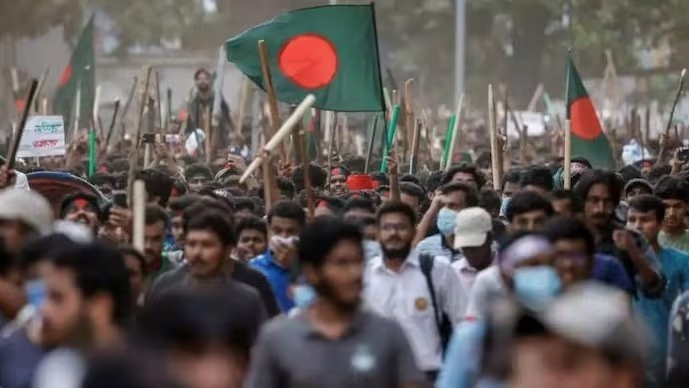
In a landmark declaration for the 13th parliamentary elections in Bangladesh, Jamaat-e-Islami and the National Citizen Party (NCP) have formally announced a political alliance. In a strategic meeting held late Wednesday night in Dhaka, it was decided that Jamaat-e-Islami would contest 179 out of the 300 parliamentary seats, while July student movement leader Nahid Islam’s NCP would contest in 30 seats. However, young leader Tasneem Zara has opposed the coalition and will run as an independent candidate.
The 11-party alliance also includes other Islamic organizations, assigning 20 seats to Bangladesh Khilafat Majlis, 10 seats to Khilafat Majlis, and 2 seats each to Nizam-e-Islami and Bangladesh Development Party.
This union of extremist and youth-led parties ahead of the February 12, 2026 vote suggests a major realignment. Nevertheless, the decision to ally with a contentious party like Jamaat has led to resignations among NCP’s young leaders and female members.
Seat Distribution and Islamic Parties' Dominance
Under the alliance, Jamaat-e-Islami showcased its strength by staking claim to the highest number of seats at 179. Nahid Islam, once the chief coordinator against Sheikh Hasina’s government, has settled for 30 seats under his NCP. The alliance emphasizes unified candidates per seat to prevent scatter of vote banks.
NCP Rebellion and Waves of Resignations
As whispers of the alliance with Jamaat-e-Islami began, dissatisfaction surfaced within the National Citizen Party (NCP). Citing ideological differences, over 13 central leaders have resigned. Young leaders like Tasneem Zara oppose the alliance, planning to contest independently, arguing that this compromise with extremism contradicts the movement’s core values.
Election Battlefield: The 'Hardline' Bloc
This coalition is being viewed as the largest Islamic alliance in Bangladesh's electoral history, bringing together 11 various parties. Political analysts believe that in the absence of Awami League and amidst BNP's (BNP) vibrancy, this third front could profoundly influence election outcomes. The main focus of the alliance is to engage young voters and religious hardliners.