On January 30, 1948, Mahatma Gandhi was assassinated by a gunshot. The world was stunned, not just India. Despite being newly independent for only six months, India found itself in the global spotlight, with media eyes focused on Delhi.
Amidst the trauma of Partition, communal riots, migration, and widespread discontent, the country was already in turmoil. Gandhi's assassination threatened to worsen the situation. One challenge was to prevent anarchy while giving a befitting farewell to a globally revered figure.
Mahatma Gandhi's Funeral at Rajghat
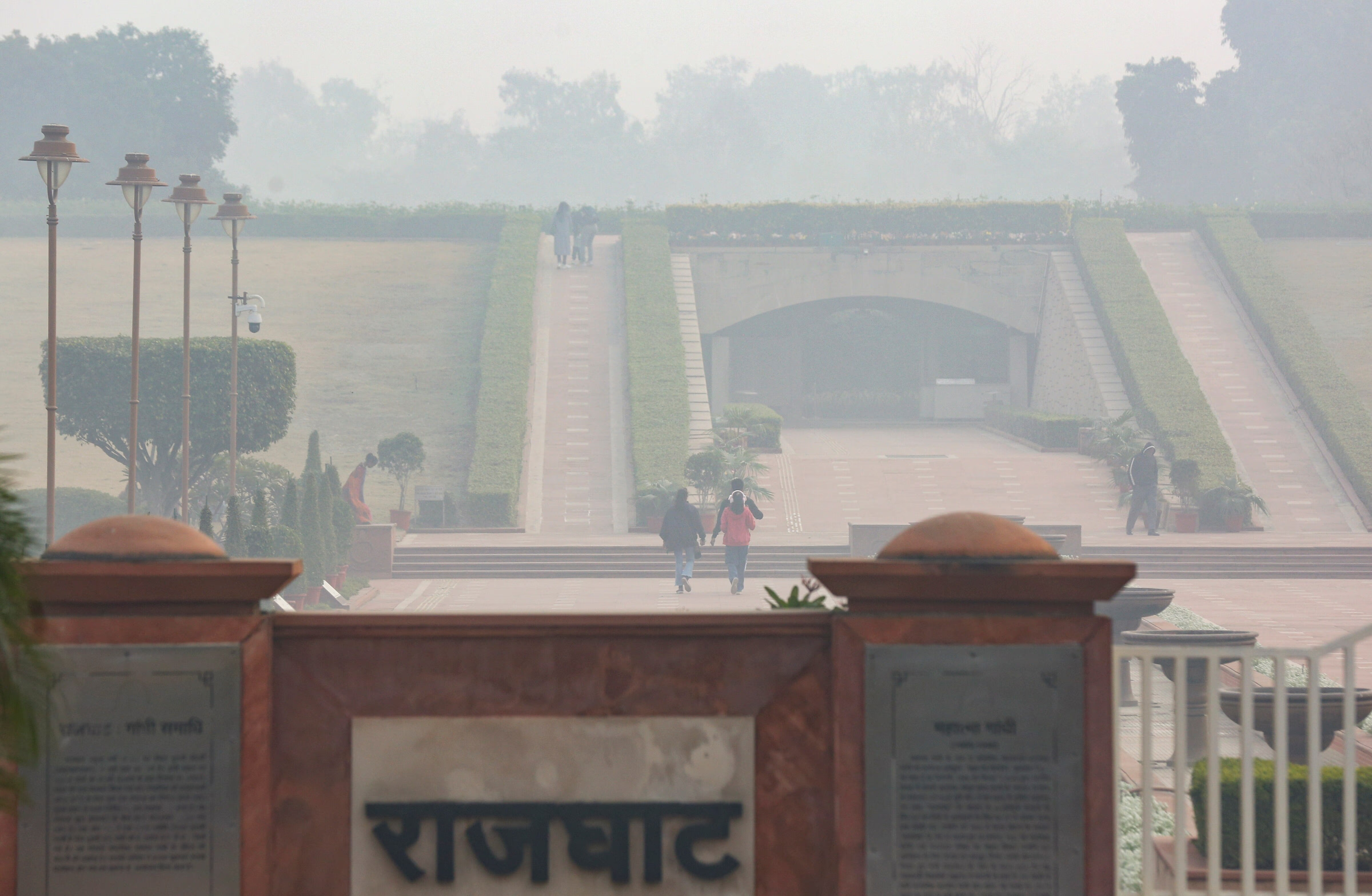
A piece of land by the Yamuna River in Delhi, now known as Rajghat, was chosen for Gandhi's funeral. On January 31, 1948, Gandhi was cremated there, transforming this riverbank into a sacred memorial site. In the days following 1948, Rajghat remained sparse and barren.
This area was an untouched stretch by the Yamuna, earmarked for Gandhi's memorial. About two to three years post-cremation, by 1950, the government took earnest steps to establish Rajghat as a memorial. Prime Minister Nehru personally supervised the project.
Source: aajtak
A Variety of Designs Were Proposed
The quest was on to decide what form the memorial of the advocate of truth, non-violence, and simplicity should take. Designs from around the world poured in, suggesting temples, statues of Gandhi, or styles echoing European elegance. Some depicted Gandhi with a spinning wheel, others in silent prayer. Prime Minister Jawaharlal Nehru showed particular interest.
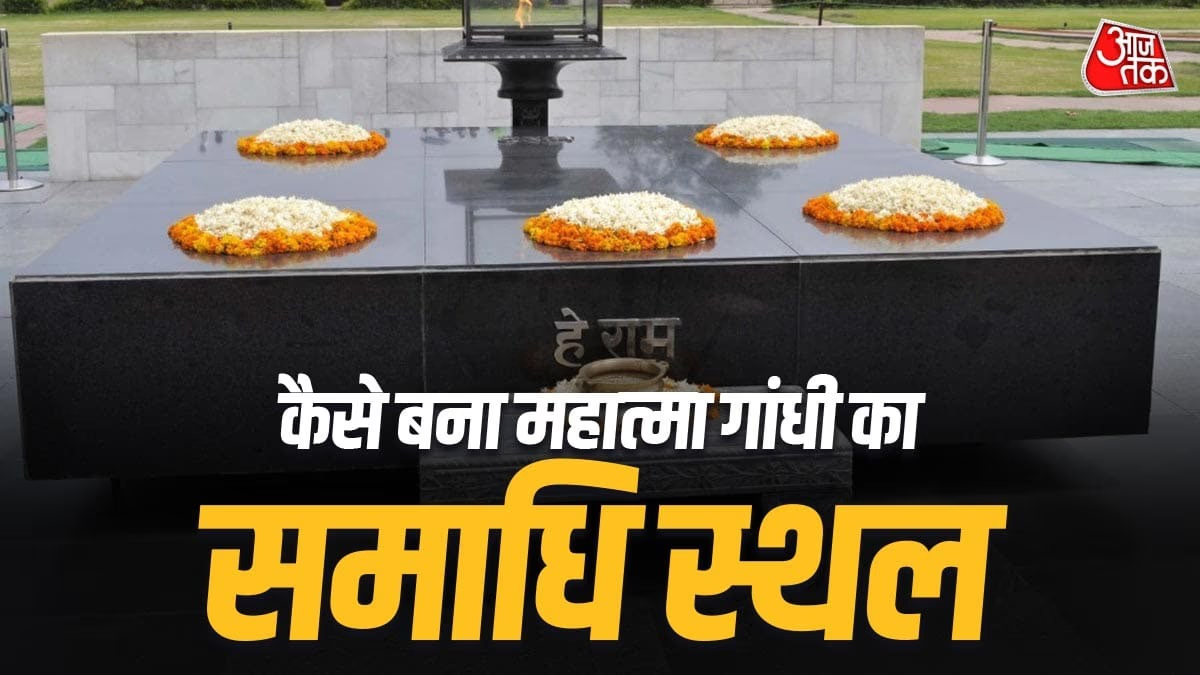
Among these proposals, architect Vanu G. Bhuta's stood out starkly. Eschewing any statue, he envisioned a simple memorial that immediately resonated Gandhi's spirit and ideals. Bhuta's plan called for a square, rectangular platform of black marble with Gandhi’s last words engraved on it. This square was symbolic of a seat or a divine resting place, representing Gandhi's lifetime of wandering, with this spot as his final refuge.
A Monument of Simplicity
The simple design was initially dismissed against the grandeur of the South Indian temple-style gopuram and ornate sculptures, but upon thorough consideration, Bhuta's concept won universal admiration. A square plaque of black marble, inscribed with 'Hey Ram,' now rests at the center.
Nearby, an eternal flame burns softly. The open space, red soil, and lush greenery echo Gandhi’s life of simplicity and love for nature. Prime Minister Nehru found this simplicity profoundly appealing. He chose it. Over time, the area was developed into a large garden. Today, Rajghat is not just a monument but a silent, serene expression of Gandhi's enduring ideals.