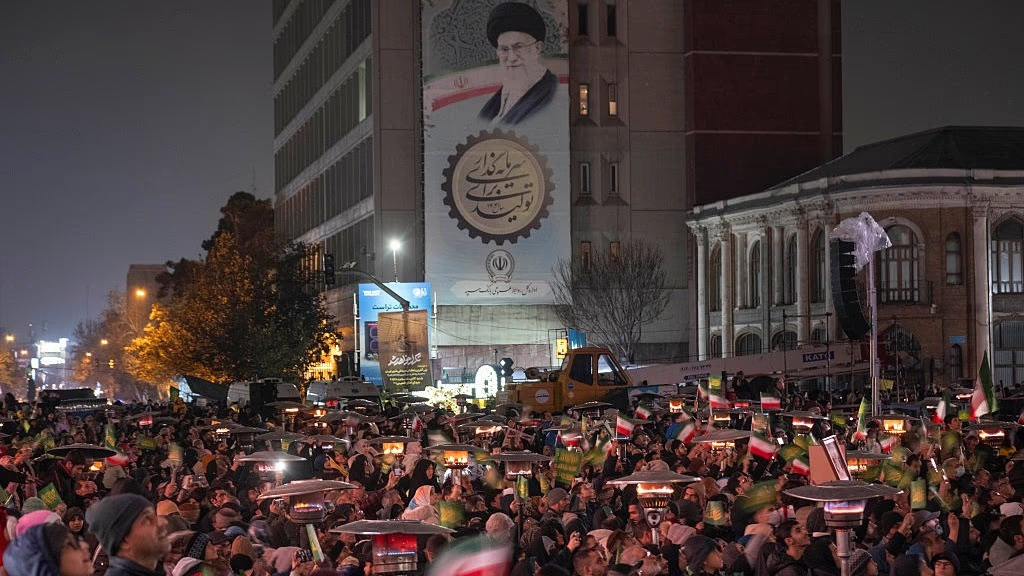
For over two weeks now, Iran has been gripped by protests sparked by a plummeting currency. It all began at the bustling Tehran bazaar on December 28. These initial demonstrations have turned tragic, with numerous fatalities and the detaining of thousands. Amid this turmoil, a war of words has flared between US President Donald Trump and Iran's Supreme Leader, Ayatollah Ali Khamenei.
The shadowy shutdown of internet services and phone lines in Iran has made gauging the protests' scale challenging. However, the Human Rights Activists News Agency based in the USA estimates that the death toll from these relentless protests has reached at least 72, with more than 2,300 detentions. Meanwhile, Iranian state TV attempts to portray control, reporting on security forces' casualties and asserting the situation is under control.
Source: aajtak
Amidst this chaos, Iran's Attorney General Mohammad Movahhedi Azad issued a stern warning—those involved in the protests could be deemed 'enemies of Allah,' a charge punishable by death. Iranian state TV echoed this, stating that anyone assisting 'rioters' would face similar charges.
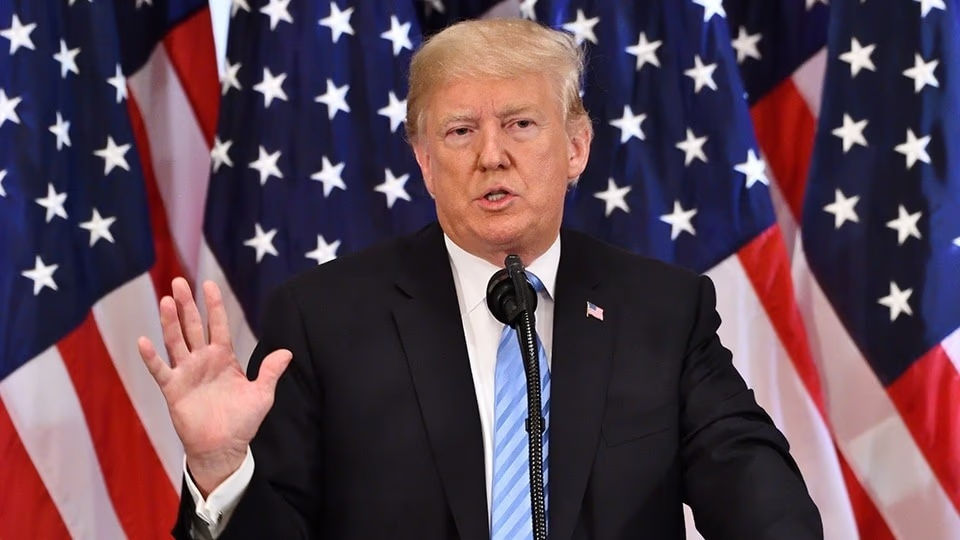
The United States has renewed its warnings. US Secretary of State, Marco Rubio, expressed support for the protesters on X, proclaiming, 'America stands with the brave people of Iran.' In a separate warning, the State Department urged, 'Do not play games with President Trump. When he says he'll do something, he means it.'
What is Iran Trying to Showcase?
In over 50 cities across Iran, massive protests rage, with chants against the government. In stark contrast, Iranian state TV attempts to paint a different picture. The protests have prompted the shutdown of internet and phone lines in Iran. While most countries start the workweek on Monday, Iran begins on Saturday. The protests have led to the closure of schools and universities, with classes moving online.
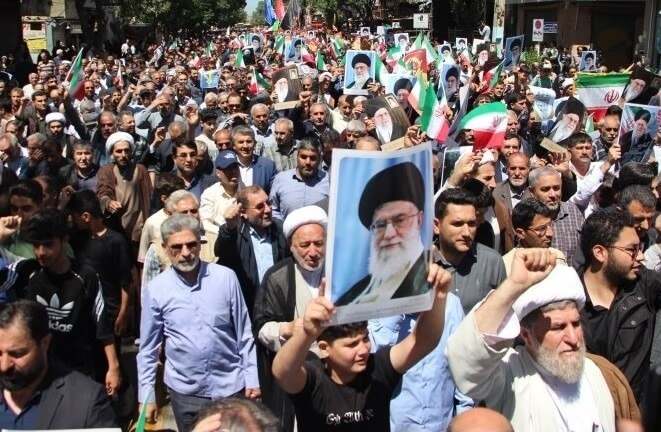
Iranian state TV broadcasts pro-government demonstrations accompanied by the stirring anthem 'Epic of Khorramshahr' by musician Majid Entezami. Played during last year's 12-day conflict with Israel and in videos of women cutting their hair in protest following Mahsa Amini's death in 2022, this anthem evokes deep emotions.
Source: aajtak
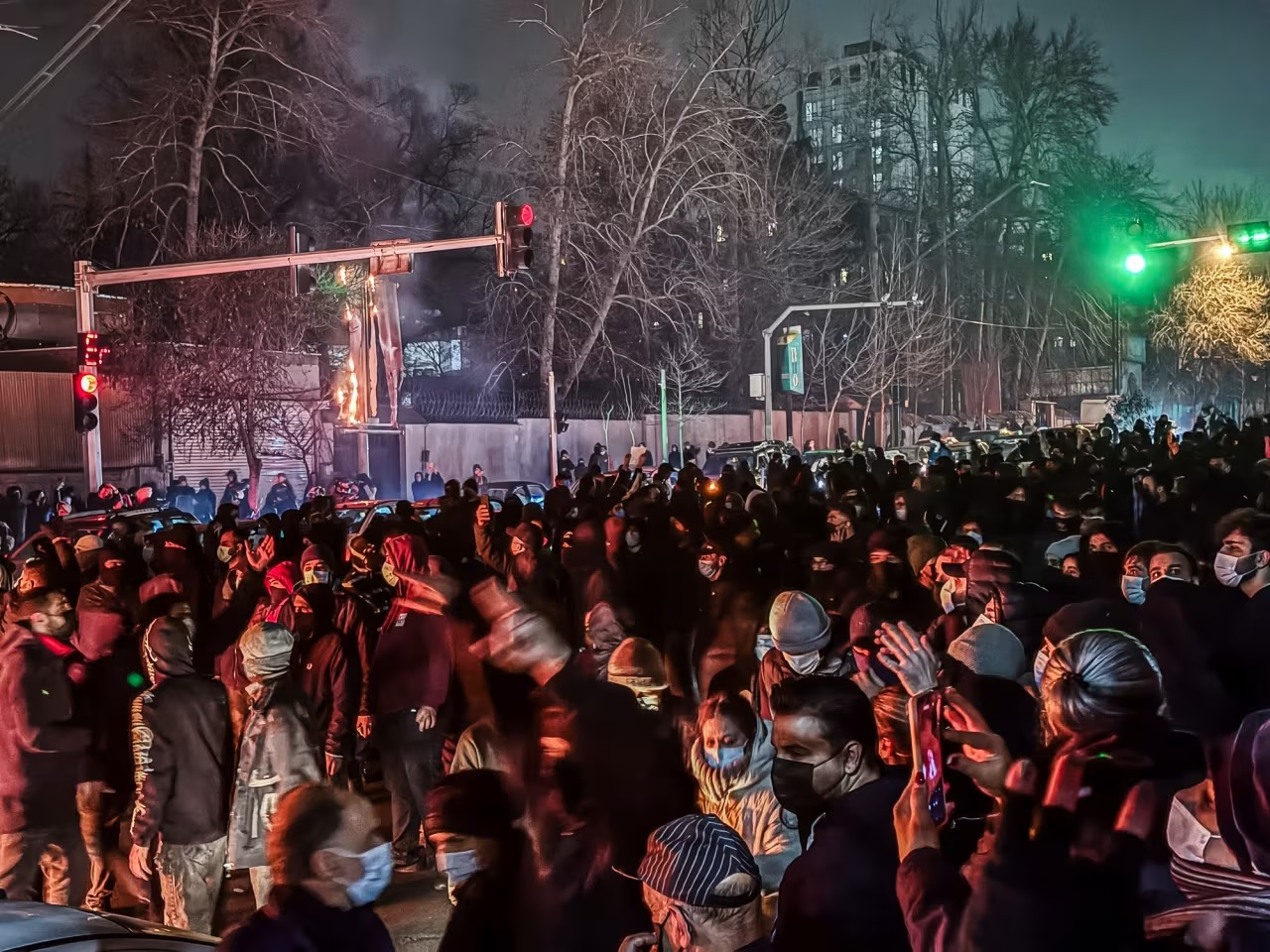
On television, footage of protestors allegedly shooting at security forces plays repeatedly. Demonstrators are compared to 'rioters' and 'terrorists.' In its report on Saturday, Iranian state TV said, 'Last night, several armed terrorists attacked various spots, setting private properties ablaze. Yet, there were no reports of chaos in Tehran or most other provinces afterward.'
However, news agency AP disputes these claims and displays multiple videos showing demonstrations in Tehran's Saadat Abad district, where protesters chant 'Death to Khamenei.'
State TV suggests that protestors are vandalizing properties and attacking security forces.
The Protests Show No Signs of Stopping
The protests began on December 28 in Tehran and have spread across the nation. This week, exiled Iranian Crown Prince Reza Pahlavi called from abroad for people to protest the Islamic Republic in homes and the streets. Massive demonstrations followed, with instances of arson reported.
Reza Pahlavi, broadcasting from America, urges people to protest with the ancient Lion and Sun flag and other national symbols from Shah's era. In some demonstrations, protestors have chanted slogans in support of the Shah and reinstating the monarchy. In Iran, chanting support for the Shah can warrant the death penalty, yet protesters seem undeterred. Reports suggest the protests now span all of Iran's 31 provinces, involving upwards of 100 cities. Demonstrators claim hospitals are overflowing with bodies.
Previously, Trump warned that if the Iranian government attacked protesters, America would intervene. Khamenei, in turn, advised Trump to focus on his own country's problems.
Why Are These Protests Happening?
The Iranian currency has been weakening for years, with shopkeepers asserting that the value of one US dollar has soared to 1.4 million Iranian rials. This sparked protests by Tehran merchants on December 28. The protestors blame the Islamic Republic and Khamenei for the deteriorating economy, chanting 'Death to Khamenei,' 'Death to the Islamic Republic,' and 'The mullahs must go.'
Anxiety mounts over internet blackouts potentially allowing Iranian forces to execute violent crackdowns away from public scrutiny. Nobel Peace Prize laureate Narges Mohammadi's son, Ali Rahmani, lamented past bloodshed, remembering the hundreds killed during 2019's protests, fears resurfacing now as they face a tyrannical regime, risking their lives in the ongoing battle.