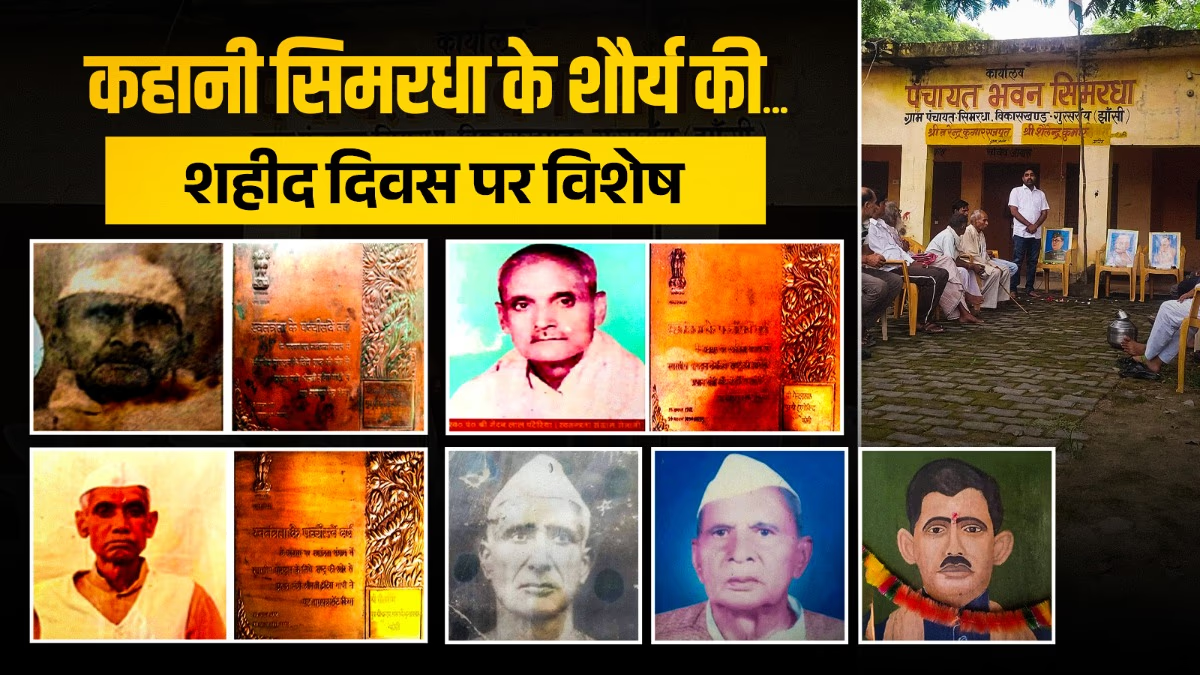
January 11, 1945, becomes a beacon of pride for Simardha village even today. The village's freedom fighters did not shy away from risking their lives in the struggle for independence. Such were the circumstances that no stoves were lit at home, the entire village became deserted, and people hid among fields and crops, but the flame of independence remained unquenched in their hearts.
January 11 isn't just a date for Simardha. It is a day remembered as the darkest in the village's history, but it also immortalized Simardha. On this day, the British regime committed atrocities so harsh that they still send shivers down one's spine.
Simardha Bears Witness to British Atrocities
During that era, the entire nation was consumed with the fire of freedom from British rule. The land of Bundelkhand was already ablaze with rebellion. Simardha was a major center of this uprising.
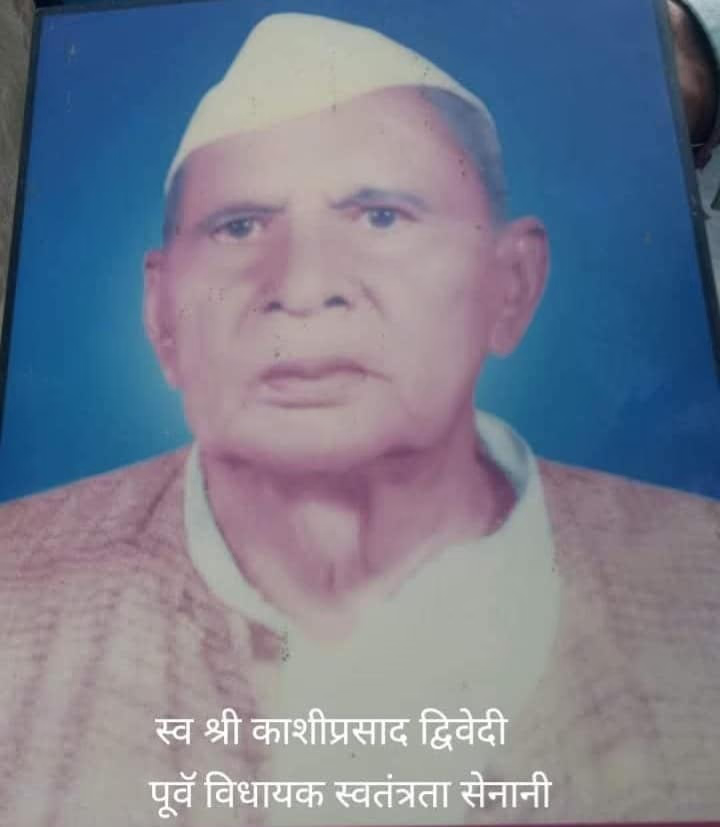
The British tried every possible means to crush the voices of revolution led by Pandit Kashiprasad Dwivedi and countless young men, but the sacrifice and courage of Indian freedom fighters overshadowed British tyranny.

Source: aajtak
'British Atrocities' and the Declaration of 'No Penny, No Brother'
During the Second World War, the British government decreed that every village must contribute a penny and a brother — the penny for a fund and a brother for recruitment into the British army.
Simardha refused to comply with this decree. Led by Pandit Kashiprasad Dwivedi, the villagers declared, 'We will give neither a penny nor a brother.'
This sentence became a proclamation of rebellion against the British.
Source: aajtak
January 11, 1945: When the British Turned Brutal
Angered by the villagers' refusal to contribute, British officers, accompanied by the Tehsildar and soldiers, reached Simardha. They captured the key freedom fighters and tied them to a neem tree in the village.
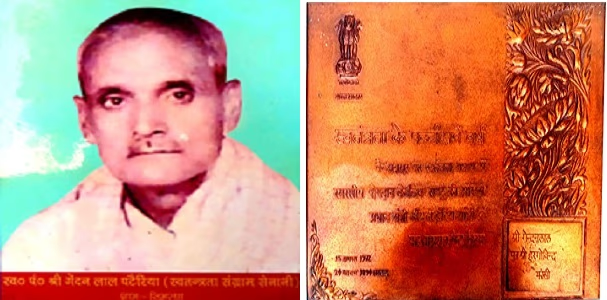
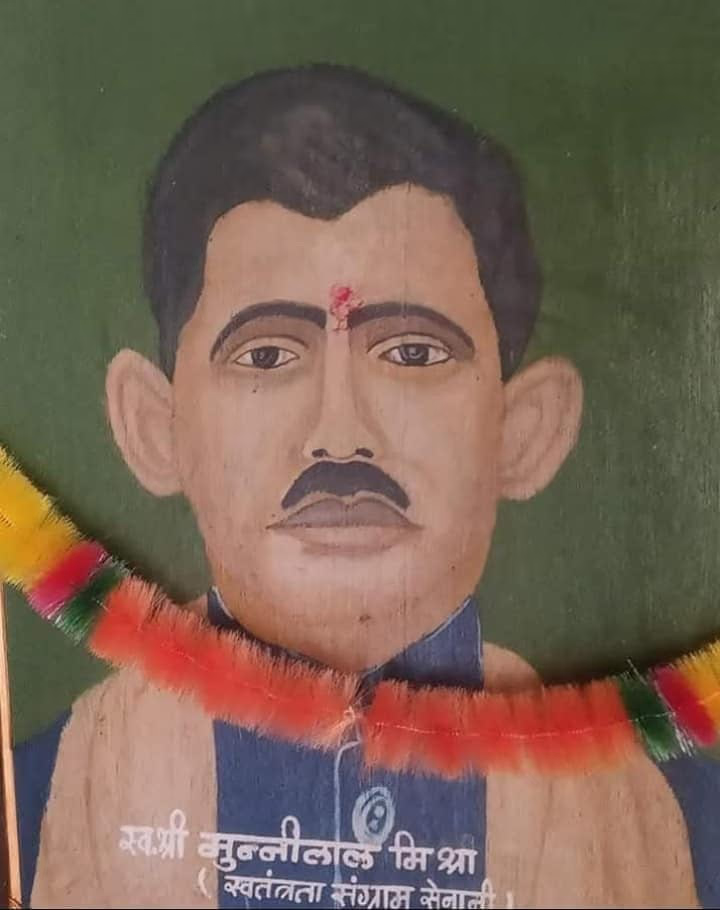
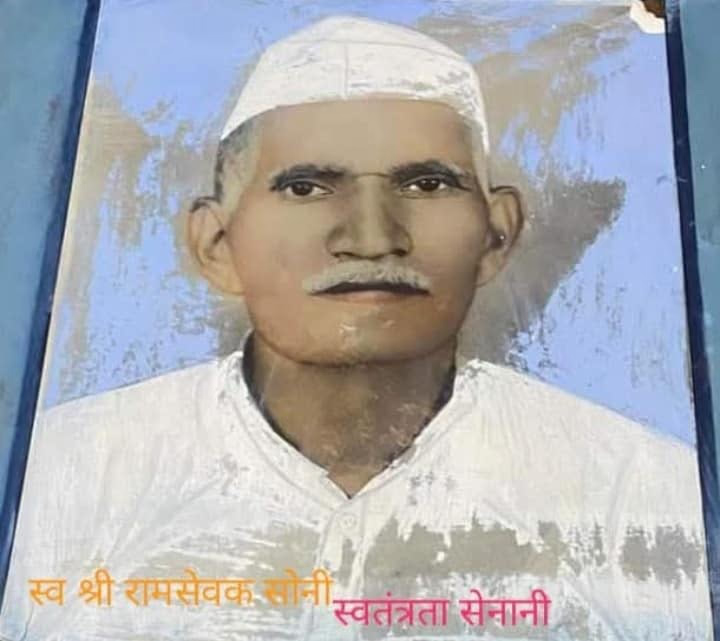
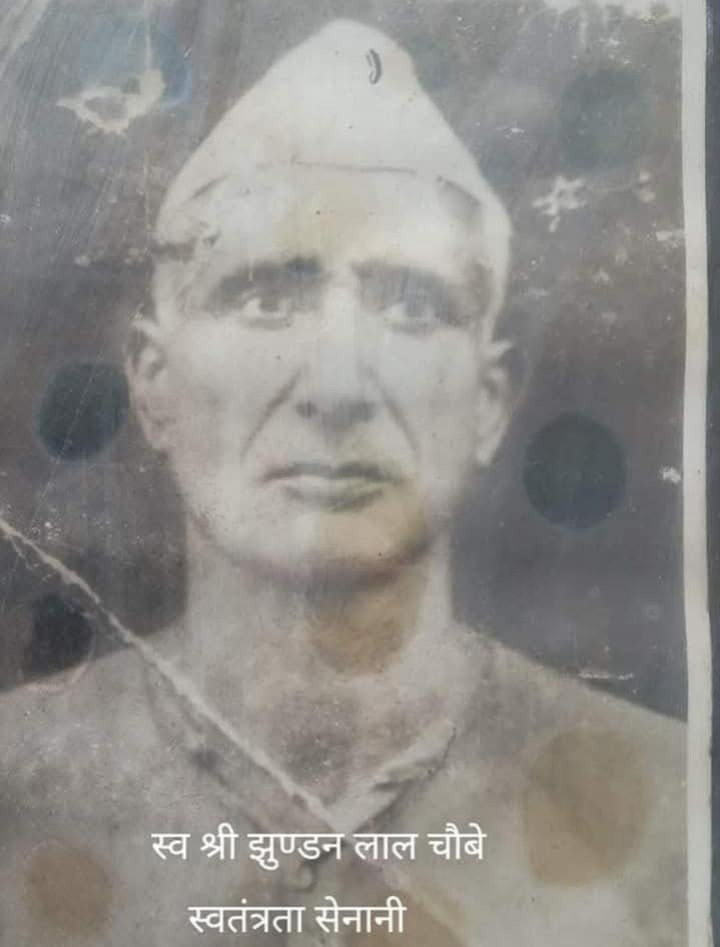
Pandit Kashiprasad Dubey, Munnilal Mishra, Sitaram Tiwari, Baijnath Tiwari, Gendanlal Patariya, Swami Prasad Lodhi, Jhundlal Chaubey, Shaligram Tiwari, Shripat Tiwari, Harcharan Lodhi, Rajju Rangrej, Pultai Dada, Bhogole Dau, and many other fighters were brutally beaten with sticks and whips for hours.
In the merciless assault by British soldiers, Bhogole Dau, Rajju Rangrej, and Pultai Dada were martyred on the spot while over 20 fighters were left on the brink of death.
Source: aajtak
Legal Battles, Fines, and Fight to the High Court
For their refusal to contribute and oppose British rule, these fighters faced legal prosecution, with cases reaching the High Court. Many faced fines and jail sentences, yet none bowed before the British.
Infants Were Not Spared
The British brutality did not end there. Pandit Kashiprasad Dwivedi was preparing a local battalion to drive out British forces. Hearing of this, the British stormed his home.
Source: aajtak
Kashiprasad was not at home. His wife was nursing their mere four-day-old infant. The infuriated British snatched the baby from the mother’s arms and threw it to the ground, rendering the mother unconscious. They then took the infant with them.
This incident remains the most horrifying and painful memory in Simardha's history.
The Village Abandoned, Stoves Extinguished, and People Hid in Fields...
On January 11, no stove was lit in Simardha. Amidst fear and outrage, the entire village fled to fields, crops, and forests. Women, children, and the elderly scattered to save their lives.
Source: aajtak
This day became known as the darkest in Simardha's history.
Oppression Fueled the Fire for Freedom
British oppression didn't break the village; it strengthened it. A meeting was held under Munnilal Mishra's leadership at Ranmat Lambardar in Bangra. Freedom fighters from across the district participated.
These fighters weren't initially in full agreement with Gandhi’s Charka Movement, but later joined it fervently. Many village satyagrahis were arrested and fined 100 rupees or sentenced to a year’s imprisonment.
Source: aajtak
When mobile cinema showing British achievements arrived in the village, Kashiprasad Dwivedi destroyed it, leaving British officers helpless before him several times.
Support from Nearby Fighters
Ramsewak Richharia from Dhikpui, Ramsumit Mishra from Khadaura, Teerthraj, Shreepat Sahay Tiwari from Simardha, Baba Sumer, and Malkhan from Bangra, among others, sharpened the movement and unsettled the British.
Gandhi's Letter and the British Apology
Simardha's outrage prompted Kashiprasad Dwivedi's battalion to write to Mahatma Gandhi. Gandhi replied that those committing atrocities would one day apologize.
This came true. In 1946, the British Collector Satish Chandra visited Simardha and apologized to the village for the entire incident.
Source: aajtak
Honor Received, Memorial Absent
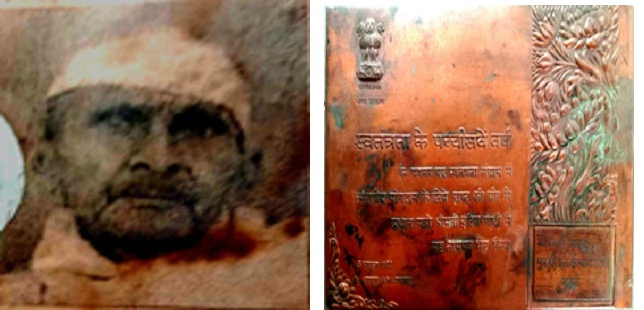
In 1972, the then Prime Minister Indira Gandhi honored the freedom fighters involved in the Simardha incident with copper plaques, giving this historical movement official recognition at a national level.
Post-independence, freedom fighters like Gendanlal Patariya, Sitaram Tripathi, and Swami Prasad received copper plaques and pensions. Yet, no memorial stands at the site where the British mercilessly flogged people.
The village still demands a memorial on that historic site to remind future generations of the cost of freedom.
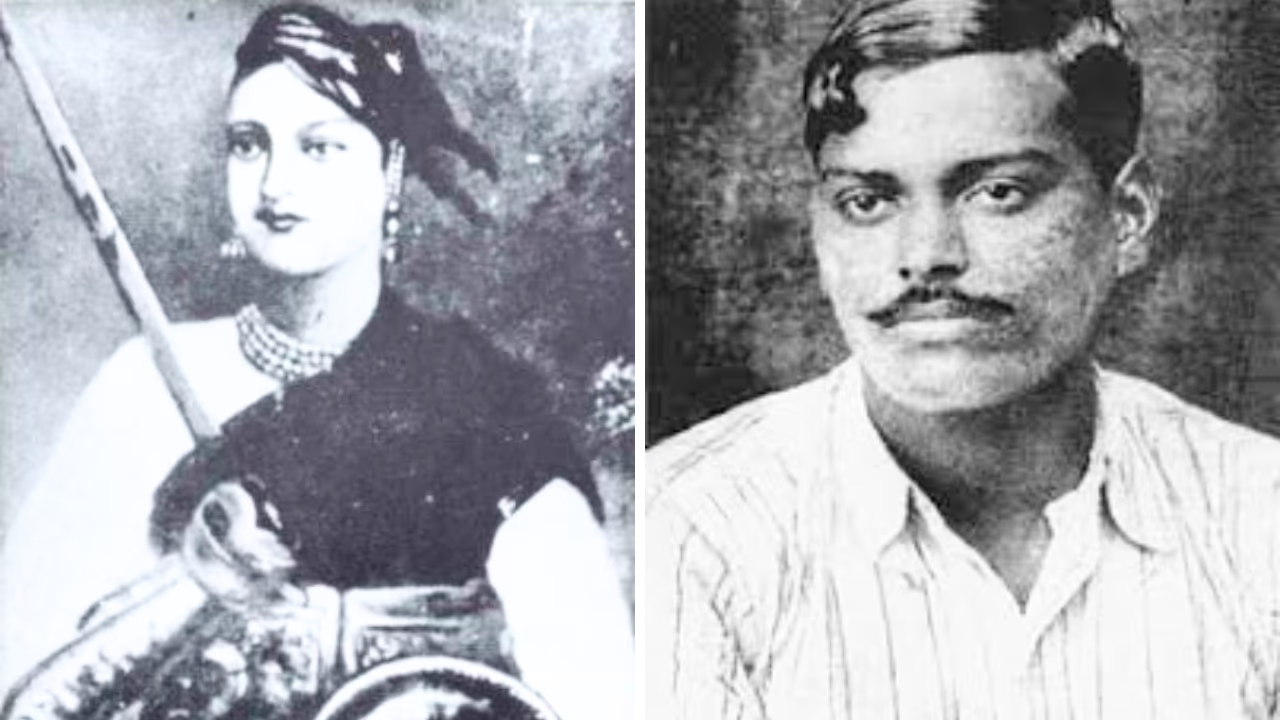
Jhansi's Legacy of Rani Lakshmibai and Chandra Shekhar Azad
The Simardha rebellion did not ignite in a vacuum. Its seeds were sown in 1857 when Rani Lakshmibai of Jhansi led the first major fight against British rule. She laid the foundation for rebellion in Jhansi.
Source: aajtak
Later, this land sheltered revolutionaries like Chandra Shekhar Azad, who challenged the British in the jungles around Jhansi. This legacy extended to Simardha.
The Simardha incident on January 11, 1945, became an immortal link in the long struggle, proving that the land of Bundelkhand never bows to subjugation.