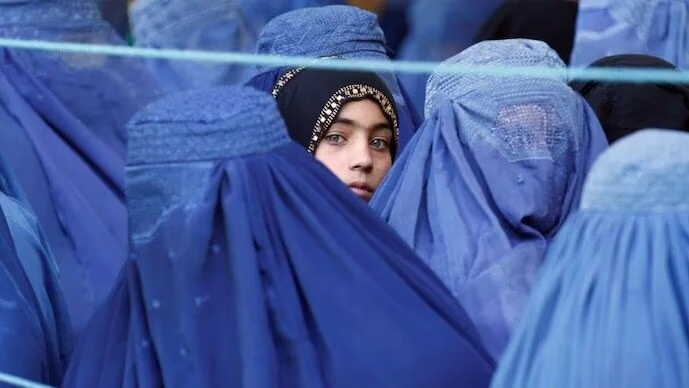
In January, Afghanistan's supreme leader, Hibatullah Akhundzada, announced the nation's first penal code via Decree No. 12. This new law stipulates a mere 15-day jail sentence for individuals committing domestic violence against women, but mandates a five-month imprisonment for organizing animal fights. On Thursday, UN High Commissioner for Human Rights, Volker Türk, stated in Geneva that this decree breaches international legal obligations.
According to the Associated Press, this 60-page, 119-article law grants men absolute authority over women and sets varied punishment standards based on social status.
The UN has urged Afghan officials to immediately revoke this decree, warning that it legally endorses gender inequality and criminalizes free expression.
Domestic Violence vs. Animal Cruelty: A Punishment Disparity
Under the new penal code, if an individual severely beats his wife, causing visible wounds or bruises, he faces only a 15-day jail term, which the wife must pursue in court. Conversely, if someone is caught organizing cockfights or fights involving partridges or other animals, they face five months in jail. Animal fights in Afghanistan, once a popular pastime, have been banned since 2021.
Strict Restrictions and Punishments on Women
This law severely restricts women's freedoms. If a woman stays at her father's home without her husband's consent, she faces a three-month prison sentence. The same punishment applies to relatives who don't return her to her husband. The law allows household heads to impose and execute sentences within their homes, legitimizing violence against women and children.
Justice Based on Social Status
Afghanistan's new penal law advocates differing treatments based on social class. Scholars and high-ranking individuals receive only warnings from judges for crimes. Tribal leaders and merchants are issued warnings and court summons. 'Average members of society' receive jail sentences, while 'lower-class individuals' are subject to physical punishment. For those facing the maximum of 39 lashes, striking different parts of the body is mandatory.
Punishments for Murder and Blasphemy
Discriminatory practices based on social status do not apply to murder cases. Anyone found guilty of murder faces the death penalty. Blaspheming against the Prophet is also considered a grave crime, punishable by death. However, if the offender repents, the death sentence may be reduced to six years of imprisonment. The law also criminalizes criticism of the administration.
International Community's Concerns
UN Women's special representative, Susan Ferguson, claimed that this law formally erases equality between men and women. Volker Türk warned that no country excluding half its population can thrive. He urged Afghan officials to change course and include women and girls in society, as they represent the country's present and future.