Following the recent attacks on Iran,
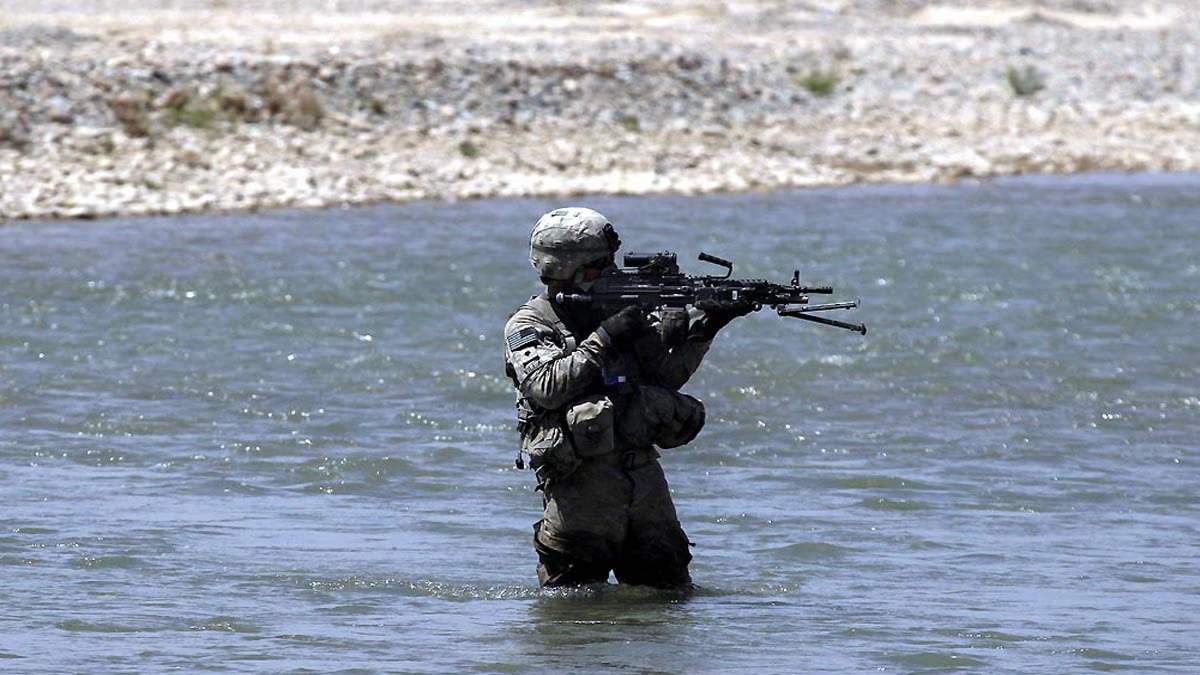
the world watches if American and Israeli forces will set foot on Iranian soil.
In a mission that began February 28, 2026, US President Donald Trump announced the death of Iran's Supreme Leader Ayatollah Ali Khamenei, declaring the attack aimed at transforming Iran's government.
Experts argue that shifting power through airstrikes alone is challenging. Deploying troops would be significantly risky. Iran retaliated with missile launches onto several nations, most thwarted. The ongoing debate revolves around whether ground invasion will proceed, or if operations will remain aerial and missile-centric.
Read also: 1200 bombs, 200 fighter jets, 500 targets... how the US-Israel 'Mission Khamenei' unfolded
The US and Israel emphasize dismantling Iran’s nuclear ambitions and undermining its government to enable Iranians to instigate change. Yet, history suggests such operations often descend into chaos, prolonging conflict.
Possibility of a ground invasion?
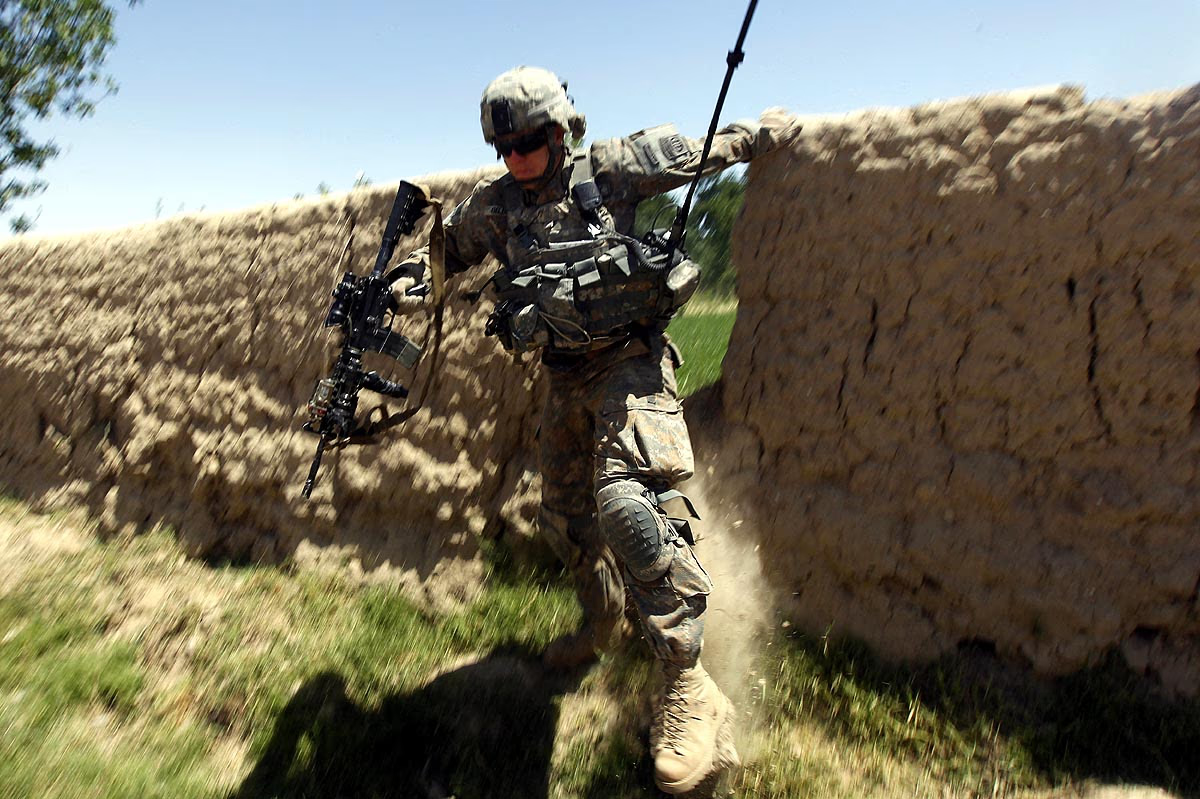
Thus far, the US and Israel have expressly stated, ground troops will not be deployed in Iran. Reports, including those from the Wall Street Journal and BBC, indicate President Trump clarifies this as an aerial campaign - the American public opposes a ground invasion. Experts caution that entering Iran could be disastrous for the US due to Iran's robust military and proficiency in guerrilla warfare.
Source: aajtak
Experts from the Council on Foreign Relations stress that regime change might necessitate ground invasion, though Trump hasn't authorized such a move. The strategy, if undertaken, involves weakening Iran’s forces through airstrikes before deploying special operatives to capture strategic locations. While the US maintains around 30-40,000 troops in the Middle East, a larger force would be essential for invading a vast nation like Iran.
Israel's smaller military suggests limited involvement in ground operations. Should invasion occur, both nations might advance via Iran's borders, overtaking significant cities like Tehran, securing nuclear sites. Nonetheless, this presents dangers - Iran’s proxies like Hezbollah and Houthi could retaliate violently.
Read also: US-Israel Attacks Iran LIVE: Major Iranian assault on Qatar’s industrial zone post-Oman port attack; Israel's assault results in Iranian Intelligence Chief's death
Has this happened before?
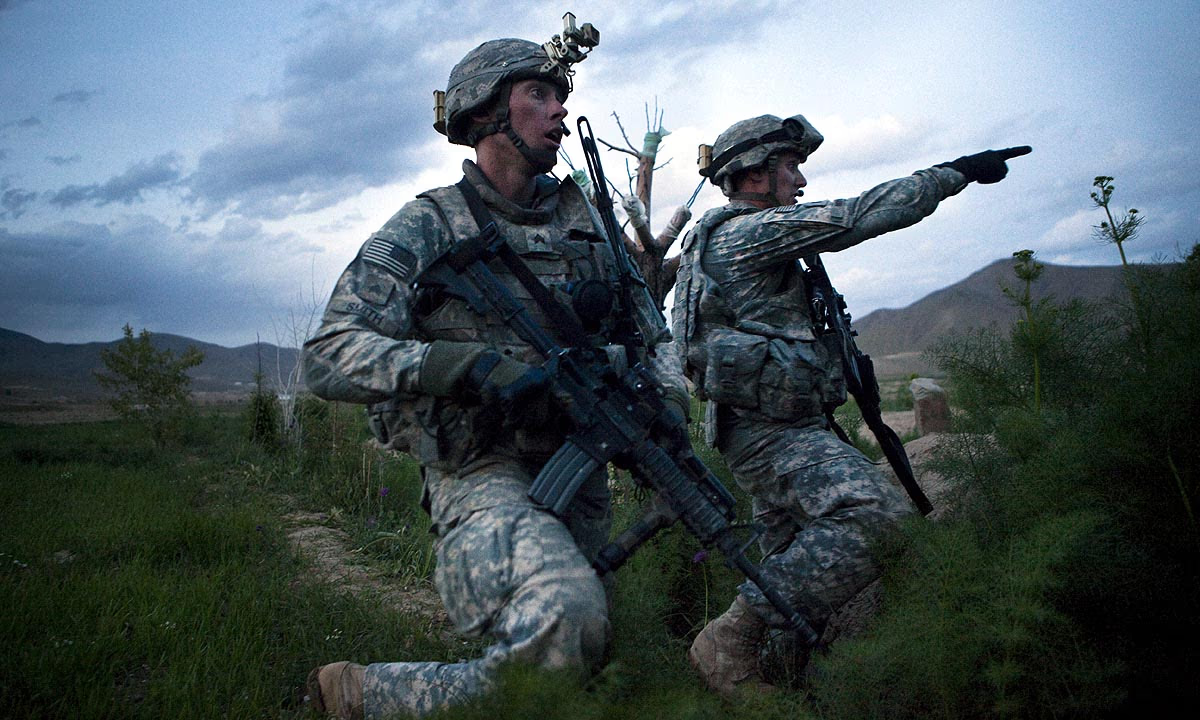
The US and Israel have never jointly launched a ground invasion. Historical accounts reveal strong military collaboration between them. During 1967’s Six-Day War, Israel waged war independently, albeit supported by American armaments. Conversely, in 1981, Israel's attack on Iraq’s nuclear reactor was excluded from prior US notification.
The US spearheaded Iraq's 2003 invasion, excluding Israel. Both nations have collaborated extensively in arms, intelligence, missile defense like the Iron Dome - sans joint ground operations. During 1956’s Suez Crisis, Israel, alongside Britain and France, invaded Egypt, provoking US dissatisfaction.
Source: aajtak
History records a CIA-backed, non-military regime change by the US in Iran in 1953. Should a ground invasion transpire now, it would pioneer a collaborative terrestrial assault by the US and Israel, possibly igniting new Middle Eastern conflicts.
What is their regime change plan?
Trump and Netanyahu aim to weaken Iran’s regime through relentless airstrikes, prompting internal revolt. Trump asserts Iranian citizens should reclaim their government. According to Foreign Affairs Magazine, the US is targeting Iran’s nuclear establishments, missile factories, and command centers.
Read also: ... which were the 30 bombs unleashed on Khamenei's residence, reducing it to rubble
Israel’s focus is eliminating leadership, exemplified by targeting Khamenei. Should regime change occur, the US intends to support a new government, steering clear of troop deployment. The Council on Foreign Relations suggests the US bolster Iranian citizens, avoiding ground forces.
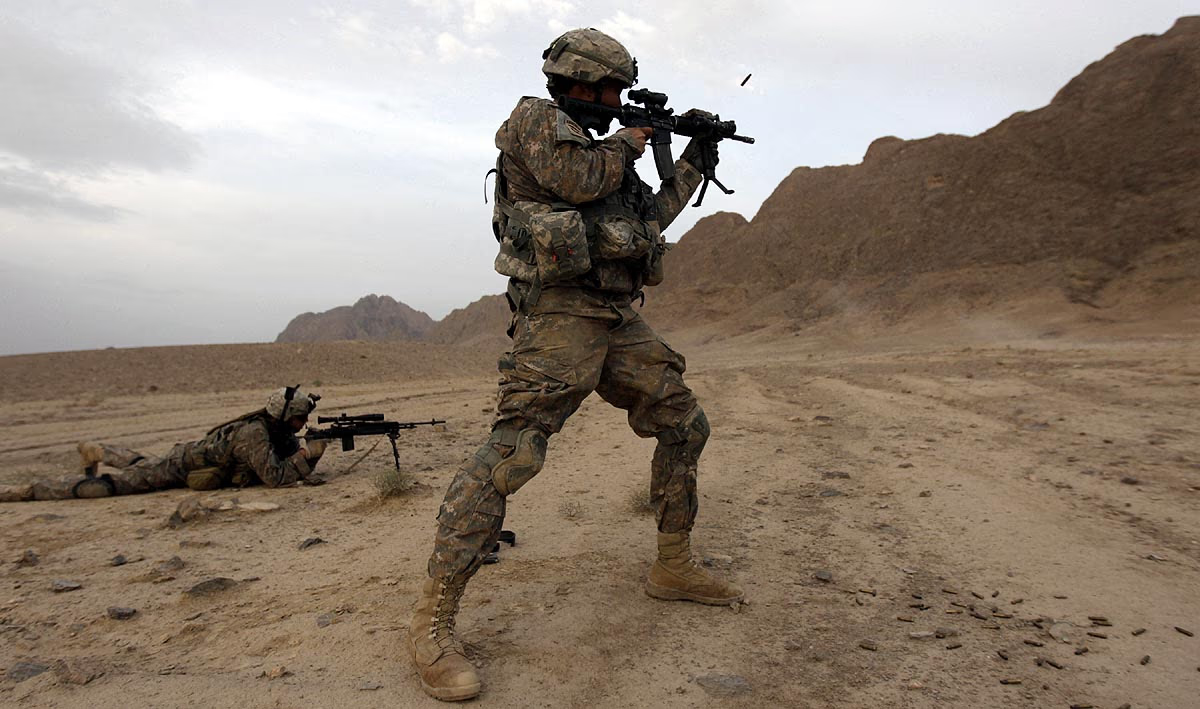
The envisioned strategy dismantles Iran's military forefront, then arms and informs protestors. However, experts assert airstrikes alone can’t instigate regime change, recalling Iraq's 2003 invasion necessity. Trump's official stance targets obstructing Iran's nuclear initiatives, though actual intentions might lean towards government overhaul. A failed plan could trigger civil war and a refugee crisis in Iran.
Source: aajtak
What do the experts think?
Experts overwhelmingly advise against ground invasion, deeming it excessively perilous. The US should exercise caution.
The Council on Foreign Relations' Suzanne Maloney advises readiness for Iranian leadership change, malgré actively avoiding regime change to prevent escalation.
Atlantic Council experts note Trump’s regime change difficulty without ground forces, airstrikes prove insufficient for success.
Mohammad Hafez, Naval Postgraduate School Professor, insists on thorough commitment to regime change, yet remains implausible sans troops.
Chatham House's Sanam Vakil notes airstrikes' inadequacy for regime change, warning potential protracted warfare Trump opposes.
George Mason University's Ilya Somin deems the conflict unconstitutional sans congressional approval. Trita Parsi from Quincy Institute highlights risks of government collapse and civil strife.
To summarize, prevailing opinions caution against ground invasion due to potential widespread instability in the Middle East and substantial American losses.