Will the United States launch an attack on Iran? The number of military ships and aircraft in the Arabian Sea might hold the answer. In June last year, during Operation Midnight Hammer, America targeted Iran's nuclear facilities, but signs were evident in the sea beforehand as well.
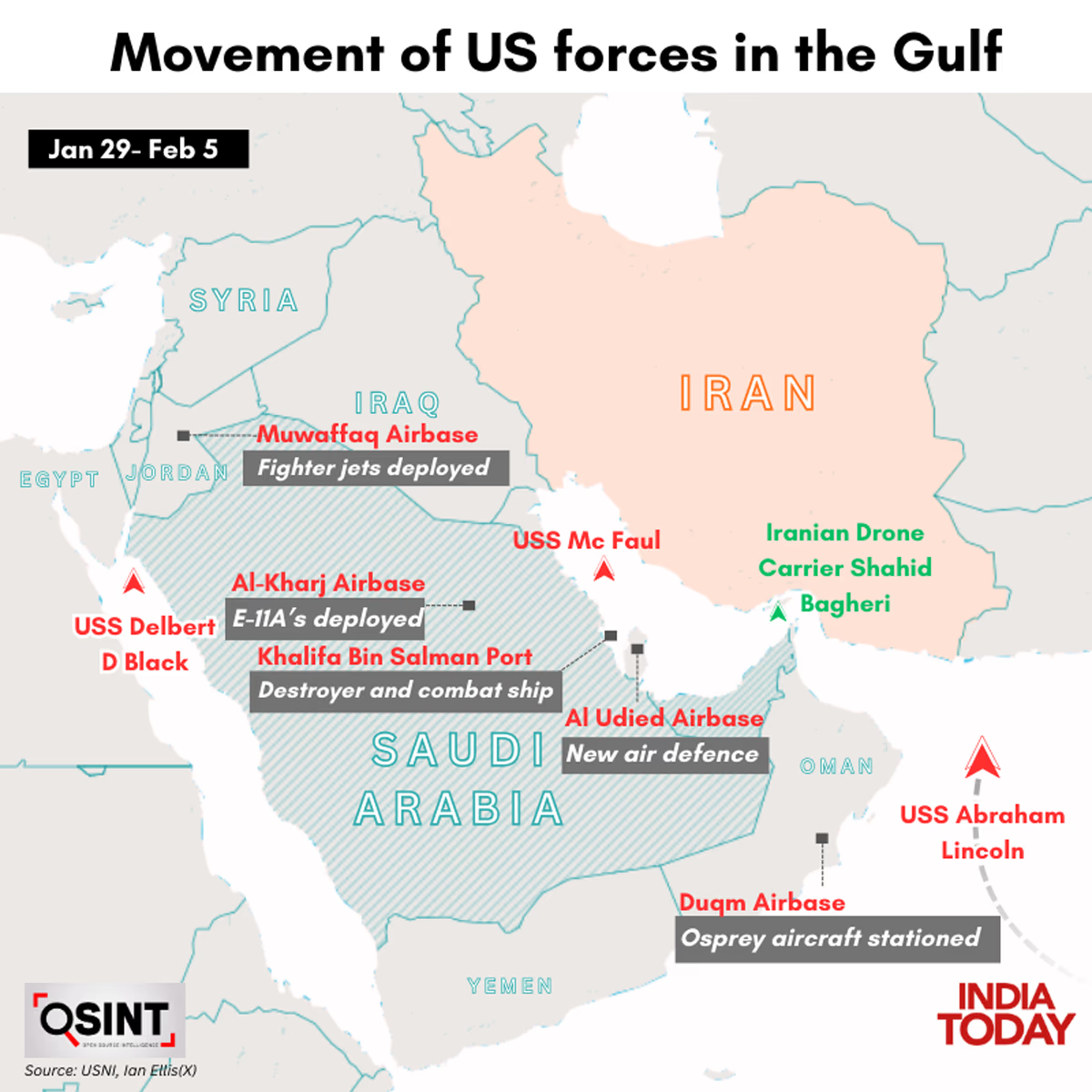
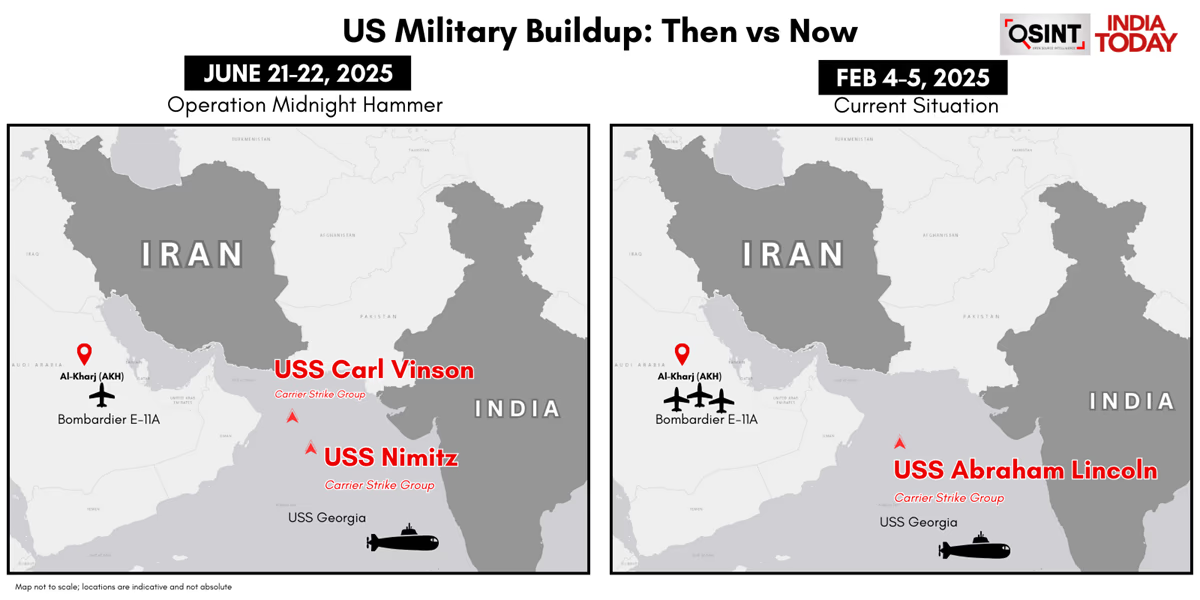
Recently, defense analyst Stephen Watkins has monitored numerous American surveillance and reconnaissance aircraft deployments in the region. These include at least three E-11A Battlefield Airborne Communications Nodes (BACN) based at Saudi Arabia's Al Kharj Air Base. Only one E-11A was spotted in the Middle East during the attacks in June 2025.
Source: aajtak
Sharing insights on X, Watkins suggested that this pattern might indicate an imminent attack. India Today's Open Source Intelligence (OSINT) team has mapped six E-11A BACN aircraft either stationed in the Middle East or on rotation. These deployments significantly boost U.S. command and control resources in the Gulf, aligning with former President Donald Trump's pressure on Iran's nuclear program and its crackdown on protestors in January.
Source: aajtak
Amidst these developments, American and Iranian officials are set for face-to-face talks in Muscat for the first time since last June’s conflict, aiming to prevent another confrontation. Meanwhile, the U.S. has instructed its citizens to leave Iran immediately, as no assistance will be available from the American embassy.
Increased Activity at US Bases in the Middle East
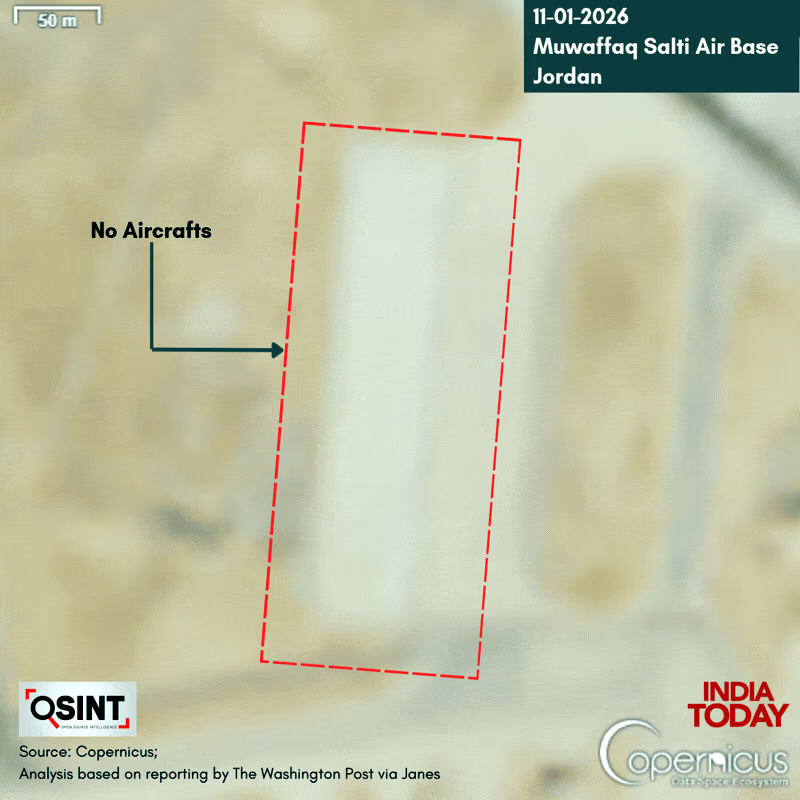
Reports this week have noted increased activity at other American bases in the Middle East. The Muwaffaq Salti Air Base in eastern Jordan is preparing for a buildup of U.S. forces. India Today's Copernicus satellite imagery revealed nearly a dozen fighter jets parked on the tarmac by late January, a site used during Operation Midnight Hammer in June 2025.
Source: aajtak
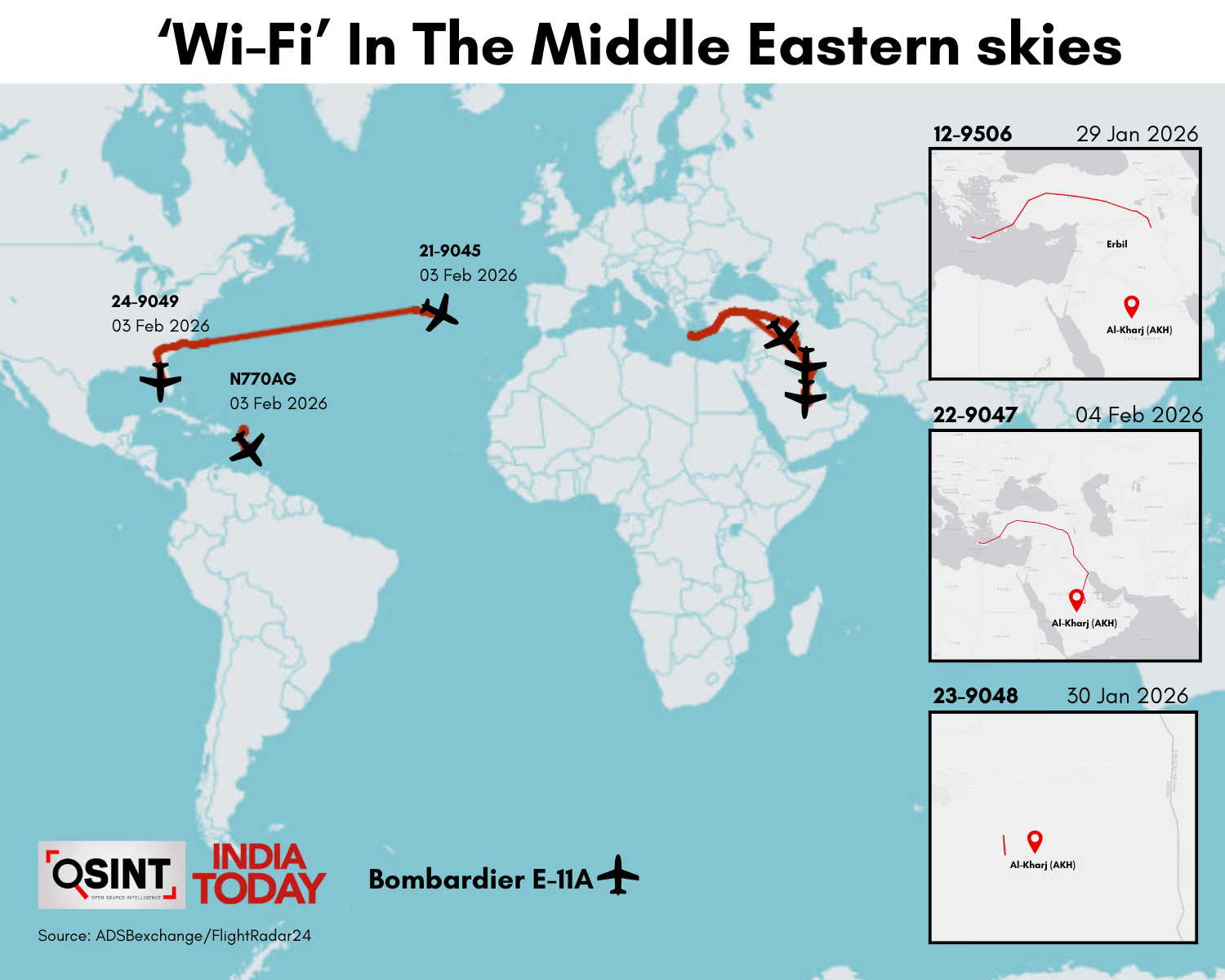
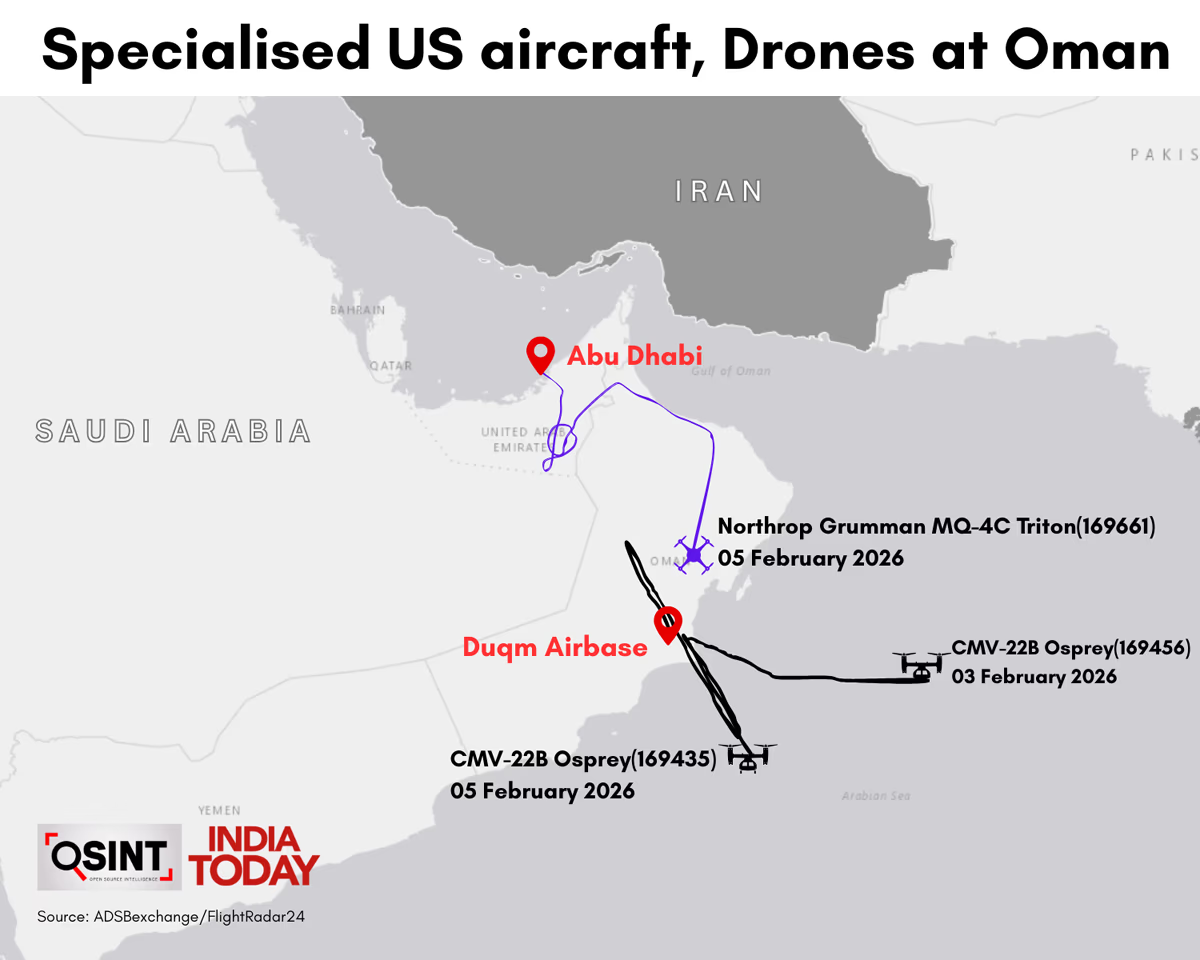
India Today tracked activities of specialized drones and Osprey supply aircraft at Oman’s Duqm Air Base through open-source flight tracking data. Since early January, two Bombardier E-11A aircraft (tail numbers 23-9048 and 21-9045) were already stationed in the region. This week, another E-11A (tail number 12-9506) arrived from Chania to Prince Sultan Air Base, Saudi Arabia.
On Tuesday, Bombardier 21-9045 left Prince Sultan Air Base for Jordan before returning to the U.S., while, on Wednesday, a different E-11A (22-9047) arrived from Chania, heading to Al Kharj. The number of U.S. Air Force BACN aircraft in the area remains at three.
These modified commercial jets function as flying communication hubs, allowing American forces to swiftly and securely share information over vast distances, often dubbed as “Wi-Fi in the sky.”
Source: aajtak
Deployment of USS Abraham Lincoln Carrier Strike Group
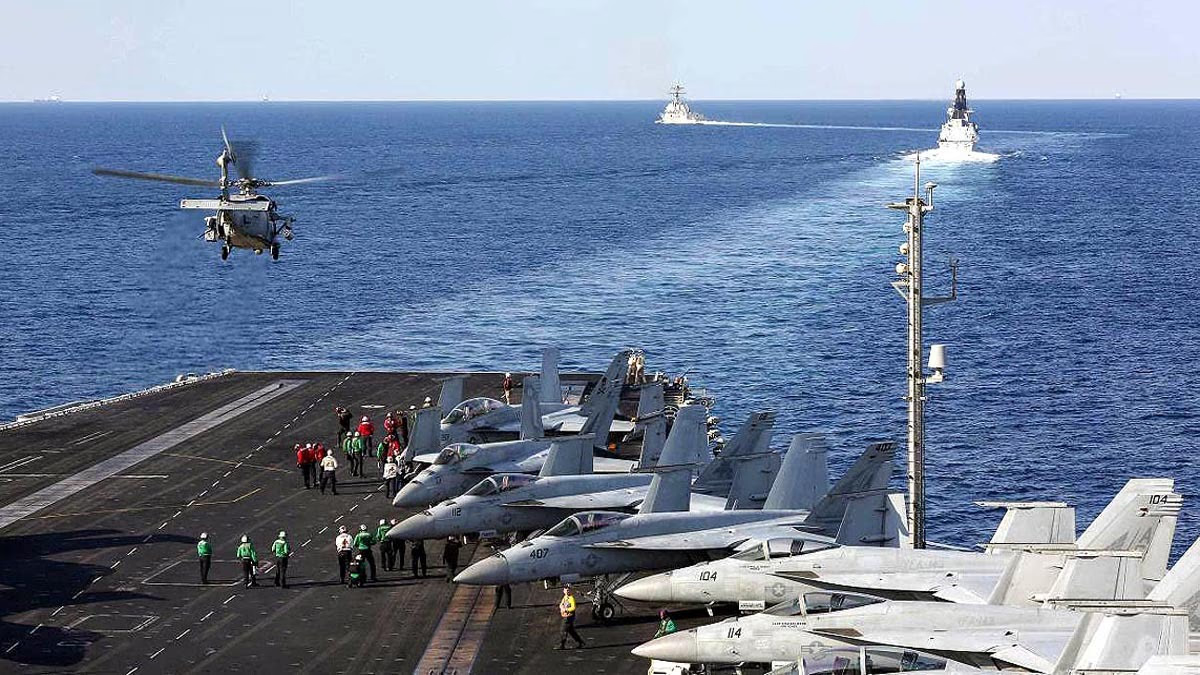
In the previous weeks, the USS Abraham Lincoln Carrier Strike Group arrived in the Arabian Sea. The Carrier Strike Group symbolizes the pinnacle of American military power, housing approximately 70 aircraft. Iranian forces, including drones and its main carrier, Shahid Bagheri, are keeping a watchful eye on Lincoln. On February 3, the U.S. shot down an Iranian Shahed-139 drone approaching the carrier.
Source: aajtak
Recent flight activities further confirm the carrier's location. India Today tracked frequent flights of at least three Osprey supply aircraft between Oman’s Duqm Airport and nearby bases starting January 30, illustrating the region's growing logistic importance for the U.S. Navy.
The Abraham Lincoln carries F-35 stealth fighters capable of penetrating advanced air defense networks. The Strike Group also includes three destroyers armed with Tomahawk Land Attack Cruise Missiles and typically hosts a nuclear-powered submarine furnished with similar weaponry. It supplements the two destroyers already operating in the region.
Source: aajtak
Comparing Preparations to June 2025
Media reports preceding the June 2025 assaults noted unusual U.S. military activities. On June 21, the U.S. deployed six B-2 stealth bombers to Guam, later revealed as a decoy mission for surprise concealment.
The USS Carl Vinson and USS Nimitz’s two Carrier Strike Groups were also stationed in the Arabian Sea before the attack, with USS Thomas Hudner, an Arleigh Burke-Class guided-missile destroyer, dispatched to the Eastern Mediterranean Sea.
Potential for Future Engagements
The extra deployment of E-11A aircraft in the Middle Eastern airspace suggests heightened readiness for an attack. India Today's OSINT team tracked at least three E-11As, three Osprey supply aircraft, a dozen F-15 fighter jets, one MQ-9 Reaper combat drone, and several A-10C Thunderbolt II ground-attack aircraft. This signifies improved military readiness compared to June 2025.
Tensions are mounting amidst ongoing dialogues in Muscat. Whether America will engage in an assault or whether the talks will succeed remains to be seen in the coming days.