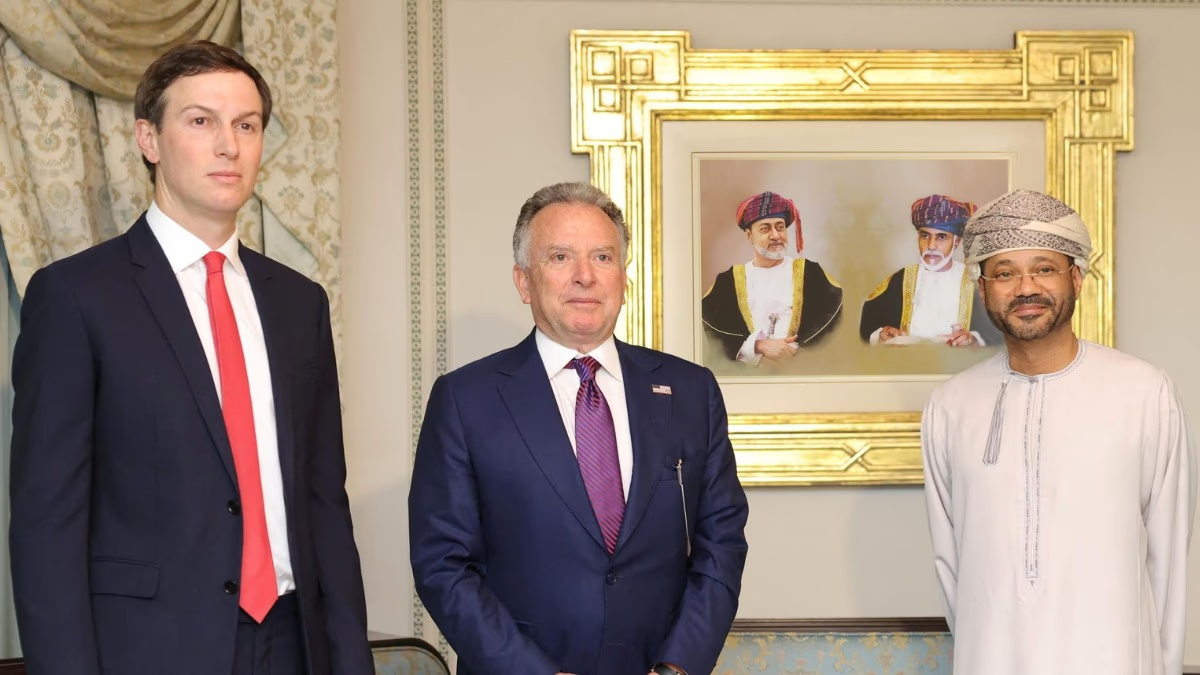
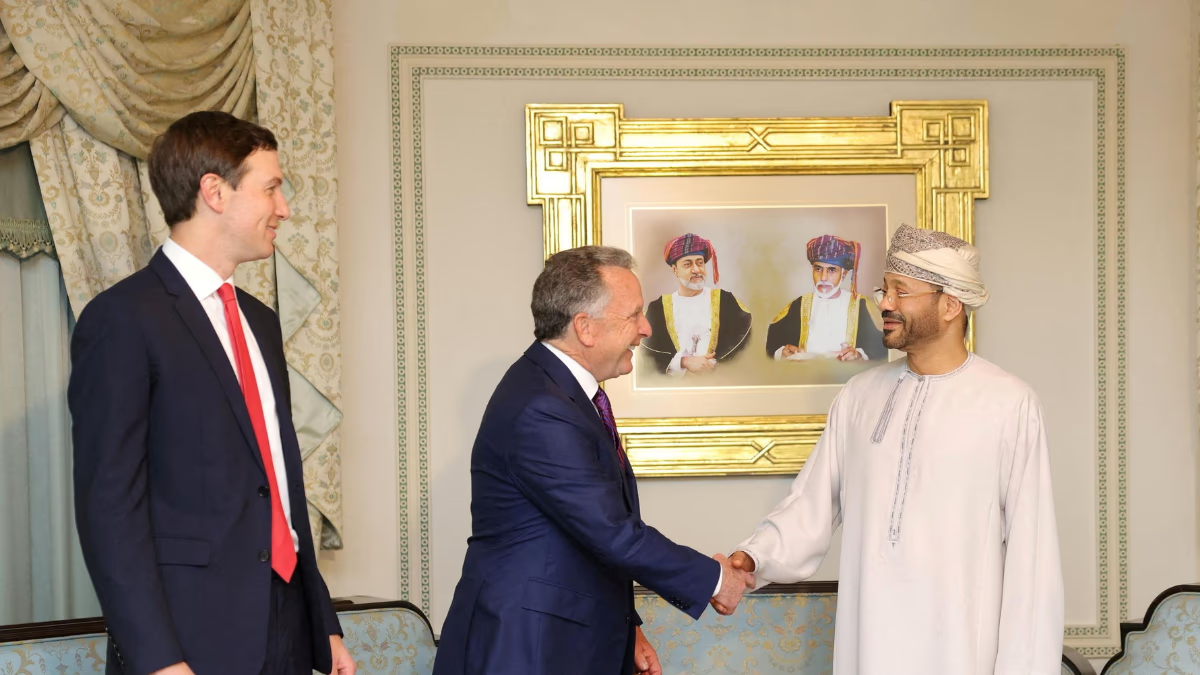
The talks held in Muscat, Oman, aimed at resolving the long-standing nuclear dispute between Iran and the US, were deemed a positive step by Iran. Foreign Minister Abbas Araghchi hailed the indirect dialogue as a promising start, with both parties agreeing to continue discussions.
During a conversation on Iranian state TV, Araghchi mentioned that the recent round of talks in Muscat involved open sharing of views by both sides. He clearly stated that the future discussions depend on how negotiators from both countries consult and decide their strategies in their respective capitals. This dialogue was organized with Oman's mediation, where indirect messages were exchanged rather than direct communication.
Araghchi identified distrust as the biggest challenge in the process, noting that achieving solid outcomes without trust would be difficult. The US indicated a desire for discussions beyond just the nuclear program, expressing interest in addressing Iran's ballistic missile program, support for regional armed groups, and internal human rights conditions.
Source: aajtak
Read More:
Post Oman Talks, Iran Assertive: Dialogue Impossible Under Threat and Pressure
Foreign Minister Abbas Araghchi made it clear that for any dialogue, staying away from threats and pressure is essential. He stated Iran's willingness to discuss only its nuclear program with the US, excluding any other topics from discussions.
What Did Oman Say?
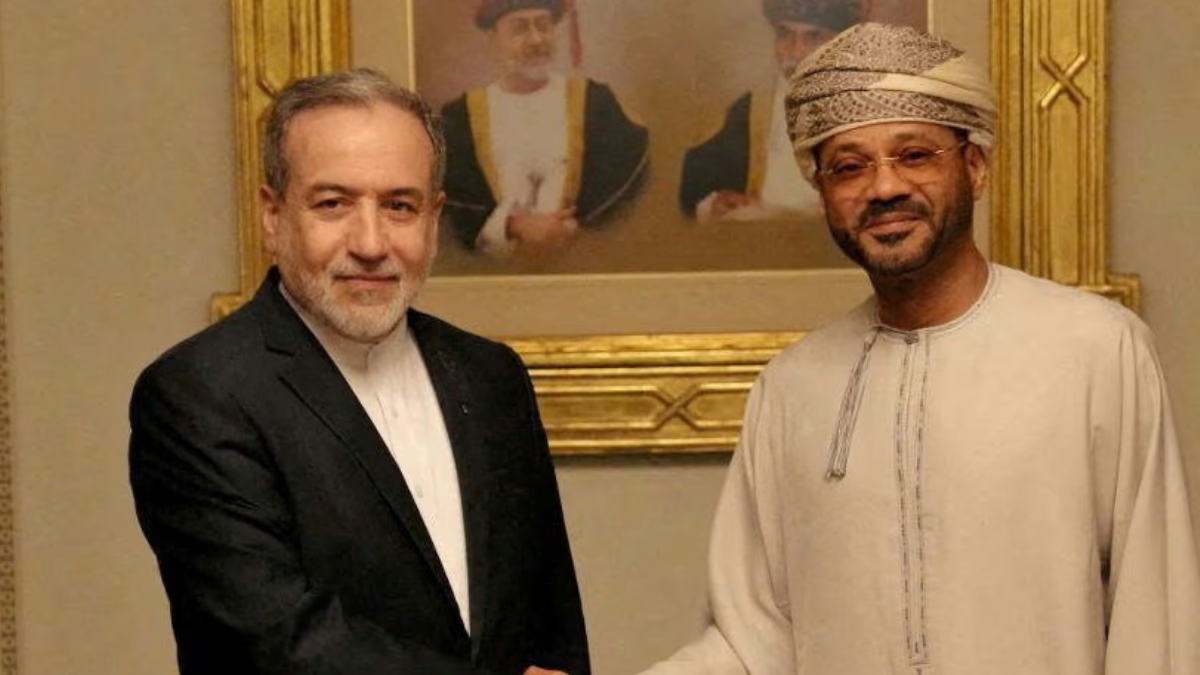
Oman's Foreign Minister Badr Al-Busaidi remarked on the Iran-US talks, describing the meeting as highly serious. He mentioned that both Tehran and Washington would consider the outcomes, with possibilities for further meetings to be discussed.
Source: aajtak
Despite Oman Talks, US Imposes New Sanctions on Iran
While the talks were ongoing, the US took a firm stance by imposing new sanctions on Iran. On Friday, new sanctions targeting 15 firms and 14 shadow-fleet ships allegedly involved in illegal trade of Iranian petroleum and petrochemical products were announced.
No Missile Program Talks
Despite the talks, Iran has remained firm on not negotiating its missile program. Additionally, Iran reiterated its demand for international recognition of its uranium enrichment rights, a red line for the US. Meanwhile, the increased presence of the US Navy in the region has heightened Iran's concerns.
In a significant diplomatic move last June, following a US military operation with Israel on Iranian nuclear sites, Iran temporarily halted its uranium enrichment. In this diplomatic context, the Muscat discussions are considered a vital diplomatic stride in the dialogue between the two nations.