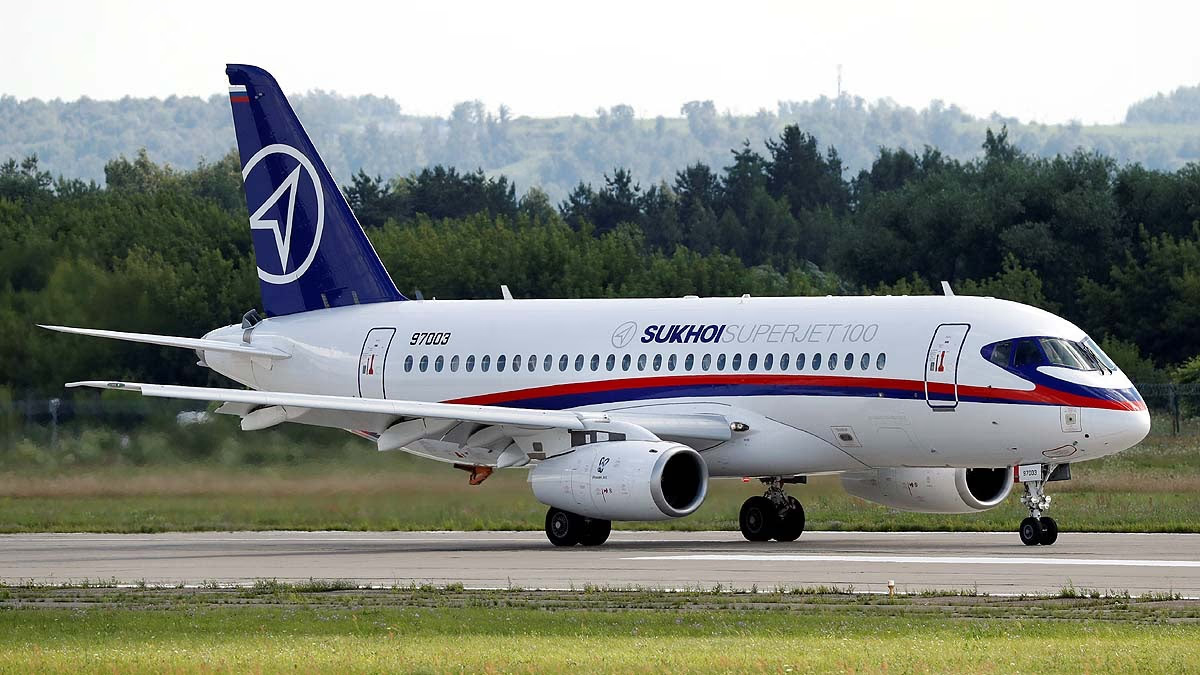
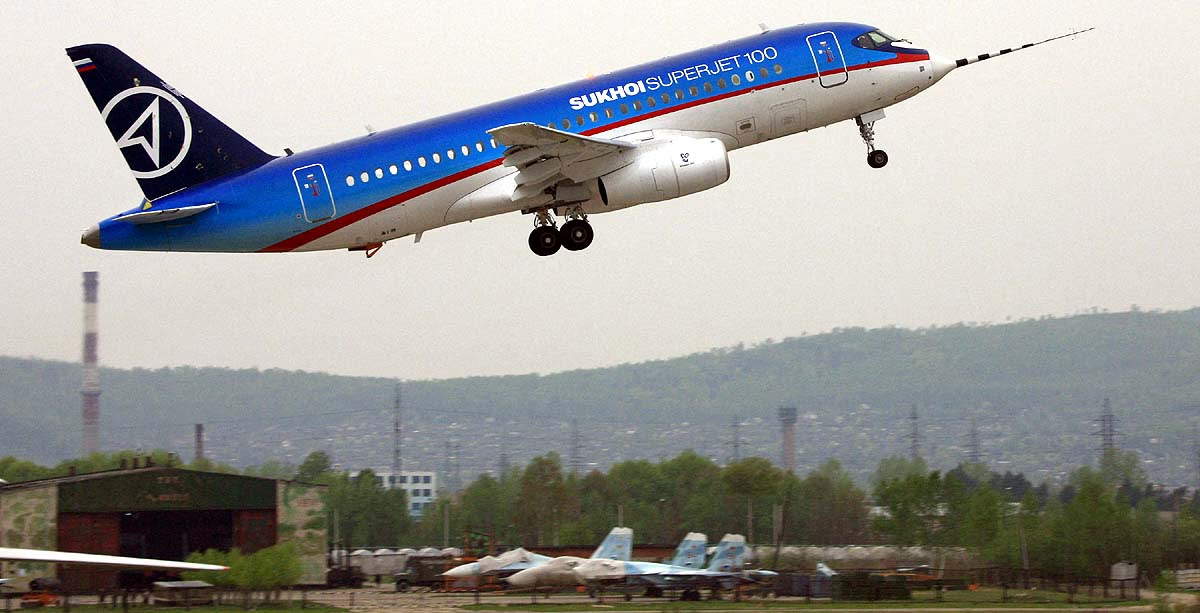
India's Hindustan Aeronautics Limited (HAL) and Russia's United Aircraft Corporation (PJSC-UAC) have embarked on an exciting collaboration to manufacture the SJ-100 passenger plane within India. This agreement is set to mark a new chapter of 'Self-Reliant India' in the civil aviation sector.
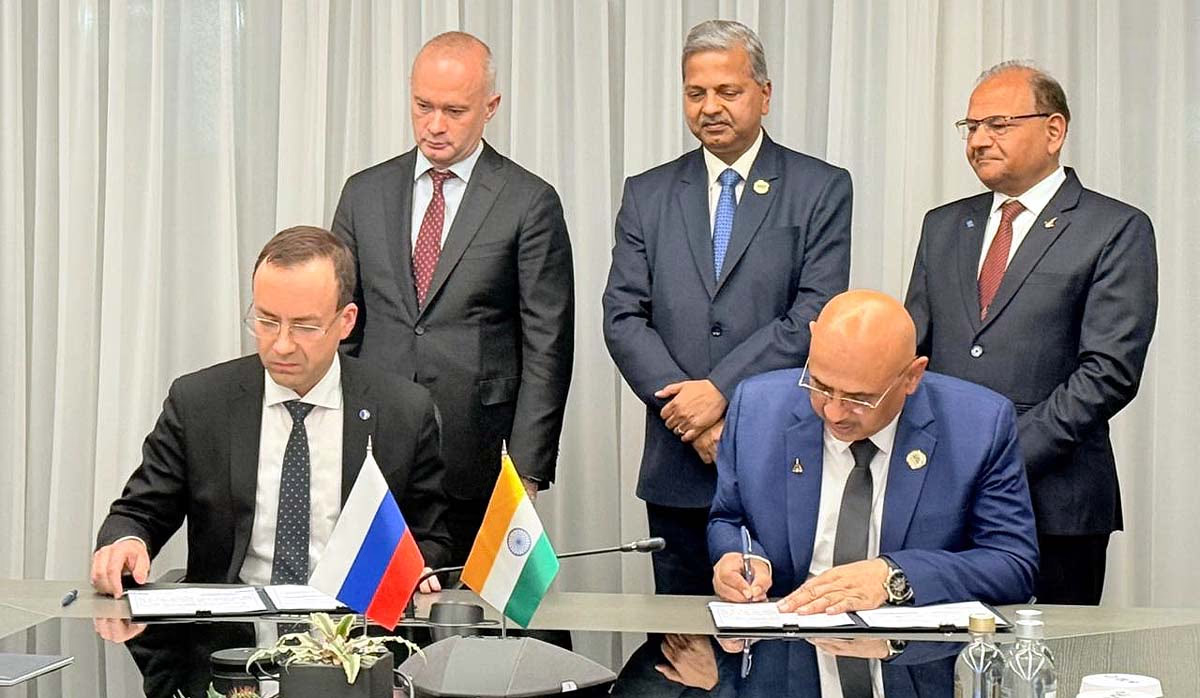
The MoU was signed in Moscow on October 27, with HAL representative Prabhat Ranjan and UAC's Oleg Bogomolov sealing the deal, in the esteemed presence of HAL Chairman and Managing Director Dr. D.K. Sunil and UAC Director General Vadim Badekha.
Also Read:
Source: aajtak
Dr. Sunil stated that this is a testament to our capabilities. Not only will we build aircraft, but we will also connect India’s smaller cities via air. Under the MoU, HAL gains the complete rights to manufacture the SJ-100 planes for domestic customers like airlines, with factories to be set up in India for assembly and production. This stands as another milestone in India-Russia military and civil cooperation.
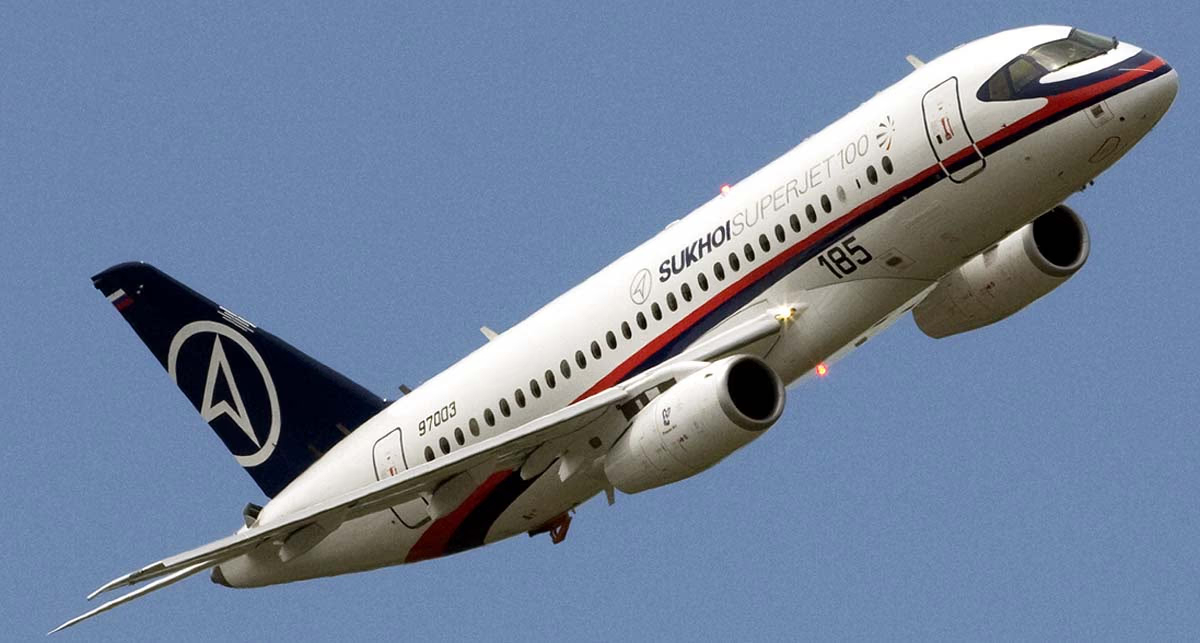
The SJ-100 is a cutting-edge twin-engine narrow-body passenger aircraft, tailored for short to medium flights. Key features include...
Learn More:
Capacity: Accommodates 75-98 passengers.
Range: Flies up to 3000-4000 kilometers.
Speed: 800-900 km/h.
Fuel Efficiency: Cost-effective and environmentally friendly.
Source: aajtak
Globally, over 200 SJ-100 aircraft are already in operation across more than 16 commercial airlines, including Russian airlines. In India, it's an ideal fit for the UDAN (Regional Connectivity Scheme), envisioned to link small airports — making flights from Guwahati to Agartala or Jaipur to Jodhpur faster and more affordable.
Despite being the world's third-largest aviation market, India faces regional connectivity gaps. In the next decade...
For regional flights: Over 200 such jet planes will be needed.
In the Indian Ocean region: An additional 350 planes to connect tourist destinations like the Maldives and Sri Lanka.
Currently, India imports such planes, which are costly. Manufacturing the SJ-100 could lower the costs by 20-30%, making air travel more accessible and boosting tourism and business.
Dive Deeper:
This is a significant milestone for India. The last time HAL initiated aircraft production was in 1961 with the AVRO HS-748, which lasted until 1988 when India acquired technology from Britain. However, the SJ-100 will be the first complete passenger aircraft designed and assembled in India. HAL, primarily known for manufacturing fighter jets (like Tejas), is now venturing into the civil sector.
Source: aajtak
This agreement not only targets aircraft production but aims to fortify the nation's standing...
Jobs: Thousands of direct jobs (engineers, technicians) and millions of indirect jobs (supply chain) will be created.
Private Sector: Companies like Tata and Reliance could become partners.
Self-Reliant India: Prime Minister Modi's vision – reducing imports, increasing exports. The SJ-100 could potentially be exported across Asia and Africa.
With the MoU signed, the next phases include...
Design Transfer: Technology sharing from UAC.
Factory Setup: Production to commence at HAL's Bengaluru or Nashik plant, with the first aircraft expected by 2026-27.
Testing: Certification under Indian standards (DGCA).
This collaboration will bolster India-Russia relations amidst American sanctions.