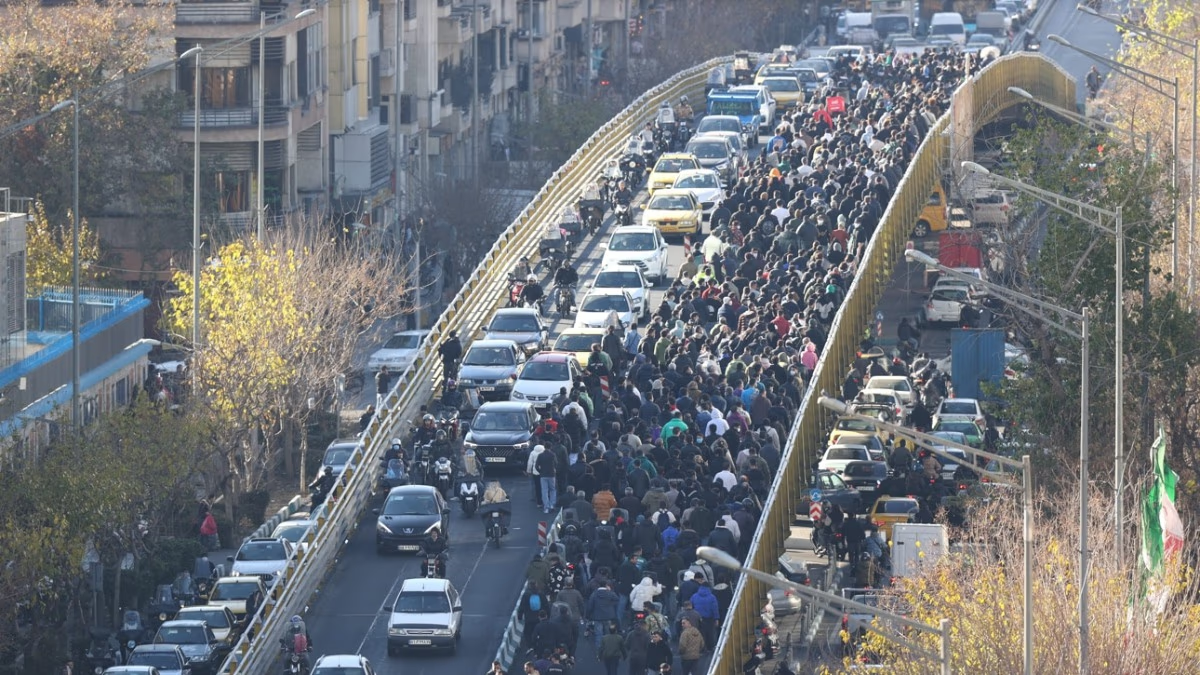
With the advent of the new year, protests in Iran against Supreme Leader Ayatollah Ali Khamenei have turned violent. The demonstrations against the nation’s worsening economy, inflation, and currency crisis have seen several demonstrators lose their lives, along with the death of a security force member. According to the international news agency Reuters, this is considered the largest popular uprising in the country in the past three years.
Initially confined to major cities like Tehran, protests have now spread to rural areas. Confirmed fatalities have been reported from the western cities of Lordegan, Kuhdasht, and Isfahan province. Reports from Iranian media and human rights organizations indicate multiple direct clashes between protesters and security forces in various locations.
University students in Tehran have taken to the streets, shouting 'Death to the dictator' chants and displaying support for Reza Pahlavi, the son of Shah Mohammad Reza Pahlavi, deposed in the 1979 Islamic Revolution. From exile in America, Reza Pahlavi wrote on social media platform 'X', “I stand with you. Our victory is certain as our cause is just and we are united.” He emphasized that the country's economic situation would worsen under the current regime.
Three Deaths Confirmed
The Fars News Agency, affiliated with the Islamic Revolutionary Guard Corps (IRGC), reported the deaths of two individuals during clashes in Lordegan. Meanwhile, in Kuhdasht, the death of a member from the Basij volunteer paramilitary force and the injury of 13 people have been confirmed. However, human rights group Hengaw claims that the deceased Basij member was also part of the protest and was shot by security forces. These claims have not been independently verified.
Major Markets Shut Down Due to Protests
Protests have also erupted in several other areas, including Marvdasht in the southern Fars province. Hengaw and other activist organizations have reported arrests of demonstrators in the provinces of Kermanshah, Khuzestan, and Hamedan. As a result of ongoing protests, many major markets have remained closed. Citing cold weather, the government declared Wednesday a public holiday, bringing a large part of the country to a standstill.
Iran Struggles with Severe Economic Crisis
It is noteworthy that Iran is currently grappling with a severe economic crisis. Western sanctions have driven inflation up to 42.5 percent in December, and by 2025, the Iranian rial has lost nearly half its value against the dollar. The situation has been exacerbated by Israeli and American airstrikes in June, leading to significant damage to the country's nuclear infrastructure and military leadership.
The government has responded by tightening security while signaling an openness to dialogue. Government spokeswoman Fatemeh Mohajerani indicated that there would be direct discussions with business owners and trade unions. Nevertheless, the recent developments make it evident that the voices against inflation and economic hardship are escalating into a significant political and social crisis for Iran.