The history of Indian cricket isn't merely a tale of victories, records, and trophies. Its pages are marked by events that continue to unsettle the spirit of the game. The saga of Raman Lamba is one such narrative where talent, conflict, and tragedy intertwine seamlessly.
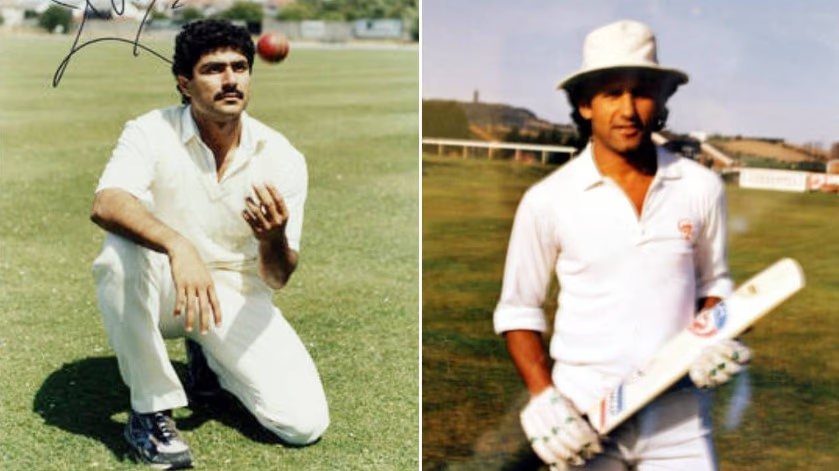
Born on January 2, 1960, in Meerut, Uttar Pradesh, Raman Lamba was a left-handed aggressive opening batsman. Despite playing only four Test matches for India, he carved out a distinct niche in domestic cricket. He was considered a reliable opener in the eyes of selectors, but Lamba's identity was not confined to his runs or Test caps alone.
A particular incident forever linked with his career left a deep stain on the history of Indian domestic cricket. This is where his story intersects with a player whose name might be lost in statistics, but remains remembered for 'one day'. That player was Baroda's fast bowler Rashid Patel.
Several players reached the Indian Test team only to not don the national jersey again post-debut. Rashid Patel was one among them. Tested against New Zealand in a Mumbai Test in November 1988, his bowling lacked impact. His international career ended with that one match.
Though his name may fade in statistical records, a day linked with Raman Lamba's career cements Rashid Patel a permanent spot in Indian cricket's darkest chapters.
1991 Duleep Trophy Final: When Cricket Was Shamed
From January 25 to 29, 1991, at Jamshedpur's Keenan Stadium, the Duleep Trophy Final witnessed a clash between North Zone led by Kapil Dev and West Zone under Ravi Shastri's leadership.
North Zone declared at 729/9. West Zone was all-out at 561 runs. After four days of play, results seemed nearly decided. On the fifth and final day, North Zone started their second innings with the time remaining.
Opening were Ajay Jadeja and Raman Lamba, who had scored 180 in the first innings. The score reached 59/0 in 9.5 overs. Everything seemed normal, but the atmosphere soon shifted.
Source: aajtak
... From Furious Beamers to Uprooted Stumps
Rashid Patel, bowling around the wicket in anger, was delivering balls in dangerous areas. Lamba expressed displeasure, showing the bat handle. This was the moment patience shattered.
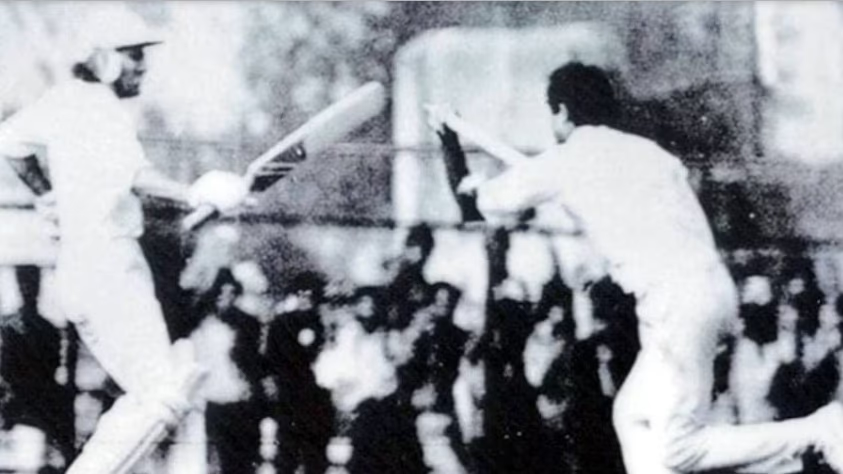
Rashid bowled a beamer from nearly half-pitch aimed at Lamba. Lamba narrowly escaped a headshot. Subsequently, Rashid uprooted a stump, charging at Lamba intending to attack, pursued right up to the third man. Lamba guarded himself as the entire stadium watched in shock.
The incident didn't stop there. The spectators' anger erupted, stones were thrown. Vinod Kambli, fielding at the boundary, got injured. The situation worsened, players were sent to the pavilion, and the trophy was awarded to the winning captain indoors.
After this disgraceful event, a 13-month suspension was imposed on Rashid Patel, while Raman Lamba faced a 10-month ban. Lamba wasn't entirely innocent—the sledging during the match fueled the fire. However, the violence inflicted a profound blow to cricket's grace, wounding the essence of the sport.
Life Left on the Field
Raman Lamba's story doesn't end here—it turns even more tragic. In 1998, he was playing club cricket in Bangladesh, fielding at short leg without a helmet during a match in Dhaka.
Batsman Mehrab Hossain hit a fierce shot that struck Lamba's head directly. He collapsed on the field. The situation was dire. A neurosurgeon was summoned from Delhi, but despite all efforts, Lamba couldn't be saved. He passed away at the age of just 38.
Raman Lamba joined the list of cricketers who died on the field—like England's Andy Ducat and Wilf Slack. His death raised serious concerns about safety while fielding at short leg, sparking fresh debates about helmet usage. His story persists as a reminder that no matter how great cricket is, there's nothing more precious than a player's life.