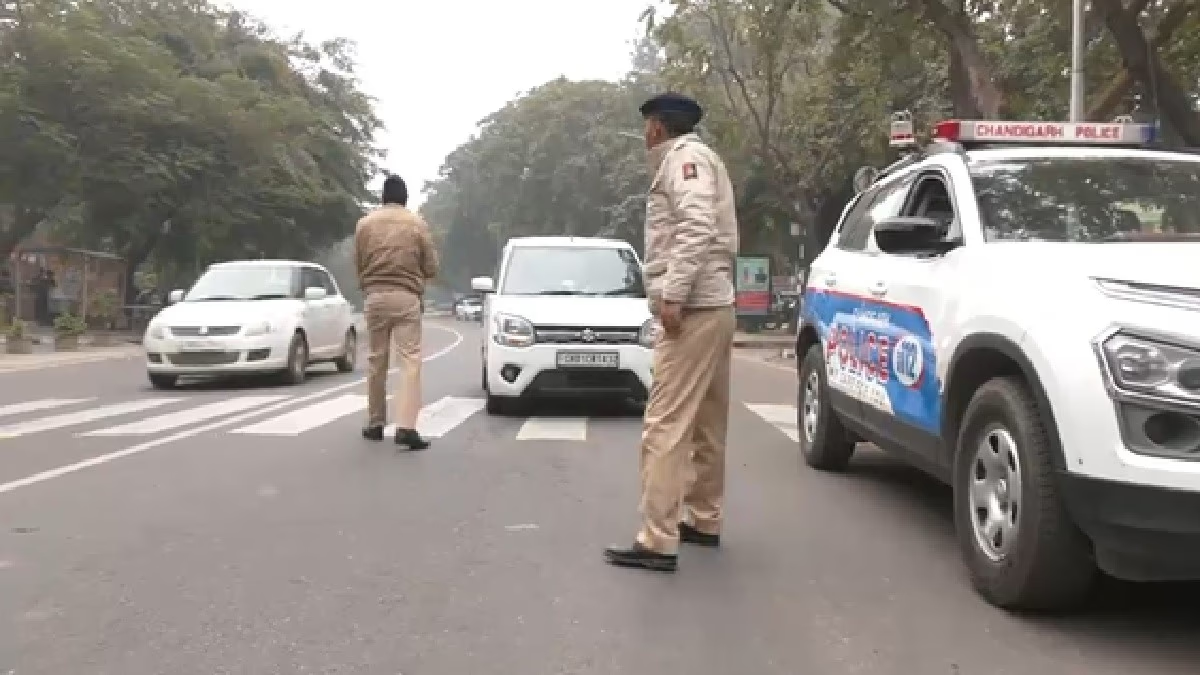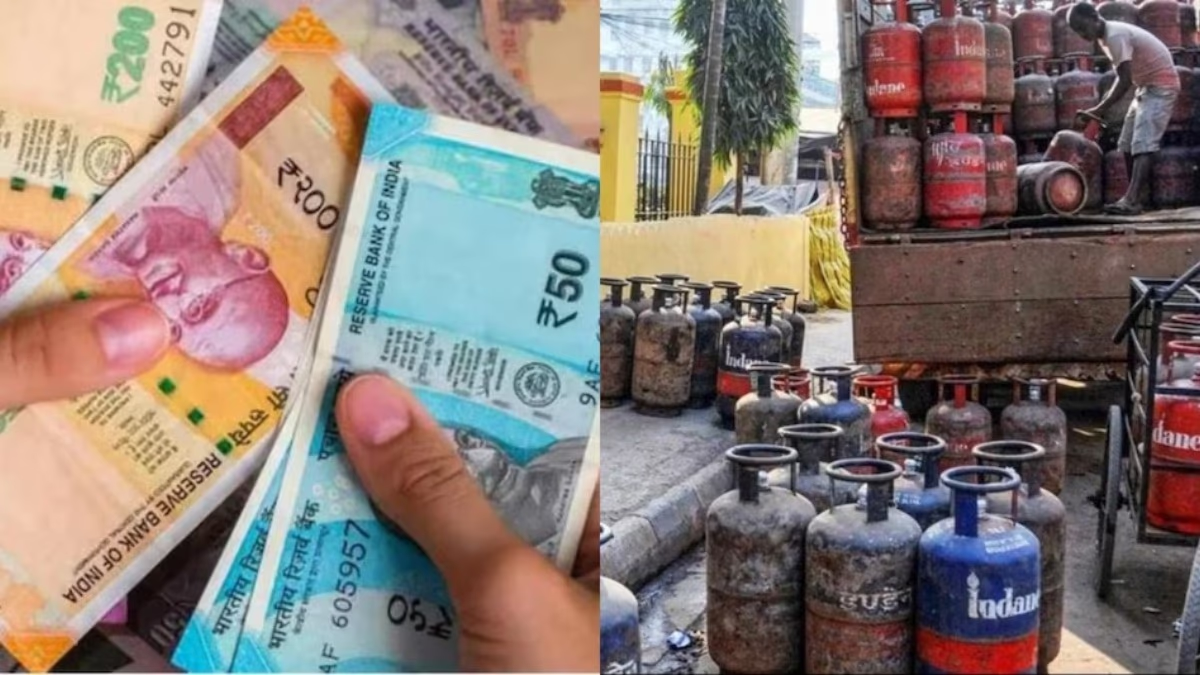
The New Year 2026 has kicked off, and the first day of the year has introduced several significant changes nationwide. Yes, starting January 1, 2026, various rules are coming into effect that will undoubtedly increase the financial burden from the kitchen to the automobile enthusiast. Oil marketing companies have announced substantial price hikes for LPG cylinders across all cities, including Delhi, Mumbai, and Kolkata. Meanwhile, major automobile sector players have increased car prices, catching consumers off guard. Let's delve into these five major changes...
First Change: Costlier LPG Cylinders
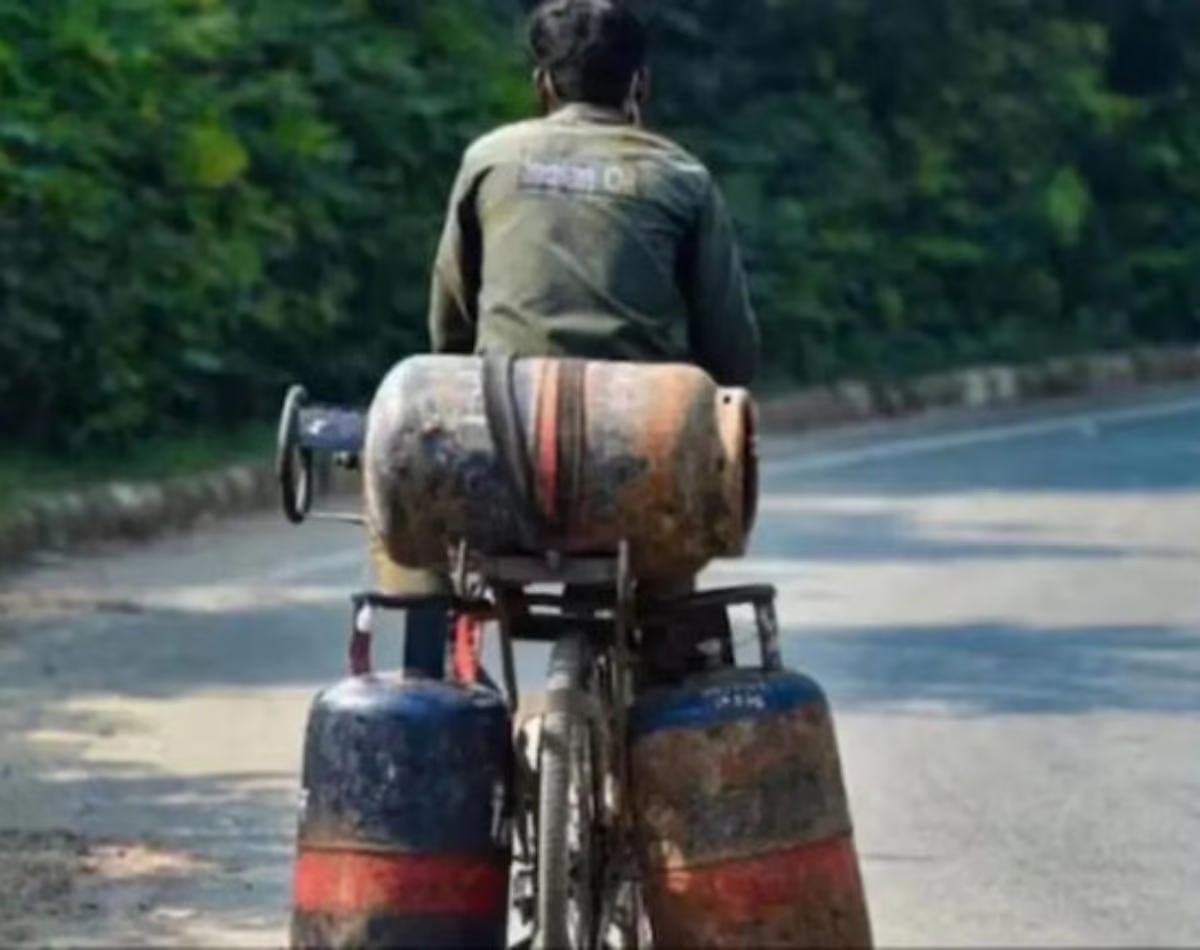
The new year began with a financial jolt as oil marketing companies raised LPG cylinder prices nationwide. This increase applies to the 19 kg commercial LPG cylinders, making it Rs. 111 more expensive from the first day of the year.
Source: aajtak
With this latest change, a 19Kg LPG cylinder available in Delhi for Rs. 1,580.50 now costs Rs. 1,691.50; in Kolkata, it has risen from Rs. 1,684 to Rs. 1,795; in Mumbai from Rs. 1,531.50 to Rs. 1,642.50; and in Chennai from Rs. 1,739.5 to Rs. 1,849.50. Household gas cylinder prices remain unchanged, retaining April 8, 2025, rates.
In contrast, just before the year's start, Delhi-NCR residents received a welcome relief with a PNG price reduction. IGL announced a Rs. 0.70 per SCM reduction for domestic PNG for its customers. Consequently, PNG prices in Delhi adjusted to Rs. 47.89 per SCM, Gurugram to Rs. 46.70 per SCM, and in Noida, Greater Noida, and Ghaziabad to Rs. 47.76 per SCM.
Second Change: Cheaper Air Travel
While LPG price hikes might sting, January 1, 2026, holds pleasant news for air travelers, bringing relief through a decrease in jet fuel prices. Companies have reduced the cost of aviation fuel or jet fuel. In Delhi, the price has dropped from Rs. 99,676.77 to Rs. 92,323.02 per kilolitre.
Source: aajtak
In Kolkata, air turbine fuel prices decreased to Rs. 95,378.02 per kilolitre from Rs. 1,02,371.02; in Mumbai, from Rs. 93,281.04 to Rs. 86,352.19; and in Chennai, reduced from Rs. 1,03,301.80 to Rs. 95,770. A reduction in ATF prices reduces operational costs, potentially lowering air ticket prices and making travel more affordable for flyers.
Third Change: Expensive Cars
January 1, 2026, brings a shock for car buyers as many major automakers have decided to increase car prices. Citing rising input costs and operational expenses, these companies have announced price hikes from January 1.

Source: aajtak
German automaker Mercedes-Benz raised prices across all models by 2%. BMW increased its car prices by 3% in India from the first day. Chinese automaker BYD announced a price increase for the Sealion-7, and MG Motors has hiked petrol, diesel, and EV variants by 2%. Japanese carmaker Nissan has increased its prices by 3%, while Renault hiked all models by 2%. Honda Cars may also adjust prices this month.
Fourth Change: Zero Tariff Exports to Australia
Central Commerce Minister Piyush Goyal announced last Monday that to mark three years of the India-Australia Economic Cooperation and Trade Agreement, zero-tariff exports have been decided. From January 1, 2026, Australia will enforce zero tariffs on all Indian exports. This means from the first date, 100% of goods exported from India to Australia will face no tariffs.

Source: aajtak
Fifth Change: Abundant Bank Holidays in January
January brings numerous significant changes, accompanied by numerous bank holidays (Bank Holiday In January 2026). According to the Reserve Bank of India's (RBI) uploaded list, banks will remain closed for 16 days in January. Various occasions, from Makar Sankranti to Republic Day, will cause bank closures. However, these bank holidays may vary across states. Despite the holidays, you can manage your banking tasks via online banking, which remains open 24x7.