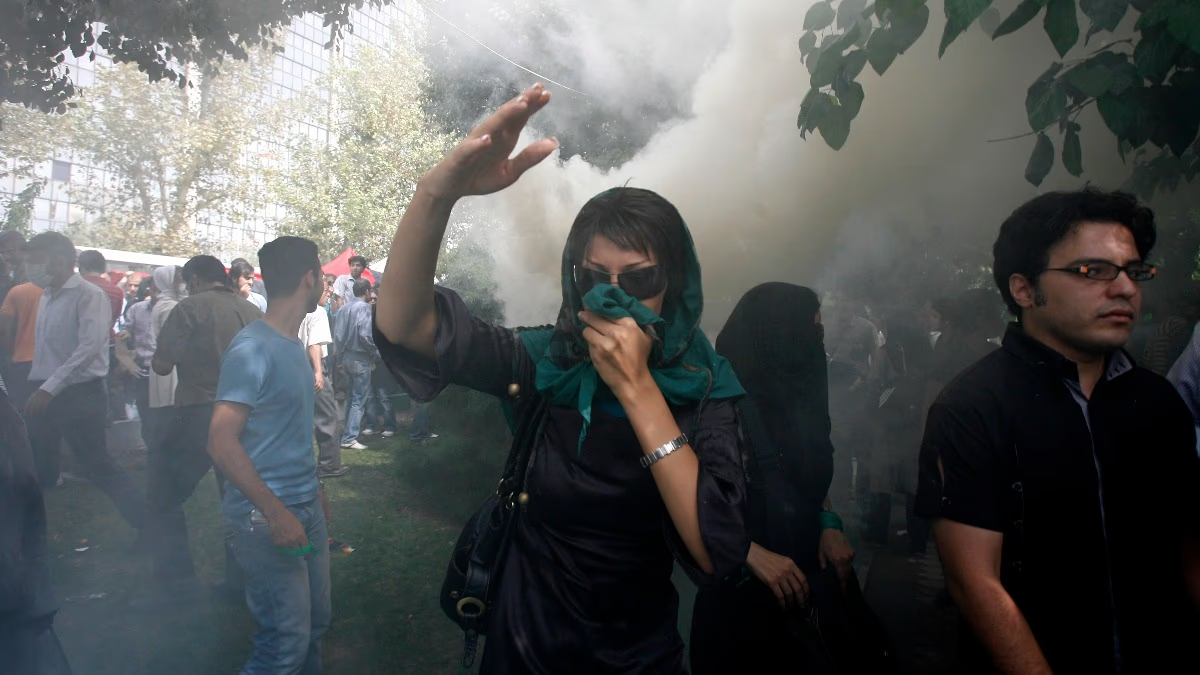
Iran is currently facing one of its toughest challenges. Over the past week, images emerging from across the country tell a tale not of a single city's anger but of a mass uprising enveloping all of Iran. Millions have taken to the streets, chanting against the regime, directly challenging Supreme Leader Ayatollah Ali Khamenei, and demanding a change in governance. Could we see the onset of another war as soon as the beginning of 2026?
The unrest did not arise spontaneously. It is the culmination of years of pent-up frustration now erupting like a volcano. Inflation, unemployment, devalued currency, and international sanctions have made life increasingly difficult for ordinary Iranians, with daily essentials slipping beyond their reach. The declining Iranian currency has hit unprecedented lows, prompting citizens to protest in droves.
Protests began on December 28 in Tehran when shopkeepers and traders started demonstrating against inflation and economic policies. This quickly swelled into a nationwide movement, not confined to merchants alone. Students from colleges and universities, particularly Generation Z grappling with job scarcity, have emerged as a pivotal force. The youth perceives the current system as one jeopardizing their future.
These protests are marked by an unprecedented female participation. In a nation with strict social constraints and conservative norms, women marching in solidarity presents a significant challenge to the regime. Consequently, the government and security forces have responded with intense force. Measures like baton charges, shootings, mass arrests, and detainments have become commonplace. Incidents of arson are rising; vehicles and buildings burn as violence claims at least 19 lives.
Despite the regime's strictness, the movement is gathering momentum. In over 25 provinces, anti-regime sentiments resonate on the streets. Calls are not just for reforms but complete regime change. Some quarters even voice desires for the monarchy's return. This is an alarming bell for Khamenei and the current power structure.
Meanwhile, U.S. intervention has made the situation even more delicate. U.S. President Donald Trump has openly warned Iran that if the oppression of peaceful protesters continues, America is ready to intervene. Although this statement has emboldened protesters, it has also made the regime more aggressive. Iran's top leadership accuses Trump of interference and alleges that America is secretly conspiring for war.
This tension is rising at a time when memories are fresh. Just six months ago in June, Iran faced attacks from America and Israel. During a 12-day conflict between Israel and Iran, America entered the fray, resulting in significant bombing of Iran's nuclear facilities. Now, with internal chaos and external pressures, Iran's challenges have multiplied.
Israel's involvement also deepens this crisis. Reports indicate that Israeli Prime Minister Netanyahu has convened a cabinet meeting, greenlighting military action on Iran. Netanyahu has publicly voiced support for anti-regime protests in Iran, affirming Israel's solidarity with the Iranian people's struggle for freedom. This has intensified fears in Tehran.
Iran finds itself in a dual crisis. Domestically, it faces millions demanding regime change and expressing anger over economic mismanagement. Simultaneously, military powers like the U.S. and Israel are exerting pressure openly. Despite its claims of enhancing air defense and military capabilities in recent months, internal rebellion has weakened Iran's stance.
The head of the Iranian military attributes the protests to provocation by the U.S. and Israel, yet the visible anger on the street suggests that the issues transcend external conspiracies. This is the largest movement since Mahsa Amini's death protests in 2022. This time, however, the issue is not merely social freedom but economic survival and the direction of governance. The fundamental question is not why protests are happening in Iran but whether the current regime can withstand this public pressure amid international threats and the looming risk of war, or will 2026 mark the beginning of a new and dangerous era for Iran and the entire Middle East?