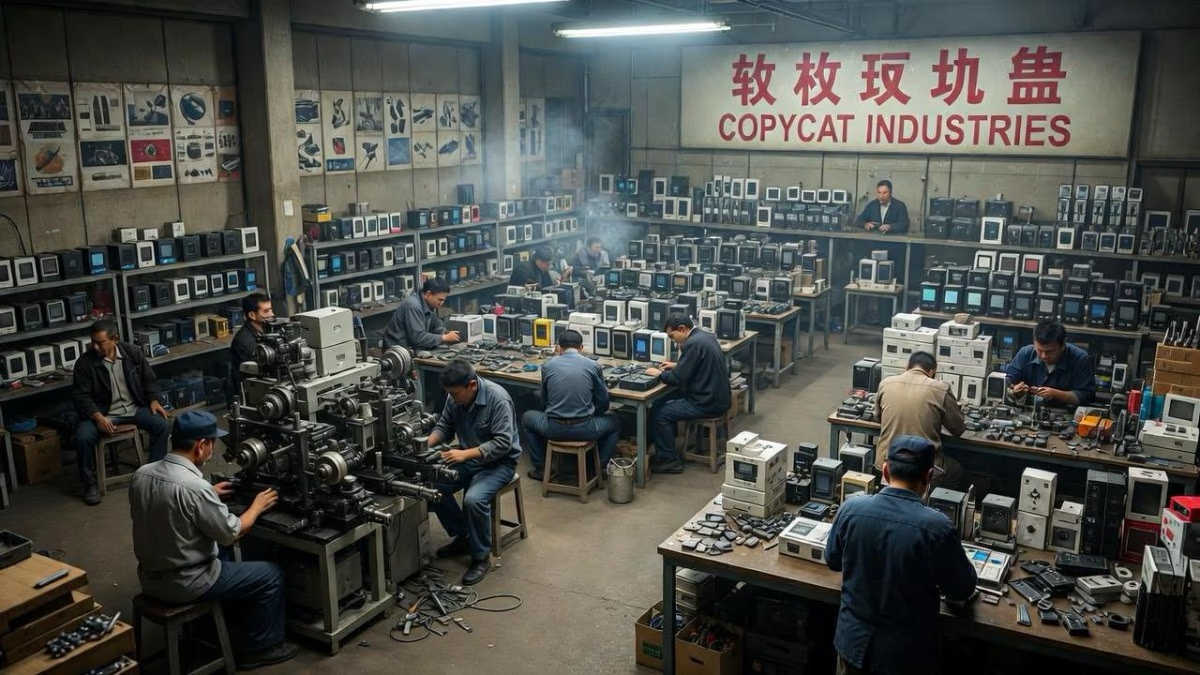
In China, the term 'Shanzhai' is popular, meaning a den of bandits. Today, it symbolizes areas producing pirated or counterfeit goods globally. In India, we see them as 'no guarantee' products. Like an audacious adventure, they aim for great success.
China's growth story is often puzzling. Behind its success lies its adept copycat policy. Far from feeling any embarrassment, China turned copying into a strength, now aspiring to be a world innovation hub, yet founded mostly on imitation. Let's explore how China transformed copying into a successful business strategy.
'No Shame in Copying' and 'Fast Follower' Strategy
It's easy to laugh at the Chinese robots showcased at the AI Summit. But the business culture in China speaks clearly: 'There's no shame in copying.' Unlike the Western emphasis on originality, China embraced the 'fast follower' strategy. The idea is simple: why waste time and money reinventing a successful idea from scratch? Chinese companies adopt successful ideas, modify them a bit, and release them in the market at lower costs.
China’s Copycat Policy Marketing Mastermind
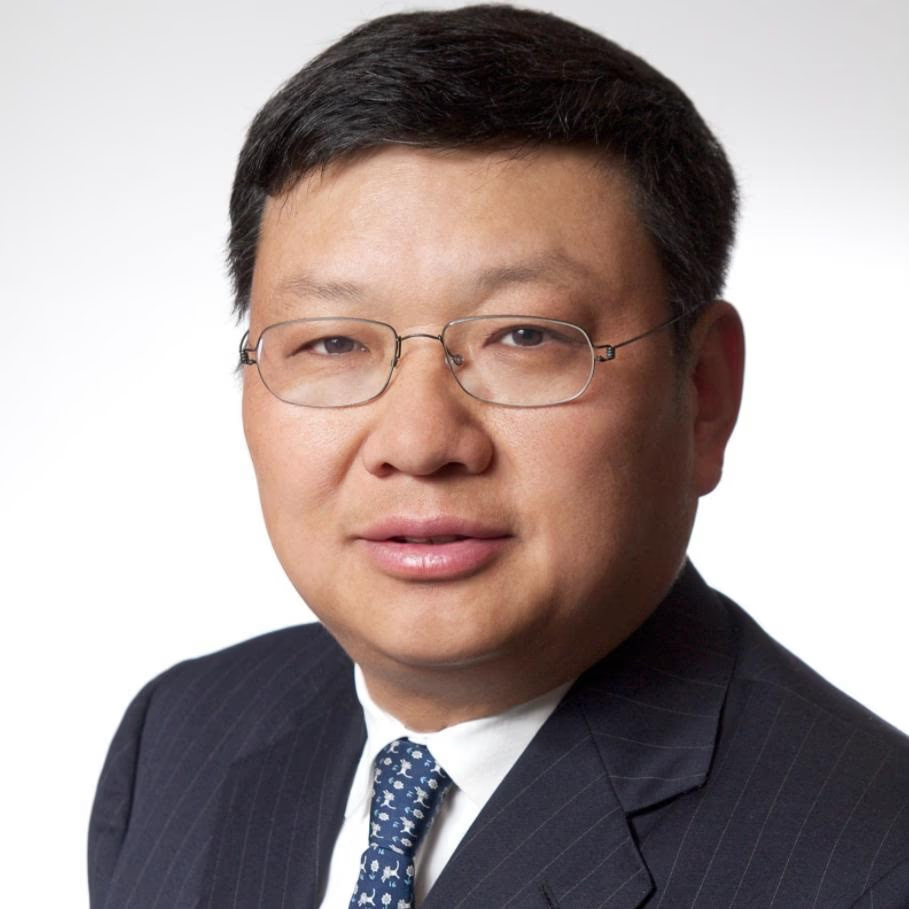
Professor Xiang Bing is credited as the mastermind behind China's copycat policy. He founded the Cheung Kong Graduate School of Business in 2002, and his students now lead companies like Alibaba and TikTok. Learn how he values growth through imitation—it's not wrong to lean on someone else before standing on your own. Recognize the power of replication, as seen by Chinese AI companies like DeepSick, competing and winning against American rivals.
Source: aajtak
Step before running: realizing China's mobile industry became 'China's Apple'
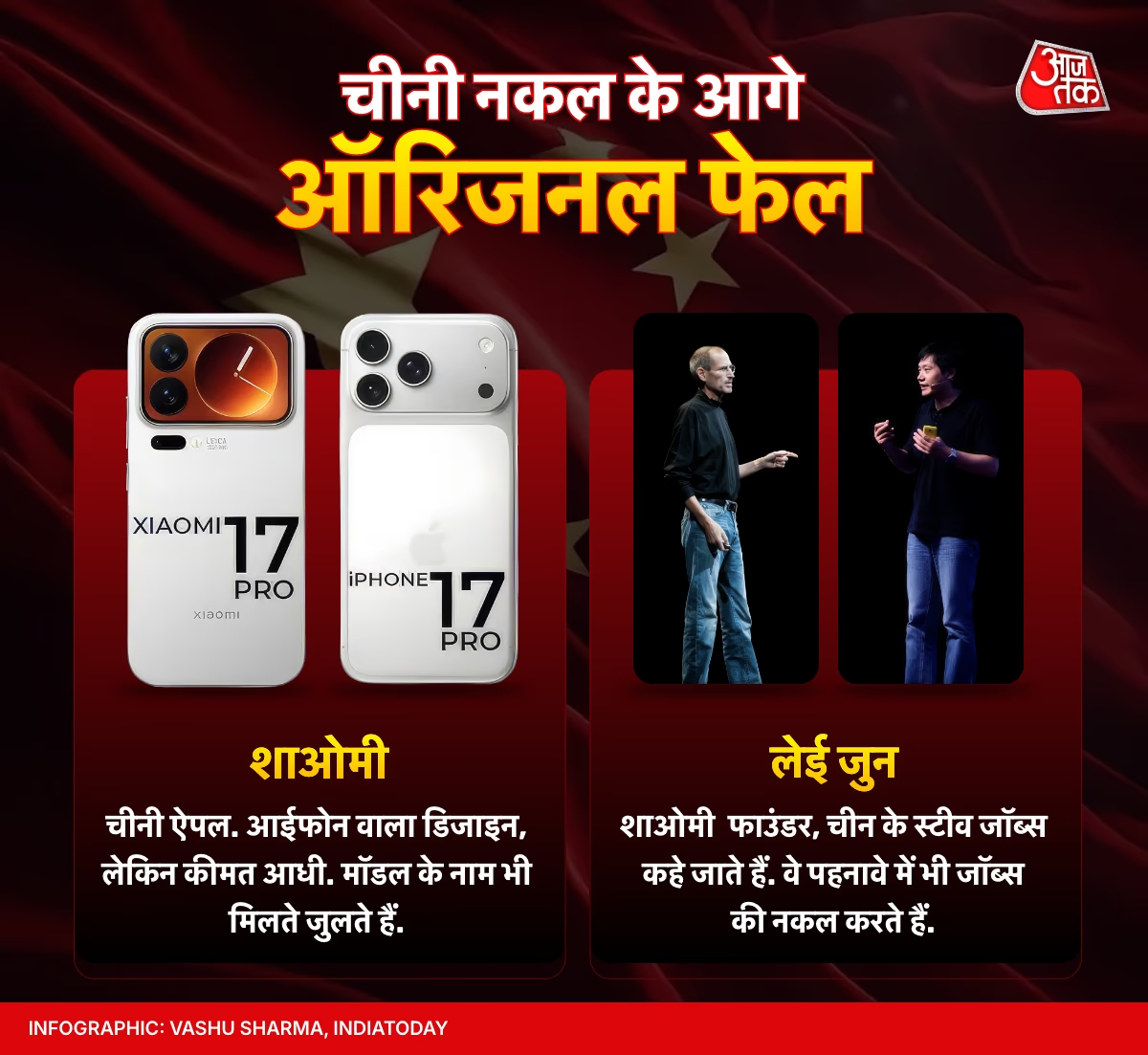
China's mobile industry is a prime example. When Apple launched the iPhone, Chinese companies mimicked not just the phone, but also Apple's stores and Steve Jobs’ presentation style. Xiaomi was once dubbed as 'China's Apple,' with its founder often dressed like Jobs. Xiaomi's phones closely resemble iPhones, yet sold at a fraction of the price. Today, Xiaomi ranks among the world's top smartphone manufacturers with other companies like Oppo, Vivo, and Realme following suit, challenging giants like Samsung and Apple, sometimes even surpassing them in several markets.
Source: aajtak
Replicating famous cars: pushing boundaries
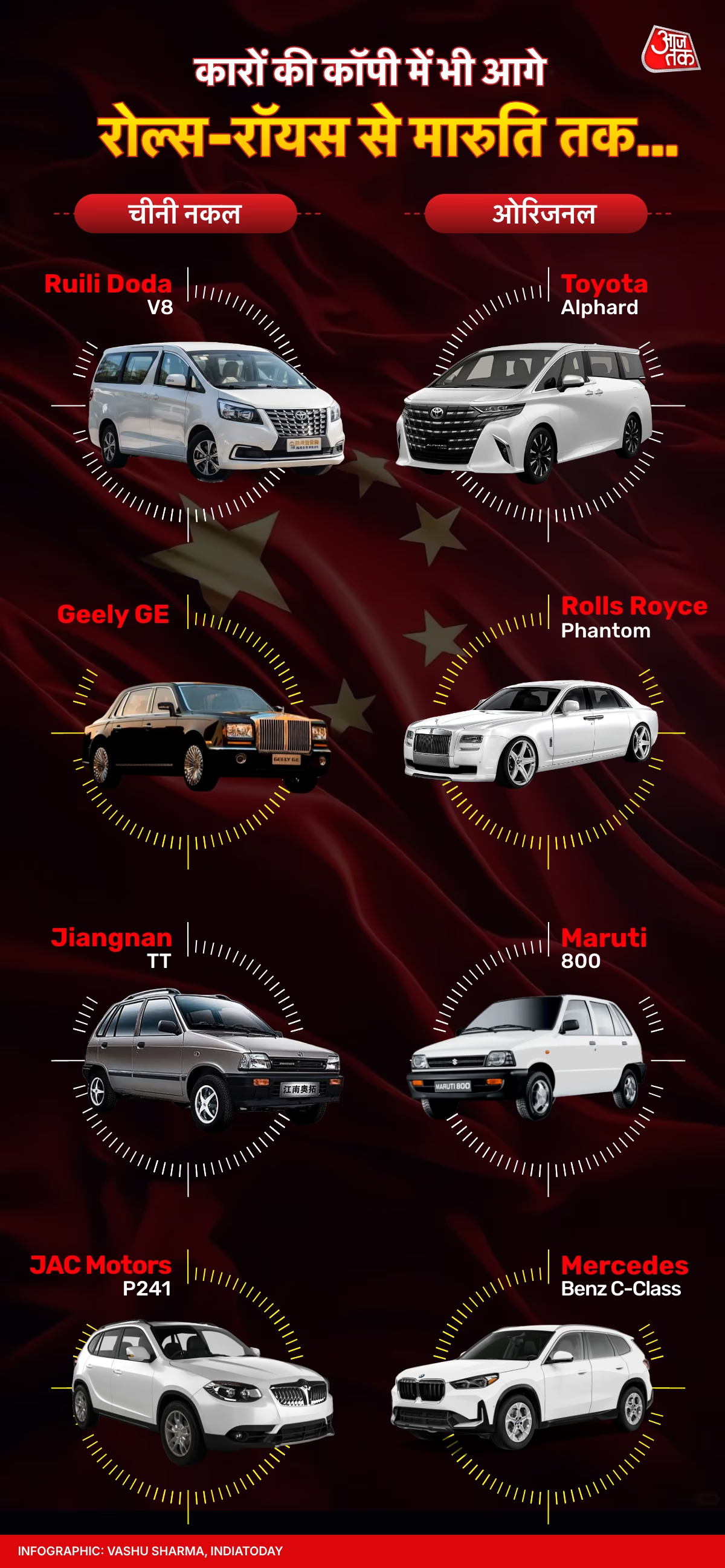
In the automotive industry, Chinese manufacturers have taken imitation to extremes. Cars resembling Range Rovers, Porsches, and Mercedes can be found. The 'Landwind X7’ is a notable copy of a 'Range Rover Evoque.' Meanwhile, Suzhou Eagle merged lo,ming, ming the Porsche logo and Ferrari design to create a curious hybrid car. Global lawsuits have arisen, but Chinese laws favor their domestic firms, viewing design replication as harmless for mass appeal.
Source: aajtak
Acquiring big brands: a strategic move
China hasn't just copied; with financial growth, it began acquiring international brands, following its 'Acquire and Rebrand' strategy. Sweden's renowned Volvo was acquired by China's Geely, leveraging its technology for better domestic vehicles. Similarly, the British MG Motors now operates under China's SAIC. Lenovo, a Chinese brand, took over Motorola's legacy and technology, selling globally under its name.
Government support: funding and subsidies
China's government plays a crucial role in this industry. Unrestricted funding and subsidies back its companies extensively.
Security: Providing robust legal shields, China banned foreign tech giants like Google and Facebook, allowing companies like Baidu, WeChat, and Weibo to thrive—another layer of copying.
Low-cost properties: Factories receive land and electricity at minimal costs, reducing production expenses significantly.
Intellectual property laws: Loose copyright laws exist. If a foreign company establishes a plant, they must share technology with a Chinese partner, which ensures domestic advantages.
Innovation arising from copying
Quickly shifting its copycat image, China is now the top nation for patent filing. Investing billions in three key areas:
Artificial Intelligence (AI): With the world's largest data set, China leads in AI training. It is a global leader in facial recognition and surveillance.
Robotics: Factories increasingly rely on homegrown industrial robots over human labor.
Electric Vehicles (EV): While Tesla remains prominent, China's BYD dominates the market, with superior battery technology that even rivals American and European firms.
China started with copying but now desires to lead in innovation. It demonstrated that with immense production capabilities and government backing, it's possible to make global markets their own. Although it may seem unethical to some, it's been a revolutionary model for economic success, transforming from a nation of mockers to a tech titan.
Lessons for India
As global shifts occur, countries like India face heightened challenges. With a large population reliant on foreign goods, Prime Minister Narendra Modi emphasized manufacturing sector growth to reduce dependence and enhance India's global role. China foresaw this and focused solely on its manufacturing prowess. Call it imitation or exploitation, China's economic engine didn't hesitate about fuel source.
For India, it can't replicate China. It lacks both the authoritarian hold and the audacity to openly compromise ethics. Indians may purchase cheap Chinese goods, but will think twice before creating counterfeits. Innovation-trending youth are encouraged to draw inspiration without copy-pasting, fostering unreplicated creations to proudly claim as their own.