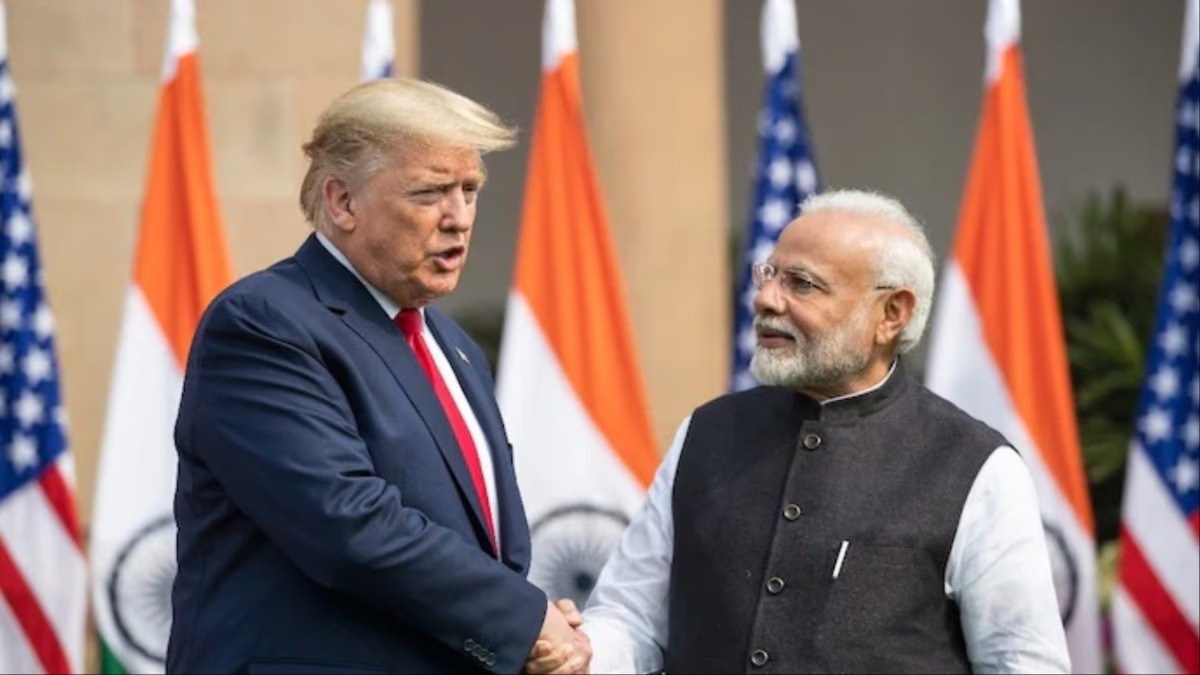
The India-US trade deal is receiving praise even from Pakistan. In Pakistan, it is said that Prime Minister Shahbaz Sharif and Army Chief Asim Munir spent their time trying to please US President Donald Trump, while India secured an agreement on its terms. Among those praising India's astute negotiation tactics is Najam Sethi, a political analyst reputed to be close to Shahbaz Sharif.
The White House has confirmed that a bilateral trade agreement between India and the United States is imminent. Following an interim agreement, Trump reduced the tariffs imposed on India from 50% to 18%. This historic agreement is set to open new market opportunities for farmers, entrepreneurs, MSMEs, startups, and fishermen.
Narrating his thoughts on the India-US trade agreement, Najam Sethi remarked, 'India does not operate under anyone's command, but believes in resolving differences through dialogue.'
'India Doesn't Take Orders'
During a television program in Pakistan, Najam Sethi asserted, 'India follows its own course, making decisions through dialogue and offering concessions that serve its own interests.'
Sethi criticized Pakistan’s diplomatic weaknesses, asserting that decisions there are often governed by emotion rather than pragmatism.
Sethi remarked, 'India doesn't partake in deals merely to honor or flatter another. Our politics often revolves around honor. India, however, engages differently in negotiations.'
Sethi admitted that India made some concessions but rebuffed claims that these concessions disadvantage farmers.
He stated, 'India indeed offered some concessions, which are being critiqued. However, the claim that farmers aren’t protected is baseless. Farmers are safeguarded while allowing American exporters access.'
No Gains for Pakistan from Trump's Sycophancy
Najam Sethi criticized Pakistan's foreign policy failures, noting that the Sharif government extensively praised Trump, yet gleaned no tangible benefits.
He mentioned, 'Since day one, I have advised that Trump is unreliable. He may make demands difficult for Pakistan to fulfill, subjecting us to reciprocal pressures if unmet... Such a situation could arise.'
Sethi continued, 'Our relations with the Trump administration are amiable at the moment, but with the evolving Middle Eastern scenario and restored India-US relations, friction may emerge.'
Trump's February Announcement
The United States had imposed a 50% tariff on Indian goods, including a punitive 25% tariff for purchasing Russian oil.
On February 2, Trump announced that the trade agreement consensus had led to the reduction of tariffs on India to 18%. Trump claimed that India agreed to cease Russian oil purchases, automatically reducing the 25% tax and further slashing a reciprocal tariff from 25% to 18%.
Negotiations for a trade deal between India and the USA had been ongoing for an extended period. It was speculated that India was delaying the deal to align with its agricultural and dairy industry interests. Eventually, Trump conceded to India’s conditions in these sectors, ensuring a mutually favorable agreement.