The beginning of 2026 was nothing short of a reality show for the world. In the early days of the year, a sensational event unfolded when American special forces abducted Venezuelan President Nicolas Maduro and his wife in an operation dubbed 'Operation Absolute Resolve' by Donald Trump.
Two weeks after this daring move, it was unclear which country America might target next. Could it be Iran, a long-standing adversary, or perhaps Greenland, part of NATO member Denmark?
Trump’s aggressive rhetoric about Greenland has deeply concerned Europe. The current situation has led some European leaders to find Russian President Vladimir Putin less threatening than before.
Also Read:
On January 16, Germany’s Chancellor Friedrich Merz hinted at significant foreign policy shifts. He suggested that it might be time for the European Union to rebalance its relations with Russia, a surprising move given that just a month earlier, Merz had accused Putin of attempting to rebuild the Soviet Union. At the time, he had stated that if Ukraine fell, Putin wouldn’t stop there.
But 2026 presents a changed landscape. Trump is now perceived as an unstoppable leader.
Source: aajtak
The new doctrine Trump is advocating is being called the ‘Donro Doctrine,’ drawing its name from the 1823 Monroe Doctrine, which declared the American continent a U.S. sphere of influence. For Trump, America is his ‘backyard,’ with Greenland representing the ‘front yard.’
Trump took to his social media platform, Truth Social, to warn that if America doesn’t acquire Greenland, Russia or China might seize it, a scenario he refuses to allow. Advocating for Greenland as critical for his ‘Golden Dome’ missile defense system, akin to Cold War-era defenses installed to monitor potential Arctic routes for incoming ballistic missiles from Russia.
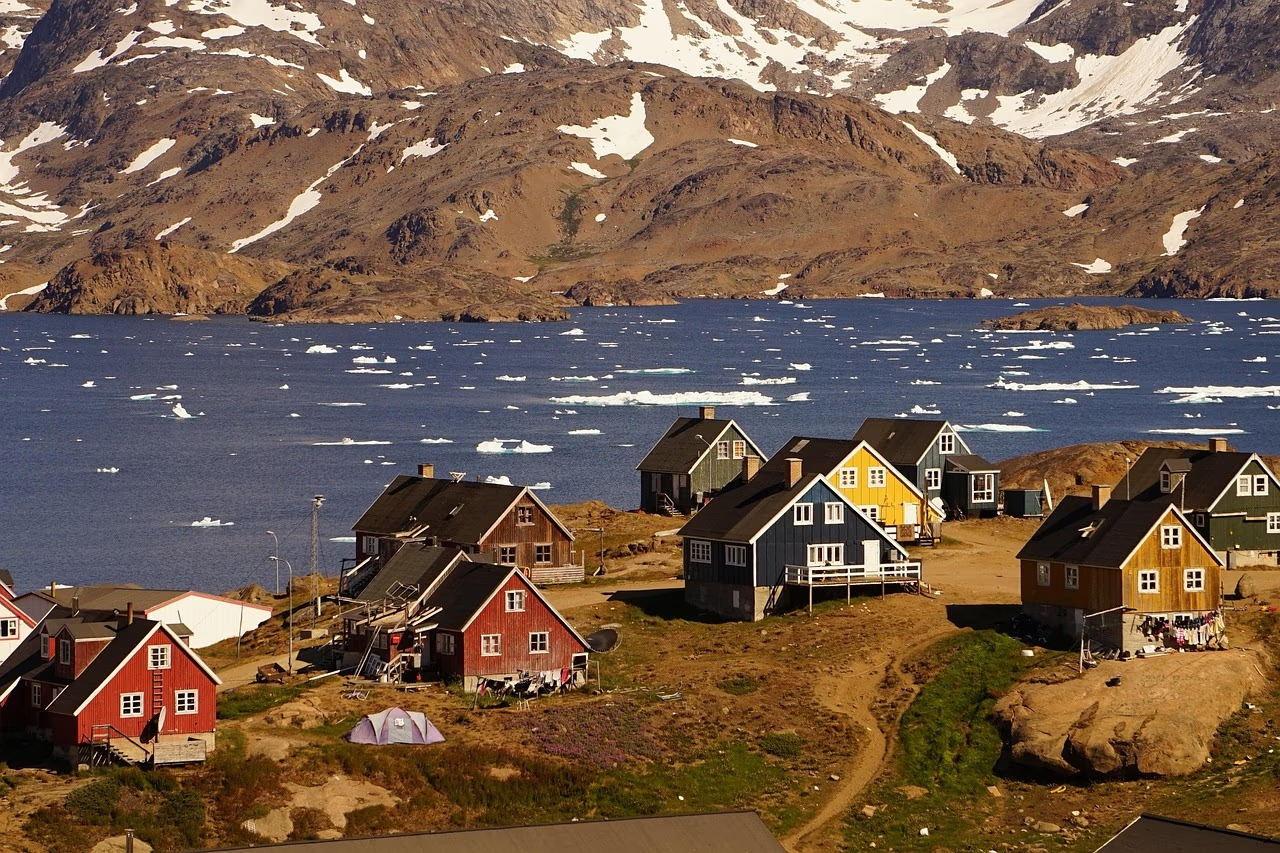
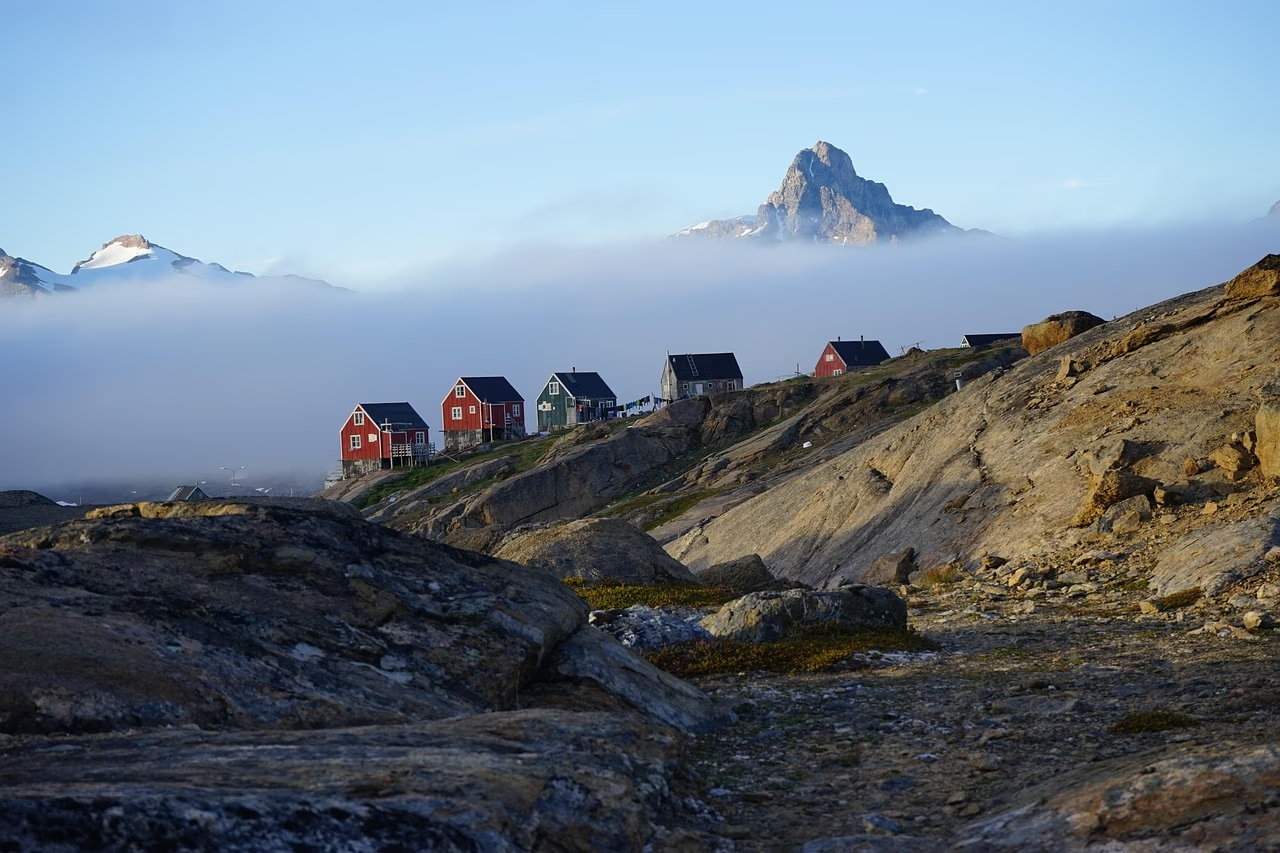
Greenland, the world’s largest island, is two-thirds the size of India, rich in minerals and rare earth metals, and strategically located at the western end of the Northwest Passage.
Also Read:
As ice melts, opening sea lanes in the coming years, the route may significantly reduce shipping time between East Asia and Europe, potentially diminishing reliance on traditional Indian Ocean pathways. The U.S. is already stationed at Alaska, the opposite end of this route.
However, one might wonder why the U.S. couldn’t negotiate strategic benefits with Denmark. According to Denmark, America has even closed various old military bases in Greenland, with only Thule Air Base remaining active.
Trump’s persistence in buying or annexing Greenland seems driven by Manifest Destiny—the 19th-century belief in the inevitable American expansion.
Source: aajtak
This ideology surged during President James K. Polk’s era, when he expanded U.S. territory by approximately a million square miles, acquiring Oregon from Britain and securing Texas and California from Mexico, creating a sea-to-sea nation.
The USA has, historically, been a real estate empire. It acquired nearly 40% of its total land through purchases like the Louisiana Purchase from France in 1803 for $15 million and Alaska from Russia in 1867 for $7.2 million.
Post-World War II, America recognized Greenland’s strategic importance, given its location along the GIUK (Greenland-Iceland-UK) Gap, a crucial route for Soviet naval movements into the Atlantic Ocean. Although a secret proposal to buy Greenland from Denmark was rejected, the U.S. established military bases there.
Also Read:
As the world again witnesses superpower rivalries, Manifest Destiny seems to be reemerging. For Trump, Greenland symbolizes more than strategic necessity—it’s about legacy. A Republican lawmaker has even introduced a bill to make Greenland part of the U.S. This comes as America approaches a pivotal historical milestone.
On July 4, 2026, America marks 250 years of independence, with grand celebrations planned. Trump intends to lead these events, with a magnificent new state ballroom being constructed at the White House.
Should Trump declare Greenland as America’s 51st state on July 4, it could be a historic proclamation, framing him as the 21st-century James Polk. For a New York billionaire real estate mogul, few legacies could be grander.