Come, old and new cricket lovers, listen to a story. It might seem exaggerated, maybe you won't believe everything. But what happened, really happened.
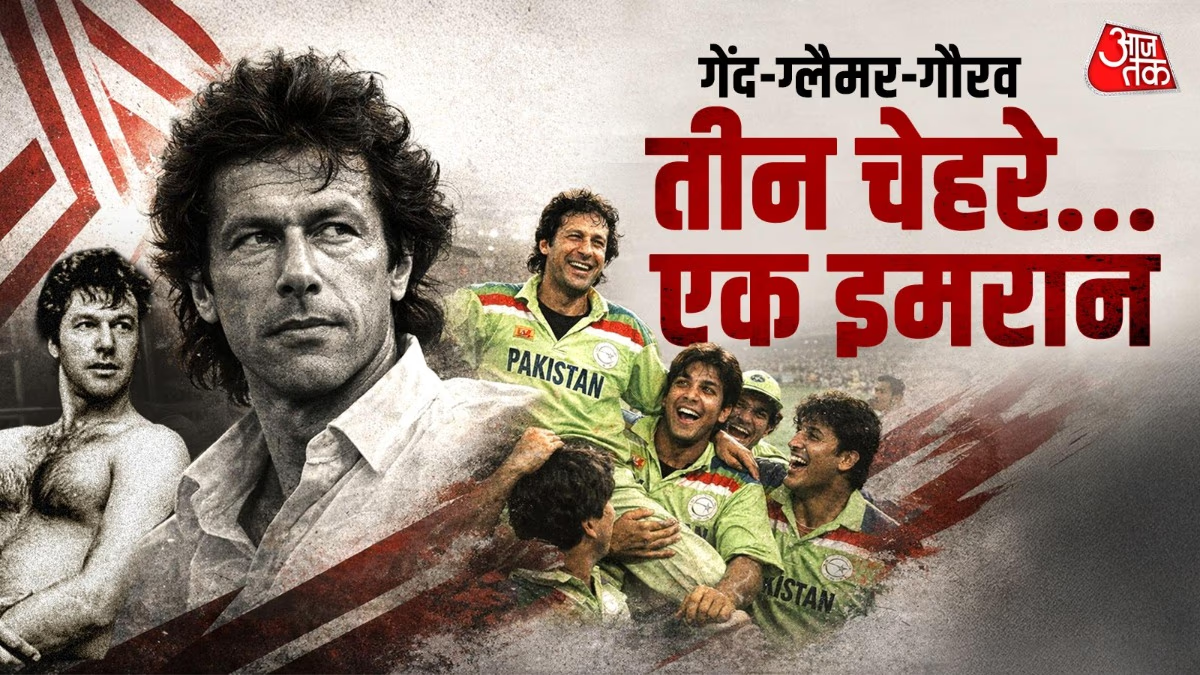
He bowled like a professional hunter, lived like a king, had the charisma of a Greek god, and such determination that he could win a World Cup on sheer willpower. His name was Imran Khan.
While sipping tea, he'd predict victories and then bring them to life on the ground. He enchanted men, women, and Pashtuns alike. He polished rough stones like Wasim Akram, Waqar Younis, and Inzamam-ul-Haq into diamonds. He was not just a captain; he was an influence.
That Magical Charm
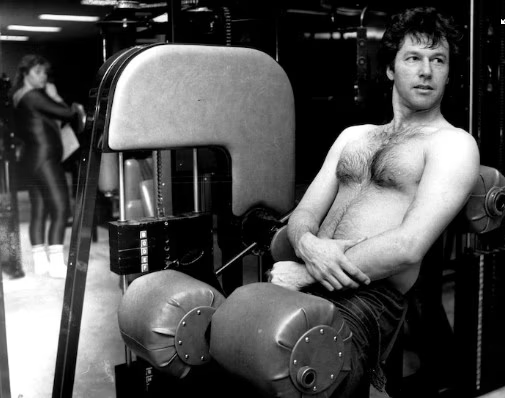
This tale begins with a peculiar fact often associated with Imran, credited to his teammate and dressing room rival Javed Miandad. In a cheeky manner, Miandad said, 'When Imran rubs the ball on the front of his trousers, women get excited. And when he rubs it on the back, the Pashtuns do.'
Source: aajtak
Only Miandad could say such a thing, and only Imran could inspire it. This single sentence captures the magical persona that made him the most charismatic cricketer of his generation. He was both a sex symbol and a strongman. When he entered a room, he caught everyone's attention without uttering a word. Stories of him were as widespread in Lahore's markets as in London's nightclubs.
The Beautiful Predator
My favorite Imran story is from 1982. On a cold December morning in Karachi, India was fighting to save a Test. The score was 102 for 1, and at the crease stood Sunil Gavaskar, synonymous with hope. At the other end, Dilip Vengsarkar was playing glorious cover drives.
There was no TV in our town at that time, just the voice of Chisti Mujahid on Radio Pakistan. Mujahid had a habit of using the full names of players. He announced, 'Imran Khan Niazi is back to bowl. Three slips, a gully, and a forward short leg are in place. Sunil Manohar Gavaskar will face him.' Every Indian fan's heart whispered a prayer.
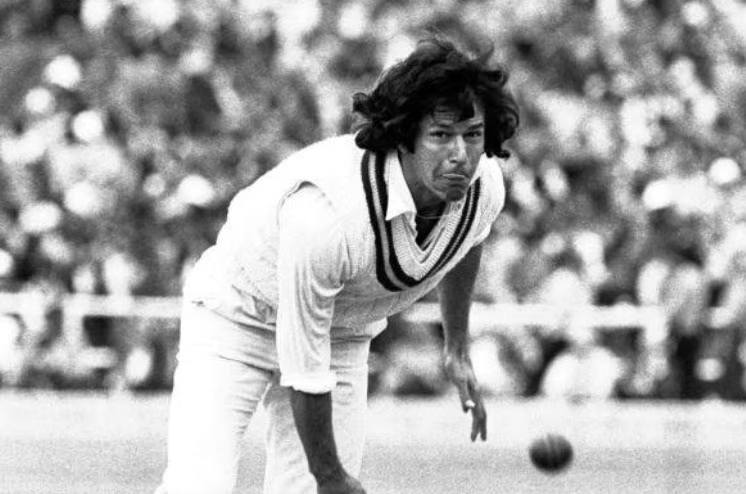
On that tour, Imran became synonymous with terror. He would sprint in with flowing hair and a handsome face, leap like a leopard, and deliver fiery balls. His first delivery whizzed past Gavaskar's bat. India's 'Great Wall' had received a warning. Just a few balls later, Imran pitched one outside off stump, Gavaskar retreated in defense, but the ball suddenly jagged in like a snake and shattered the stumps.
Asif Iqbal remarked in commentary, 'It was a brilliant delivery. It swerved in with pace.' All over India, a hush fell. Back then, Gavaskar was Indian batting. His dismissal triggered a collapse. Then came a rout: Gundappa Viswanath, Mohinder Amarnath, Sandeep Patil, and Kapil Dev crumbled. Imran captured 8 wickets in the innings, and India lost by an innings. Throughout that series, Imran was unplayable, taking 40 wickets in 6 Tests.
Source: aajtak
Calling the Shots
Imran had the grit of a warrior. Long before 'Gangs of Wasseypur's' 'Keh ke Lunga' became famous, Imran had mastered the art of taking calculated risks. Sunil Gavaskar recounts how Imran persuaded him from retiring in 1986. Imran said, 'We're coming to India in 1987, and I want to defeat India with you in the team.'
Back to 1982. A month before the tour, Imran did something no Pakistani cricketer had done. He came to India on a 'personal visit.' Rumor has it he stayed with a famous Bollywood actor in Bombay. He gave interviews in Delhi and Calcutta and calmly declared that Pakistan would win the series decisively. He said this without arrogance, like predicting the weather.
When the series began, the field witnessed what he'd declared in drawing rooms. India lost all three Tests. Then, in 1987, he fulfilled his vision. In the final Test in Bangalore, he made bold choices, had Miandad open, and personally contributed 39 runs to set a challenging target. Gavaskar fought brilliantly in his final innings, scoring 96 over 5 hours but, ultimately, it was Imran's team that triumphed. For him, battles were won first in the mind, and the field was where they were executed.
Women Magnet
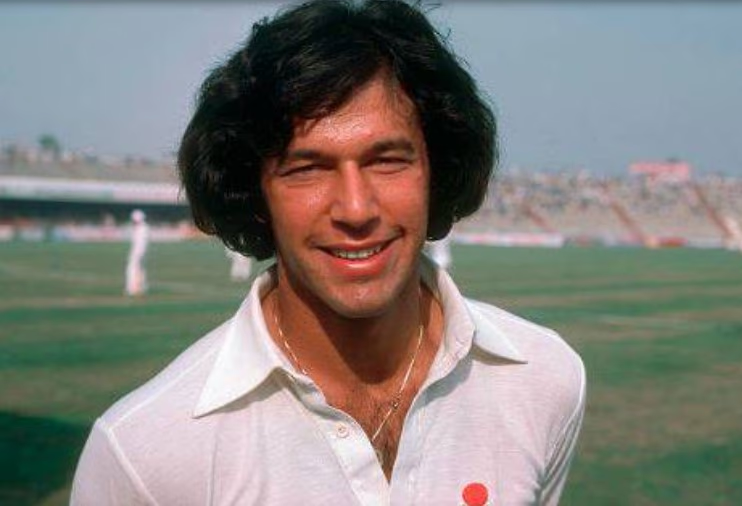
Imran didn't just hunt down batsmen. It was said he bowled 'maiden overs' on the field and bowled over the 'maidens' off it. He was so handsome that Dev Anand wanted him as his film's hero. Imran declined, but he agreed to be the face of an Indian soap brand.
During India tours, hotel lobbies would be filled with women who came just to see him. Wasim Akram recalls Imran taking them to London's nightclubs, where he drank only a glass of milk, while women lined up to shake his hand. London's 'Tramp' nightclub was dubbed his 'living room,' where models and wealthy patrons gathered around him. A model once remarked, 'Imran has a scent that draws women to him.'
Source: aajtak
A Love for Dollars
Apart from women, Imran had a penchant for wealth. In 1977, when Kerry Packer started the 'World Series Cricket,' Imran and some of his associates decided to skip England's Test matches to join him. Asif Iqbal, Zaheer Abbas, and Mushtaq Mohammad also made themselves unavailable for Pakistan's England tour, inciting management's ire, but Imran remained unfazed.
The World Series Cricket presented fast bowlers as gladiators, showcasing figures like Dennis Lillee, Michael Holding, Andy Roberts, and Imran as warriors. They were no longer just sportspersons.
The games played under the bright lights of the night saw traditional white clothing turning colorful. Marketing revolved around personalities. On this stage, Imran emerged like a magnet, drawing the universe to make him extraordinary.
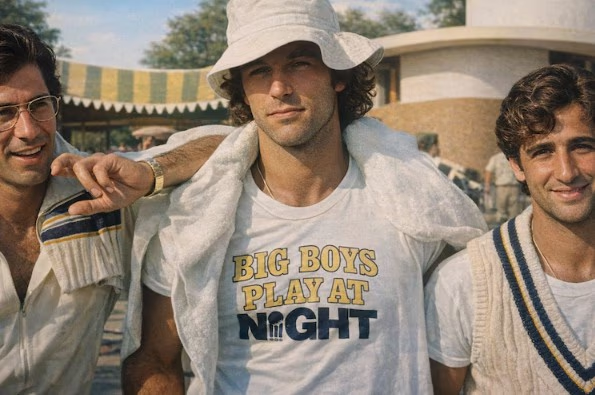
In that era, Imran donned 'Big Boys Play at Night' T-shirts, emerging as an international star. Despite initially hesitating to share his winnings, he didn’t shy away from distributing wealth later on.
Source: aajtak
Judging Diamonds
Great captains win matches, extraordinary ones shape generations. Imran was the latter. He saw Wasim Akram bowling in the nets and immediately picked him. Watching Waqar Younis on TV during a local match, he summoned him to the nets the next day. After seeing Inzamam play in the nets for five minutes, he decided Inzamam would play the 1992 World Cup.
The Injured Tiger...
By 1992, many had written him off as past his prime. He was 39, battling a shoulder injury. Pakistan started losing initial matches. It was then that Imran told his team in the dressing room, 'A cornered tiger is the most dangerous of creatures.'
What followed is history. Pakistan won game after game. Inzamam led the charge against New Zealand in the semi-final, and Wasim Akram conjured magic in the final with his bowling. Imran played a pivotal last knock, scoring 72. When the final ball was bowled, he walked off as a champion, leaving behind a great legacy and a vacuum. Fans remember him to this day. As do the women and Pashtuns.
..And Strength Became Weakness
On the cricket field, destiny awarded him the glory he deserved. But another chapter awaited him in life, seemingly penned by a tragic hand. In politics, Imran's journey has been marked by irony. His strengths and virtues became his greatest weaknesses.
He entered politics with the same zeal, uncompromising stand, and unyielding passion. Where others bartered in covert rooms, quietly conceded and waited for another opportunity, Imran stood his ground. No clandestine talks, no midnight flights to London or Dubai. He faced the military-led government head-on. And they came.
Pakistani novelist Mohammed Hanif meticulously wrote about this end in 'Time' magazine. He noted that Pakistan's military has a playbook for dealing with prime ministers who start taking their position seriously. This made it unsurprising to observers of Pakistani politics that Khan landed in jail. Everyone seemed to anticipate it.
But Imran misplayed his hand. Hanif writes that Imran's plan to confront the army was: 'All he needed was for 20,000 people from each of Pakistan's four big cities to take to the streets, and the generals would be flummoxed.'
And therein lies the biggest tragedy. The man who never feared bouncers, who stood firm when others left, who foresaw his opponent's downfall, who urged a nation to rise—now learns that the people, when the moment is right, often sit back down.