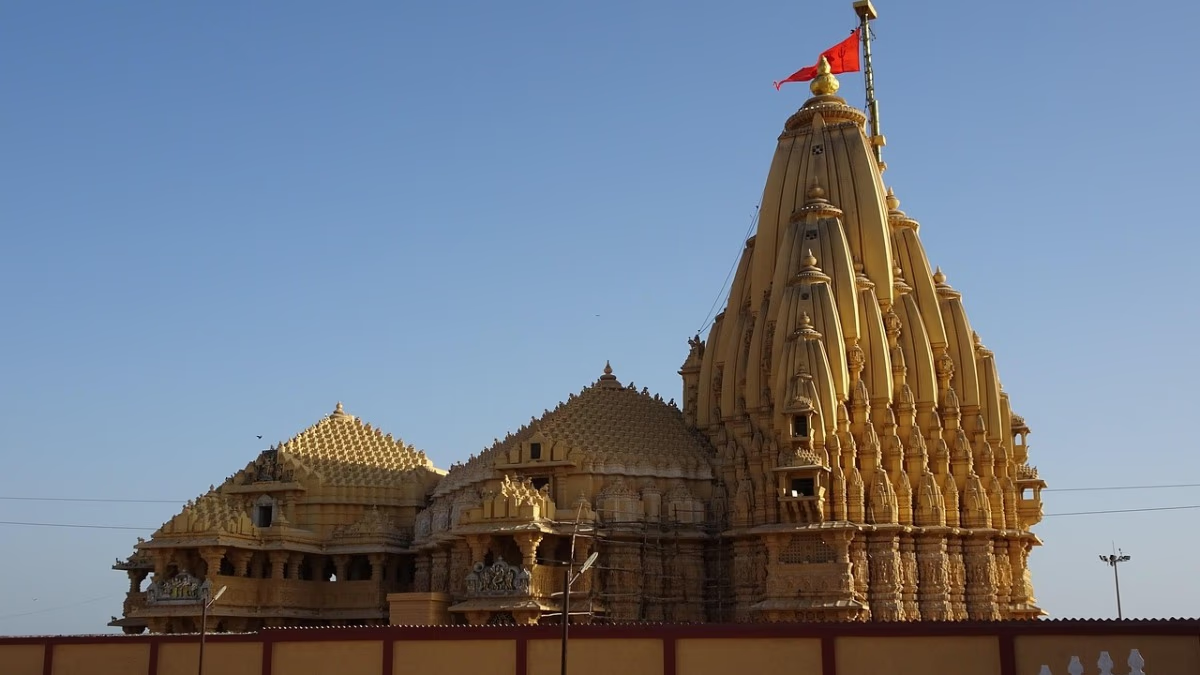
The name Somnath evokes a unique energy, as if centuries of history stand vividly before our eyes. Nestled on Gujarat's coast, this temple is more than mere stone – it's a testament to India's formidable spirit, unwavering even after many attempts to erase it, shining brighter every revival.
The year 2026 marks a monumental event in India's cultural chronicles, as we commemorate a millennium since the first harrowing assault on Somnath in 1026. This isn't a time for mourning but a celebration of resilience – attackers came and went, but the unwavering pillar of faith remains a beacon.
Prime Minister Narendra Modi is set to attend the 'Somnath Pride Festival' on the sacred grounds this January 11th, highlighting the indomitable courage of India's brave souls who ensured Somnath's existence despite repeated invasions. The festivities from January 8th to 11th will showcase glimpses of our nation's glorious civilization. So, let us unfold the saga of this temple, where golden walls once stood, barbarity was resisted, and the indomitable spirit thrived time and again.
The story dates back a thousand years, when India's prosperity and Somnath's splendor reached far shores. The renowned historian Al-Biruni marveled at Somnath's beauty and grandeur, dazzled by its sunlit golden dome visible from miles away. The temple's greatest wonder was the sanctum sanctorum, where Lord Shiva's idol floated without physical support, a mesmerizing blend of engineering and spirituality that defied the ordinary.
However, this wealth and golden aura caught the eye of the plunderer Mahmood Ghaznavi. In late 1024, with 30,000 fierce horsemen, he journeyed from Ghazni, braving many hurdles and Rajasthan's scorching deserts, reaching Gujarat's coast by January 1026. That morning, Somnath witnessed a scene that would be recorded as one of history's bloodiest chapters. The temple's protectors - local residents and devotees - made the ultimate sacrifice. It's said over 50,000 perished defending it, yet Ghaznavi's savagery knew no bounds.
Ghaznavi's greed dominated as he entered the temple, eyeing its vast treasures. He pillaged 56 carved pillars, ripped away silver plates, and broke the 40-man-weight golden chain suspending the great bell. His avarice extended to unearthing its hidden riches. He assumed he obliterated Somnath into oblivion. But he misunderstood – buildings can be razed, stones scattered, but Somnath wasn't just stone walls. It stood as an eternal spirit within Indians, rebounding stronger upon each devastation.
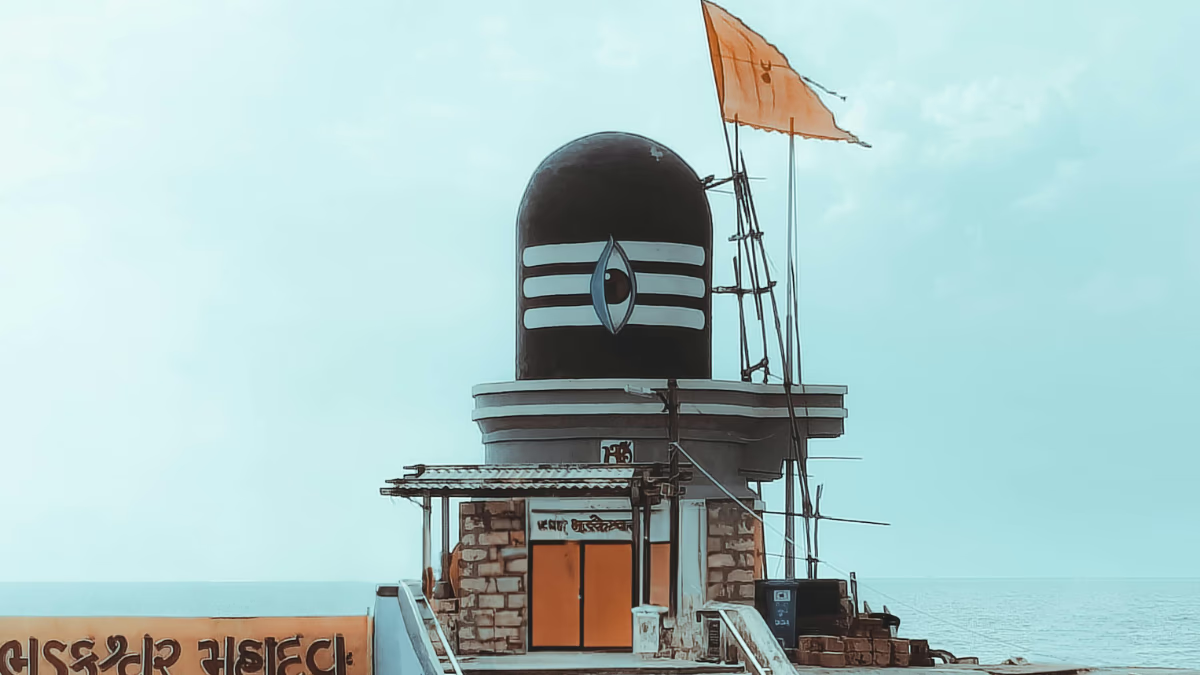
Source: aajtak
The Journey from Ruins to Modern Magnificence
Somnath witnessed many vicissitudes over centuries, yet a new dawn of revival arose post-1947's independence. Merely three months later, India's 'Iron Man,' Sardar Vallabhbhai Patel, visited Somnath's ruins, determined to cleanse its disgrace and restore its ancient grandeur. He vowed to elevate Somnath beyond just a site of worship to a symbol of unity and culture.
The temple completed in 1951, the seventh reconstruction on the original site, was reimagined in Chalukya architectural style under the guidance of K.M. Munshi and Sardar Patel. Although Patel didn't live to see its completion, his resolve still waves in Somnath's high flags today, a testament to India's invincible spirit that thrived through every assault.
Why Does Somnath Hold Primacy Amongst 12 Jyotirlingas?
According to scriptures, among the twelve Jyotirlingas, Somnath ranks first. Legend holds that its main temple was originally crafted in gold by the moon god, then silver by the sun god, wood by Lord Krishna, and later grandly in stone by the Solanki Rajputs. It is believed that daily ablution with Ganga water, brought from 1200 kilometers away, occurs here.
This temple is encircled by the sea on three sides, enhancing its divine aura. During lunar eclipses, millions of devotees gather here. Its spiritual importance is underscored by the belief in the eternal rewards of worship. The 'Pride Festival' from January 8 to 11 offers a chance to acclaim this timeless spiritual energy, with PM Modi personally rallying the country to reconnect with its roots.
Should you wish to partake in this historical 'Pride Festival,' the journey to Somnath is quite accessible. Located near Veraval by the coast of Gujarat's Saurashtra, railway travel is often preferred.
The nearest railway station is Veraval, around 5 kilometers from the temple, directly linked to major Indian cities like Mumbai, Ahmedabad, and Rajkot. From the station, taxis, autos, or cabs readily await to take you to the temple's main entrance in just 15 minutes.
For air travelers, the closest airport is Diu, approximately 65 kilometers from Somnath. From Diu Airport, regular taxis and buses are available. For those arriving via long-distance international or domestic flights, Ahmedabad's Sardar Vallabhbhai Patel International Airport serves as an excellent juncture, where you can continue your journey by bus or train.
Road enthusiasts will find Gujarat's highway network a blessing, with luxury AC and non-AC buses frequently shuttling from cities like Rajkot, Porbandar, and Ahmedabad to Somnath. Interestingly, the fare for AC buses from Diu to Somnath is around 500 rupees, making the trip both economical and comfortable.