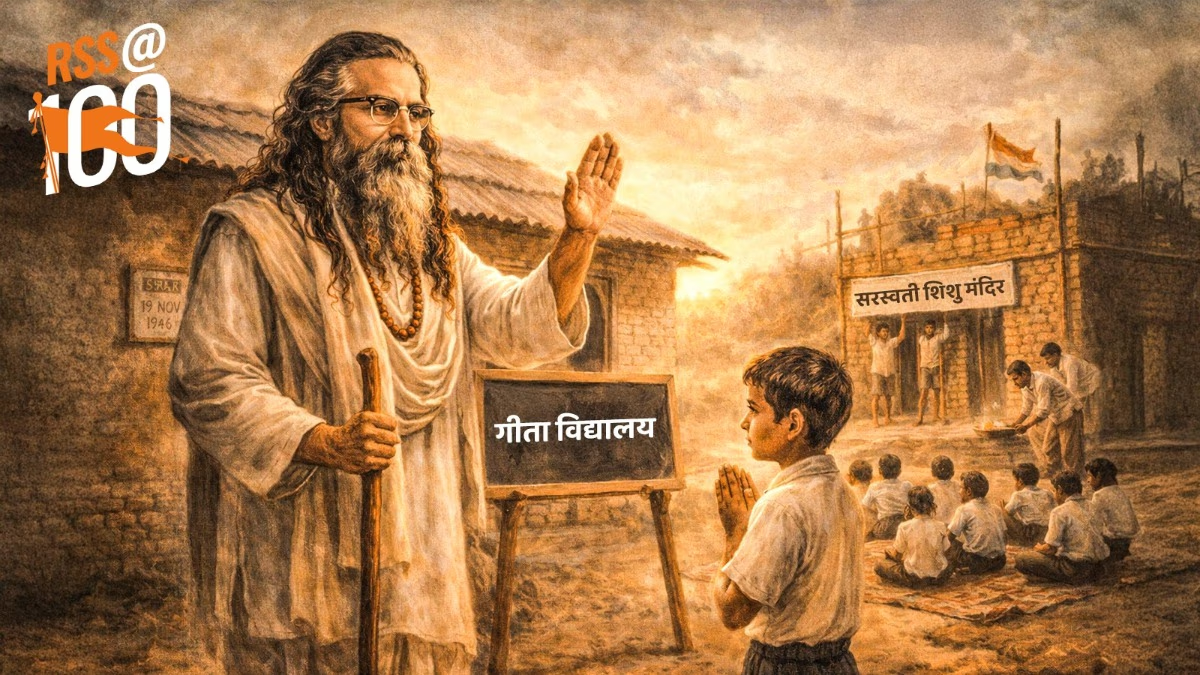
Would you believe that 57,123 Muslim students and 9,947 Christian students are enrolled in Vidya Bharati schools this year? Or that the number of educators (Acharyas) in these schools has surpassed 152,624, exceeding even the combined number of government teachers in several states? An additional 8,199 new teachers were employed this year. With the enrollment of 64,333 new students this session, Vidya Bharati's student count reached an impressive 3,332,774. The influence of RSS-affiliated schools has spread across 775 districts.
The Gandhi Behind Saraswati Mandir's Creation
It's not just Rahul Gandhi's name that shares the 'Gandhi' surname; the name is taken from Gandhiji himself. The establishment of the first Saraswati Shishu Mandir is tied to Krishna Chandra Gandhi, originally Krishna Chandra Mittal, born in Meerut to Murari Lal Mittal on the very day, 1921, that the RSS was founded, coinciding with Vijaya Dashami.
While Rahul Gandhi dons T-shirts in winter, Krishna Chandra preferred a simpler life. He washed with cold water and meditated daily donning just a dhoti during winters, never opting for socks, sweaters, or pajamas. Should the cold intensify, a shawl sufficed. Eschewing soap and oil since childhood, he never resorted to English medicines, never required glasses, and never admitted to a hospital, a simplicity earning him the moniker 'Gandhi'.
Krishna Chandra joined the RSS in 1943, drawn to its physical programs. A fan of horse riding and swimming, he became a pracharak in 1944 after completing his B.A., avoiding cycle rickshaws out of empathy, preferring to ride bicycles himself.
The Tale of the Kans Fort in RSS Folklore
Assigned to Mathura next year, he conducted RSS activities from a location known as Kans Tila (near the Yamuna). A former fort's remnants were discovered here after excavating—a narrative found in old RSS literature. This location, named 'Keshav Durg', held meaning given the coinciding names associated with RSS leaders.
From Slaughterhouse to the First Shishu Mandir
In 1952, KC Gandhi was assigned as the regional pracharak in Gorakhpur, joining Nanaji Deshmukh and under the guidance of province pracharak Bhaurao Deoras and Pandit Deendayal Upadhyaya, laid the foundation of the first Shishu Mandir. Initially housed near Manasarovar Ramlila Mandir's garden, it later moved to rented land owned by Babu Girdhar Das in Pakkibagh, once a slaughterhouse. With efforts from Nanaji and pracharak KC Gandhi, the site evolved into a school.
The journey continued with a state-level Shishu Education Management Committee formed in 1958. By 1977, the "Vidya Bharati All India Education Institute" was established, expanding its aims to develop a nationally-focused education system.
Today, Mathura houses a Saraswati Mandir named after KC Gandhi. Assigned to Northeast India, he initiated a hostel for 10 tribal children, becoming a key center for educational endeavors. Retirement led him back to Mathura, where he established institutions like 'Saraswati Kunj, Nirala Nagar' and 'Shishu Mandir Prakashan'.
As health declined, residing in Mathura suited him. Perceived his end near, he visited Northeast India one last time to bid farewell to colleagues. He ceased consumption of food and water 24 Nov 2002, received sacred offerings from the Banke Bihari temple, sensing his imminent end.
Lajjaram Tomar's Leap from Police to Revolutionary Education
Lajjaram Tomar, hailed from Morena, strongly contributed to strengthening the Saraswati Shishu Mandir system. Despite scoring highest in district matric exams and receiving a sub-inspector offer, he pursued teaching. Taking charge of establishing 'Saraswati Vidya Mandir' in Agra, he introduced numerous educational innovations inspired by ancient systems, promoting Indian education globally.
Even Before Shishu Mandirs: The Geeta School
The Geeta School possesses a storied history initiated by revered personalities like Madhav Rao Sadashiv Rao Golwalkar, situated in Kurukshetra. Articulated by the school, its foundation aligns with spiritual values, supporting societal development. Guru Golwalkar emphasized its role, with donors contributing land for its prosperity. This narrative recalls Kurukshetra's legacy, paralleling the school's spiritual journey to that of divine teachings from the Bhagavad Gita.
The Relentless Duo of Dinanath Batra & Atul Kothari
Linking Dinanath Batra's work with the Geeta School, his unwavering dedication bolstered the school amid challenging times, surviving periods like the imposed emergency. His partnership with Atul Kothari promoted educational transformation, emphasizing Indian cultural values and creating endeavors like 'Shiksha Bachao Andolan' and 'Bharatiya Bhasha Manch'.
Revolutionizing Education through the RSS
Under leaders like Balasaheb Deoras and Shrikant Joshi, significant steps were taken towards educational expansion, building many schools, particularly evident in Uttar Pradesh and Uttarakhand, where they proliferated. Meanwhile, figures like Rana Pratap Singh diverged from conventional paths, embracing miles of investment in this educational movement.