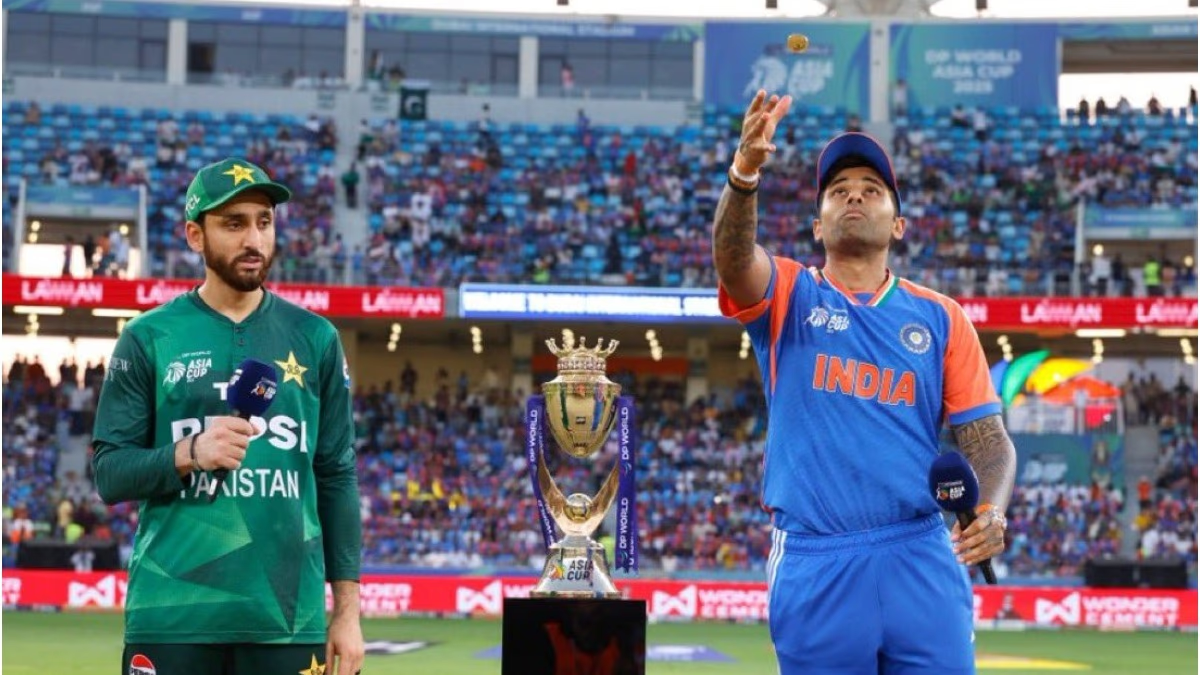
The ICC Men's T20 World Cup 2026 match between India and Pakistan is scheduled for February 15 at Colombo's R. Premadasa Stadium. The Pakistani government has not yet permitted its team to participate, deepening the ongoing dispute. The International Cricket Council (ICC) warned the Pakistan Cricket Board (PCB) that a boycott would have serious consequences.
ICC made it clear that selective participation in the tournament would not be accepted, and every team must play all matches as agreed. It warned that pulling out of the match against India could lead to significant financial losses and potential sanctions for Pakistan.
Following ICC's stern stance, PCB stepped back. A crucial meeting was held late Sunday in Lahore between ICC officials and PCB to resolve the issue. Bangladesh was also invited to this meeting, represented by Bangladesh Cricket Board (BCB) president Aminul Islam 'Bulbul'. A significant decision may emerge soon.
According to a Cricbuzz report, the Pakistan Cricket Board has laid out three key conditions to play against India...
1.
PCB's primary demand is a larger share in ICC’s revenue model. However, ICC's revenue distribution follows pre-determined rules, making immediate decisions on this demand challenging.
2.
Pakistan's second condition involves resuming bilateral cricket with India. This demand falls outside ICC’s jurisdiction, as such series decisions are made by the respective cricket boards and governments. Meeting this demand is considered highly challenging.
3.
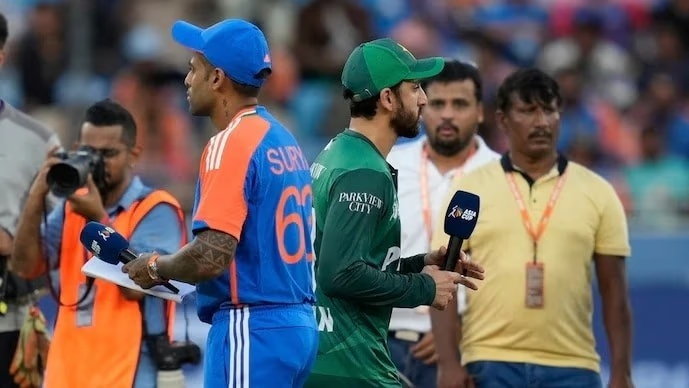
PCB has also insisted on mandatory handshakes between players during matches. While current rules don’t mandate handshakes, leaving it to mutual agreement between teams, this would be a substantial policy adjustment.
This controversy began when Bangladesh's cricket board cited security reasons to change match venues. ICC denied this request, replacing Bangladesh with Scotland. Pakistan, in support of Bangladesh, declared they wouldn’t play the group match against India in Colombo.
Sri Lanka expressed dissatisfaction over this dispute, highlighting potential losses to tourism and hospitality sectors if Pakistan boycotts. Sri Lanka reminded Pakistan of the time it faced international isolation and how Sri Lanka helped reintegrate international cricket into Pakistan.
ICC noted that preserving the World Cup's prestige is paramount, but remained open to discussions. All eyes are now on the outcome of this critical meeting.