Source: aajtak
Today is the final day of 2025, and as of tomorrow, Thursday marks the beginning of New Year 2026. January 1st brings several major changes to the country, potentially affecting every home and wallet. These changes might adjust your kitchen budget, while buying a car could become more expensive. Additionally, rules are changing for central employees and PAN Card holders. Let's take a closer look at these 10 major changes.

Source: aajtak
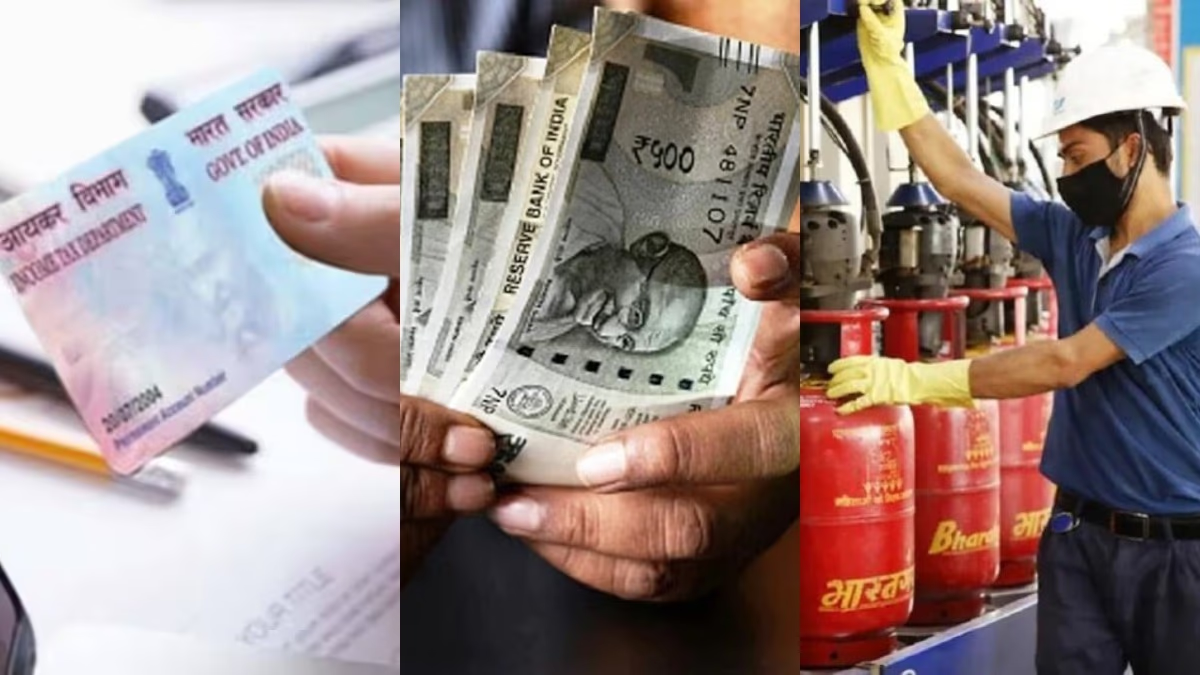
First Change – PAN Card might become useless!
The last chance to link your Aadhaar card with your PAN is today, with December 31st being the deadline. If you haven’t linked your PAN-Aadhaar yet, it’s high time to prioritize this task; otherwise, starting January 1, 2026, your PAN could be deactivated and rendered useless.
Deactivation of your PAN could lead to multiple financial issues, including the inability to receive ITR refunds, receipts, and bank benefits. Moreover, deactivated PANs will leave you excluded from various government scheme benefits. Note, this Aadhaar-PAN link process is mandatory for cardholders whose PAN was issued using an Aadhaar number before October 1, 2024.
Source: aajtak
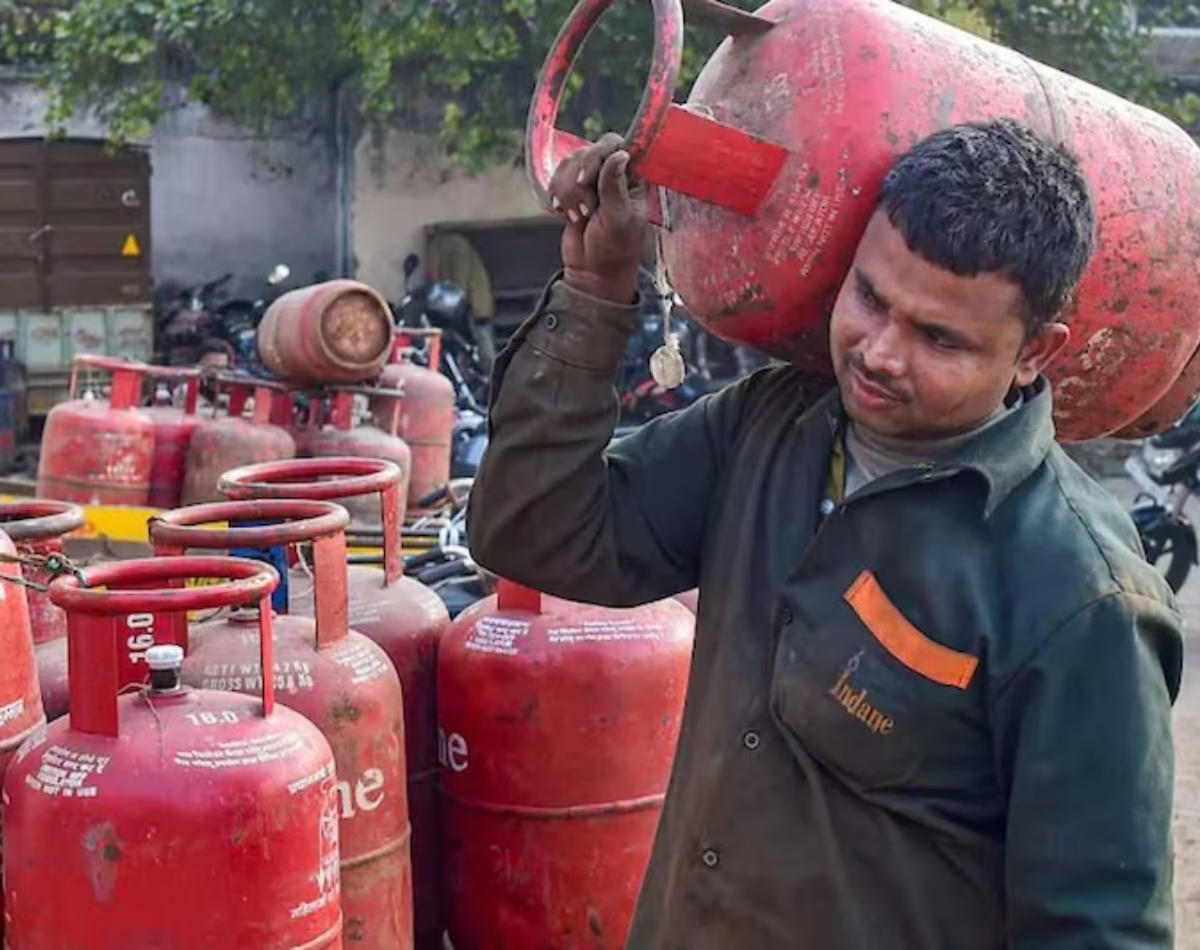
Second Change – LPG Cylinder prices
Every month, oil marketing companies revise LPG gas cylinder prices, including potential alterations from January 1st. While the commercial 19 kg LPG cylinder prices have fluctuated, the 14 kg domestic cylinder prices have remained unchanged. As such, oil companies might announce new LPG prices on January 1, 2026, directly influencing your kitchen budget. In December, there was a cut in LPG prices.

Source: aajtak
Third Change – Price changes from ATF to CNG-PNG
Apart from LPG prices, oil marketing companies will also release revised prices for air turbine fuel (ATF) on the first day of the month, directly affecting airfare. From January 1st, expect changes moreover to the prices of CNG and PNG.

Source: aajtak
Fourth Change – New tax law
The new Income Tax Act 2025 will not be fully implemented immediately from January 1, 2026. However, the government is expected to notify new ITR forms and rules to be implemented starting April 1, 2026, for the fiscal year 2026-27, replacing the old Income-tax Act, 1961. The new law will bring changes to processes and definitions for tax years, with efforts to simplify ITR forms and systems.

Source: aajtak
Fifth Change – Implementation of the 8th Pay Commission
Central employees and pensioners eagerly await January 1, 2026, for the possible implementation of the 8th Pay Commission. The current 7th Pay Commission is set to expire on December 31st. Although the new pay commission might be implemented theoretically, employees and pensioners must wait longer for the benefits of increased salary and pension. According to the 8th CPC, benefits for employees' salary and pensions will be linked as of January 1, 2026.

Source: aajtak
Sixth Change – Buying a car is going to be expensive!
Planning to buy a car from January 1, 2026? Hold tight, as many major automobile manufacturers in the country plan to increase car prices. Companies like Nissan, BMW, JSW, MG Motors, Renault, and Ather Energy have announced price hikes ranging from 3000 rupees to 3%. Additionally, Tata Motors and Honda have indicated potential price increases.

Source: aajtak
Seventh Change – PM Kisan Yojna rules
In the new year, farmers in states like Uttar Pradesh will require a unique farmer ID to avail of PM Kisan Yojna benefits. Changing rules also indicate that damages to crops by wild animals reported within 72 hours will be covered under the PM Kisan Crop Insurance Scheme.

Source: aajtak
Eighth Change: Changes related to UPI, FD, LOAN, and SIM
In terms of financial changes starting January 1st, banks are expected to enforce a stricter protocol on UPI and digital payment regulations. Alongside, SIM verification rules will be tightened to combat fraud instances. Efforts are also being made to curb financial fraud via apps like WhatsApp, Telegram, and Signal. Furthermore, loan rate adjustments by SBI, PNB, and HDFC Bank, along with new FD interest rates, will come into effect from January.

Source: aajtak
Ninth Change: Export to Australia with Zero Tariff
On a noteworthy note, on completion of three years of the India-Australia Economic Cooperation and Trade Agreement, Union Commerce Minister Piyush Goyal announced Monday that effective January 1, 2026, Australia will have zero tariffs on all tariff lines of Indian exports. This implies that 100% of goods exported from India to Australia starting that date will incur no tariffs.
Source: aajtak
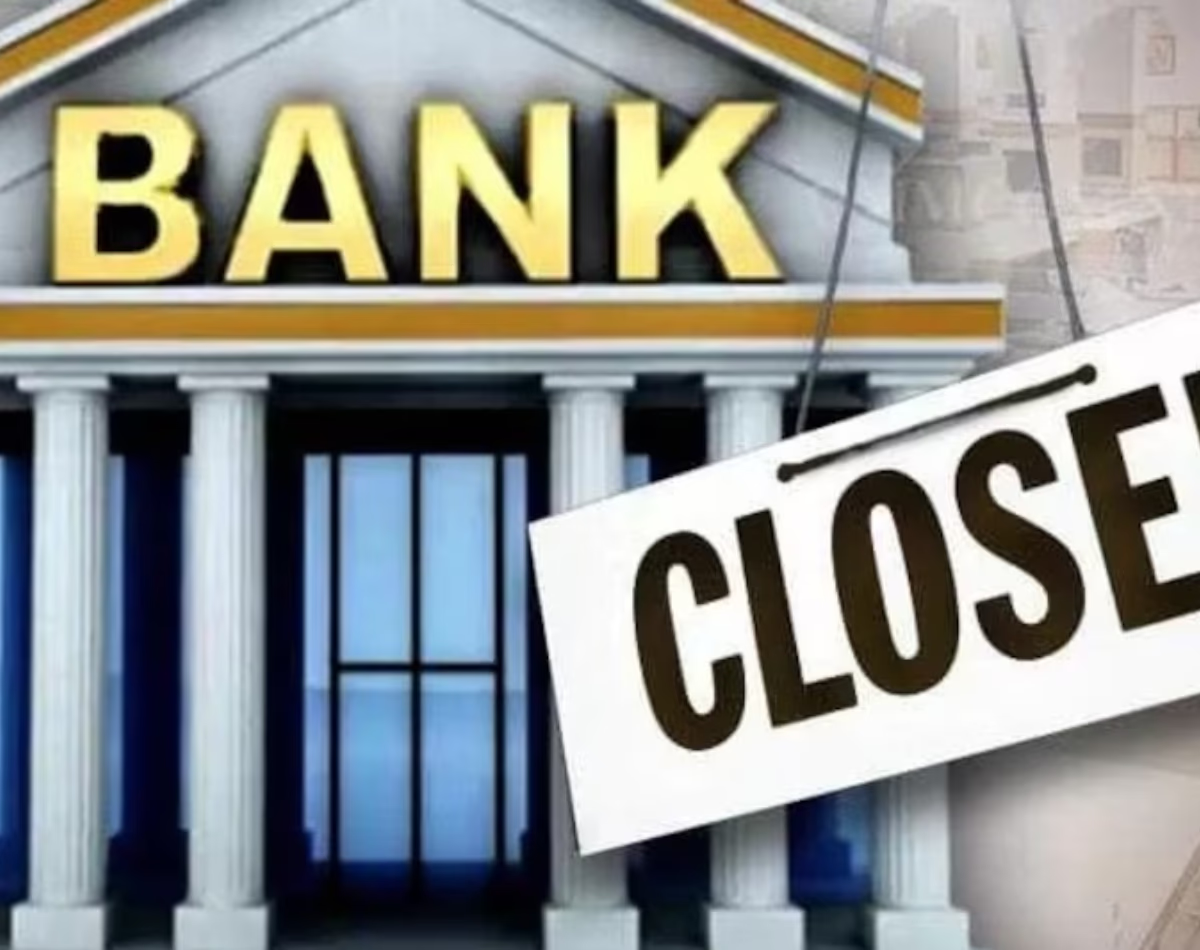
Tenth Change: Huge Bank Holiday in January
January 2026 will see a series of bank holidays. The Reserve Bank of India (RBI) has published a list of bank holidays on its website. It’s crucial for people heading to the bank to refer to this list to avoid surprises, like finding the bank doors locked. As per the RBI Bank Holiday List, there will be 16 days of bank closure in January due to Makar Sankranti, Republic Day, and other occasions. However, these holidays may vary across states. For uninterrupted services, consider online banking, which operates 24x7.