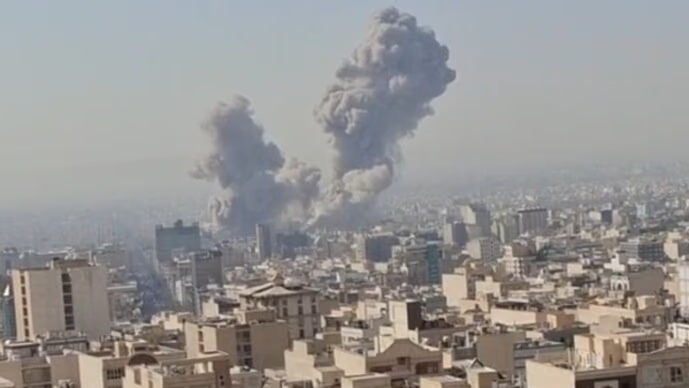
Israel and the United States have announced the start of a 'preventive attack' — a precautionary military operation against Iran. Israel's defense minister confirmed the operation on Saturday morning. Simultaneously, the Israeli army raised 'proactive alerts' nationwide, sounding sirens to ensure citizens move to safety amidst potential Iranian missile threats. The government urged citizens to remain vigilant and adhere to safety instructions.
Meanwhile, reports of significant explosions have emerged from Tehran, the capital of Iran. According to local media and eyewitnesses, at least three explosions were heard in the central part of the city, followed by reports of two more detonations. Iranian state media speculates possible blasts in the Sayyed Khandan area of northern Tehran. However, Iranian officials have yet to officially confirm the attacks or disclose any damage details.
Read More: Israel Vs Iran LIVE: Attacks on 30 Iranian Locations, Fear Grips Tehran, Khamenei Moved to Safety
It is reported that 30 locations in Iran have been attacked, including Iranian intelligence agency buildings, airports, the presidential palace, and residential areas. Following the Israeli strikes, Iran has closed its airspace. Israel has named this operation 'Shield of Judah' against Iran.
High Alert in Israel, Sirens Blare
In contrast, Israel is on high alert. The IDF announced nationwide sirens, sending advanced alerts to mobile phones advising citizens to remain in safety. Schools and colleges have been closed, as have offices, with advice for everyone to stay indoors.
Israel's defense minister, Israel Katz, declared a national emergency, warning of the potential for missile and drone attacks on civilian areas. The Israeli military announced the closure of schools and public events, recommending work-from-home arrangements.
US-Iran Nuclear Talks in Shadow of Conflict
This incident occurs amid deepening tensions in West Asia. In June, Israel and Iran engaged in a 12-day aerial conflict. During this period, for the first time, the United States directly participated in Israeli military operations against Iran's nuclear sites.
Related: Israeli Air Strikes Lead to Declared Emergency, Sirens Sound Across Israel
US-Iran nuclear talks resumed in February, aiming to diplomatically resolve longstanding disputes and avert military conflict. Israel consistently emphasized that any deal should dismantle Tehran's nuclear infrastructure entirely, not just halt uranium enrichment, and included Iran's ballistic missile program in the negotiations.
Iran has expressed readiness to accept limits on its nuclear program in exchange for lifting sanctions but refuses to tie its missile program to any agreement. Tehran also clarified its right to self-defense in the event of attacks.
In response to US military action in June, Iran launched missiles at Al Udeid Air Base in Qatar—America's largest military base in the Middle East. Western nations view Iran's ballistic missile program as a regional threat with the potential for future nuclear weapon delivery. However, Tehran consistently denies intentions to develop nuclear bombs.
The recent attacks have once again dimmed hopes for a diplomatic resolution. The world now watches closely to see Iran's next move and whether this confrontation might escalate into a broader regional conflict.