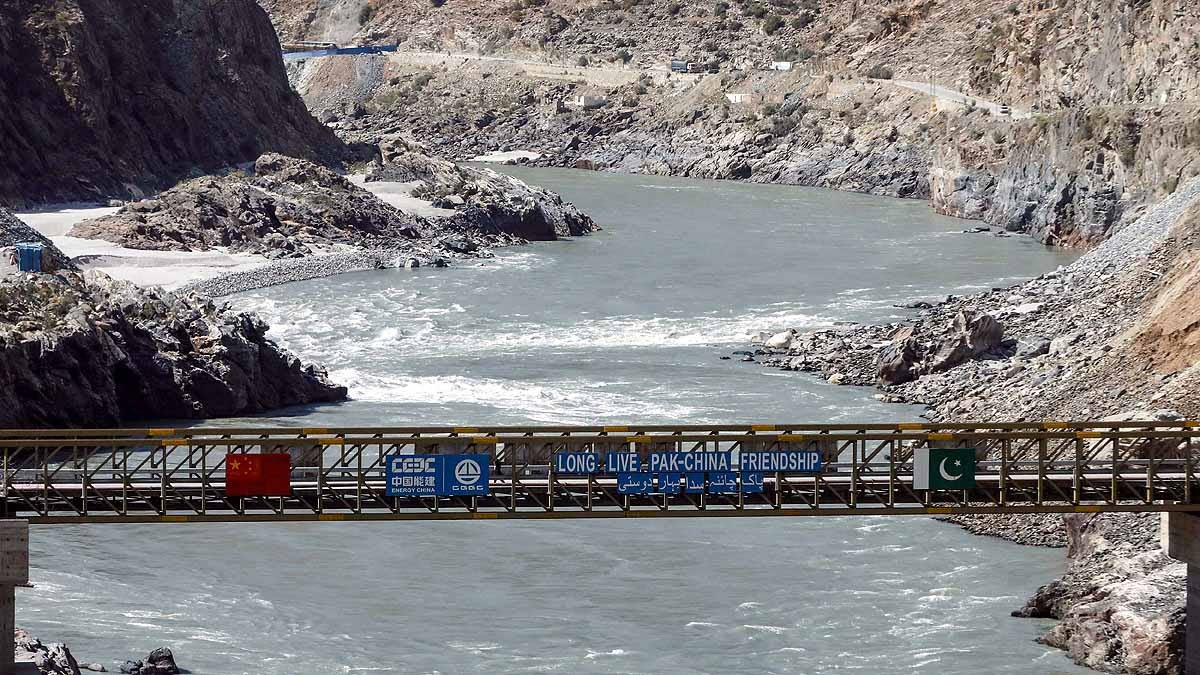
Ishaq Dar, Pakistan's Deputy Prime Minister and Foreign Minister, has once again raised the issue of the Indus Waters Treaty with fervor. He accused India of any attempt to redirect or halt the Chenab River, warning that such actions would be deemed an 'Act of War'. Dar asserted that India's 'aggressive steps' pose a significant threat to peace and stability in South Asia.
The Indus Waters Treaty, brokered by the World Bank in 1960, was an agreement between India and Pakistan to allocate three eastern rivers (Ravi, Beas, Sutlej) to India and three western rivers (Indus, Jhelum, Chenab) primarily to Pakistan. Despite numerous conflicts and tensions, this treaty has remained intact over the decades.
Following an April 2025 terrorist attack in Pahalgam, Jammu and Kashmir, which claimed 26 tourist lives, India unilaterally suspended (held in abeyance) the treaty. India described this as a retaliation against Pakistan-supported terrorism. Since then, the treaty has been on hold, with India ceasing to share hydrological data and halting the joint monitoring mechanisms.
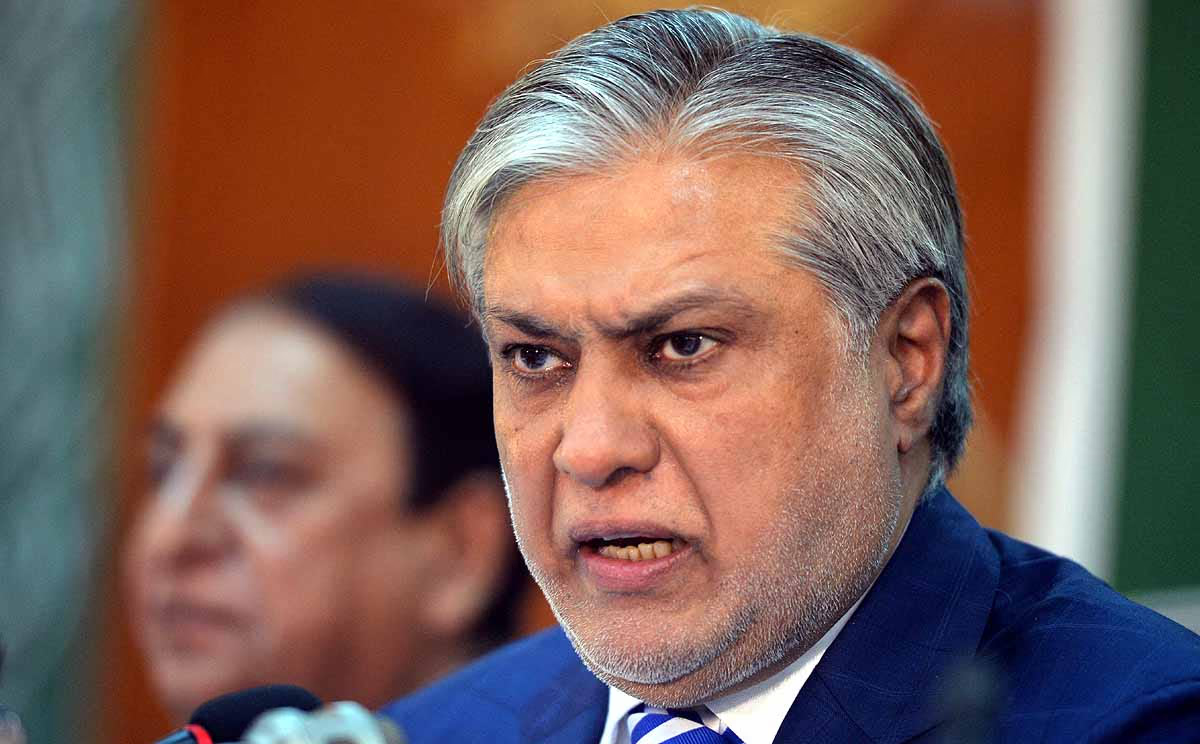
Source: aajtak
In December 2025, a sudden fluctuation in the Chenab River's water volume was observed. On the night of December 7-8, 58,000 cusecs of water were abruptly released, only for the flow to plummet to 870-1,000 cusecs by December 13. Pakistan accused India of unannounced release and reduction of water, affecting their crops, particularly wheat. Pakistan called this 'weaponizing water' and treaty violation.
This breaches Article 26 of the Vienna Convention.
India is systematically undermining the treaty.
Using water as a weapon is dangerous.
Blocking or diverting water is considered an act of war.
Pakistan will not compromise its water rights.
India is evading dispute resolution processes, defying international norms.
India's actions endanger Pakistan's food security and may lead to a humanitarian crisis.
Dar, in a briefing to diplomats, stated that Pakistan has repeatedly raised the issue with the United Nations Security Council. Recently, special rapporteurs from the United Nations have echoed concerns over India's actions. Their report indicated that suspending the treaty unilaterally is erroneous, as obstructing water flow violates the human rights (water, food, livelihood) of millions. The experts demanded clarification, compensation, and adherence to the treaty from India.
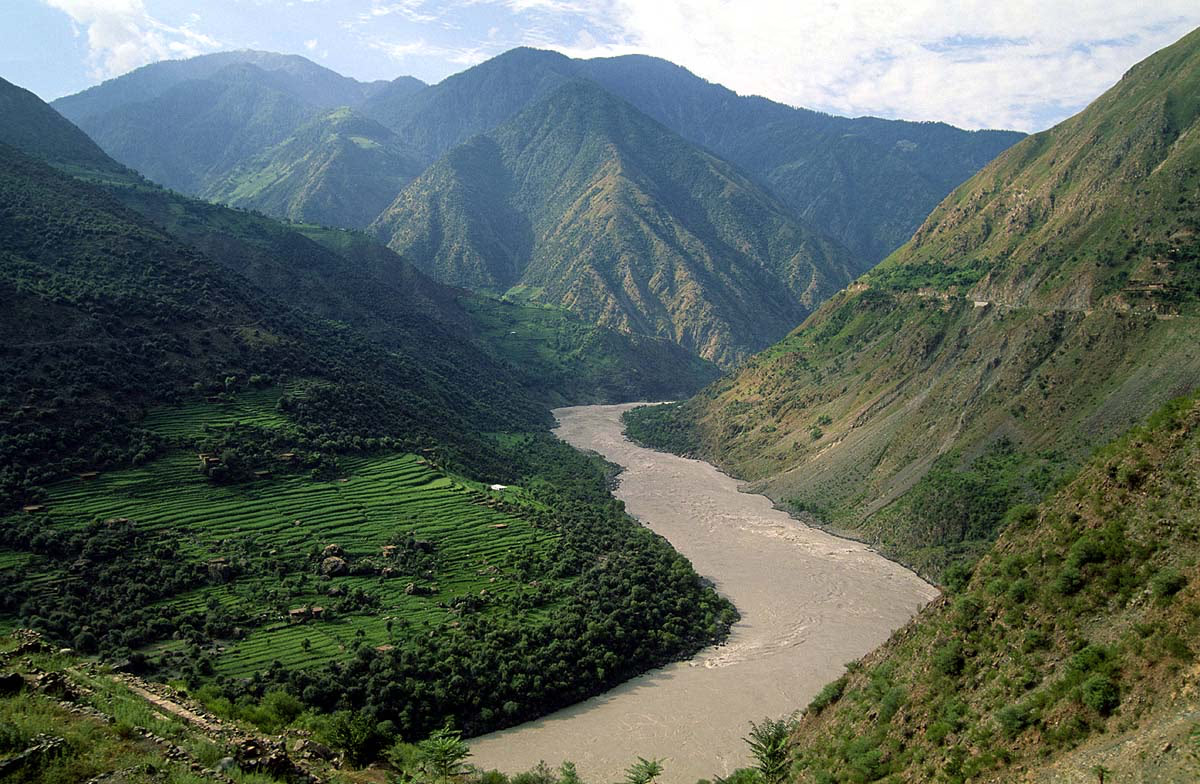
Source: aajtak
India asserts that suspending the treaty is a response to terrorism, accusing Pakistan of supporting cross-border terrorism, undermining the spirit of the treaty. India stated that until Pakistan ceases its terrorist activities, the treaty remains suspended. India also clarified that it is not completely blocking the water but has ceased data sharing and lifted some restrictions.
This dispute has the potential to escalate tensions between the two nuclear-armed countries. While Pakistan is taking the issue to international platforms (UNSC, PCA), India maintains it as a bilateral and security concern. Experts believe that the crisis could worsen due to water scarcity and climate change.
Both countries must seek a solution through dialogue, or else regional peace could be jeopardized. This situation reemphasizes long-standing concerns over water in South Asia. For Pakistan, the Indus River system is a lifeline, whereas India ties it to national security.