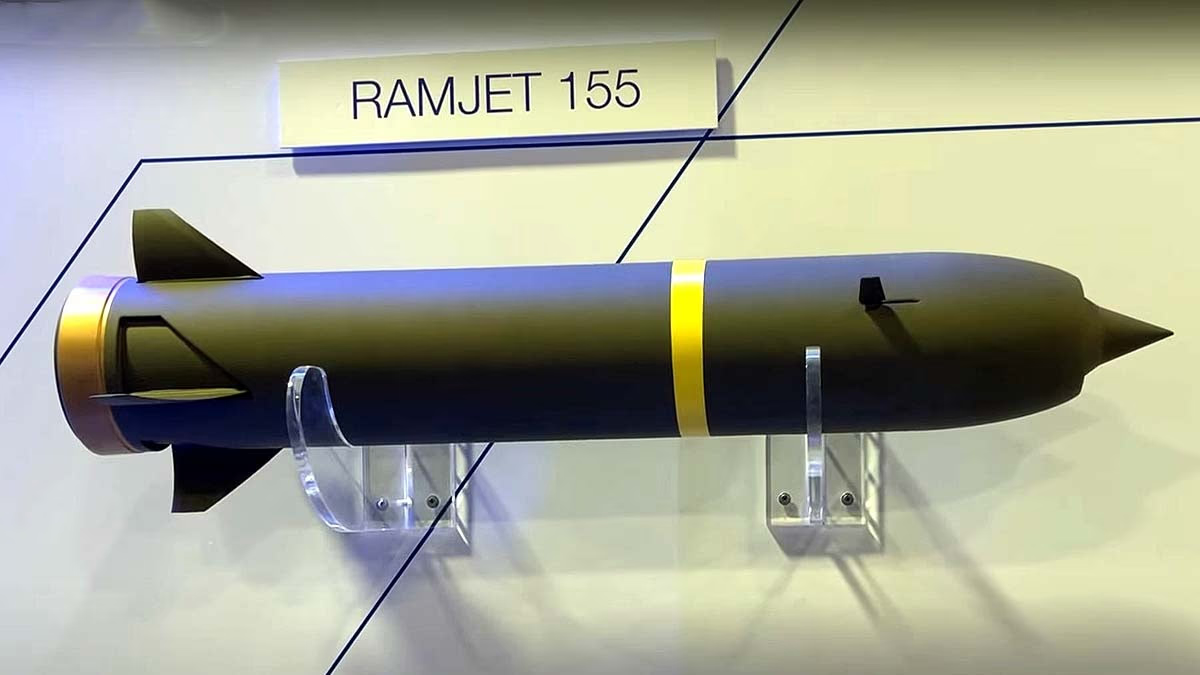
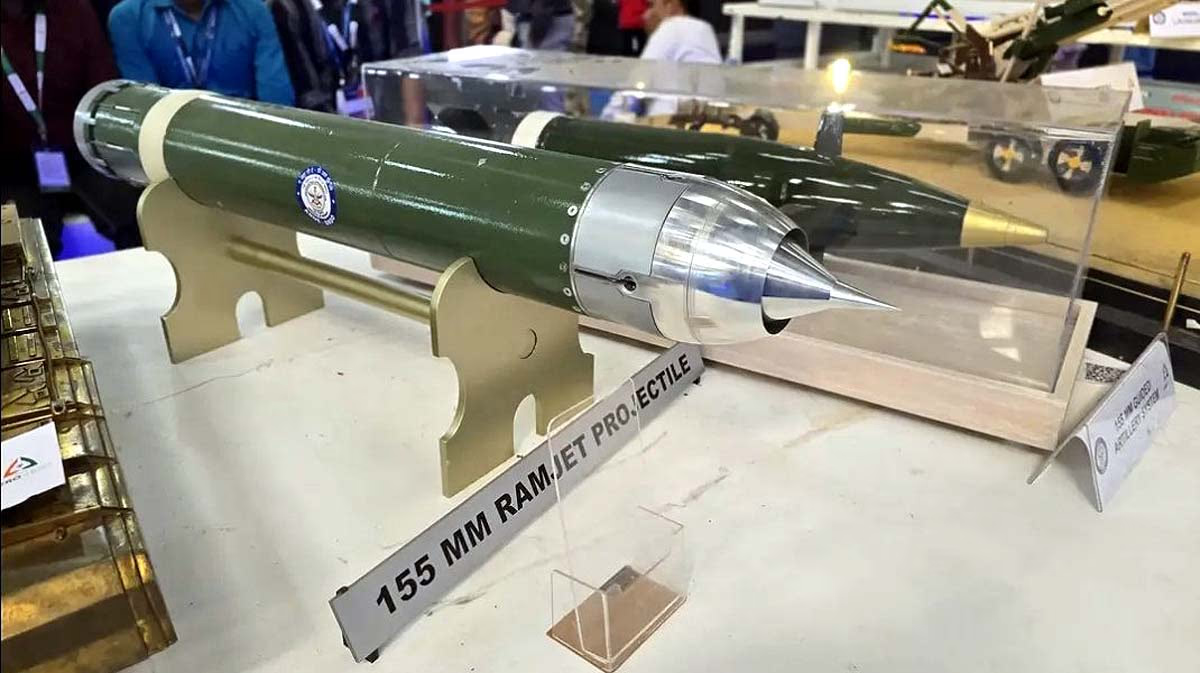
The Indian Army is on the brink of becoming the world’s first military force to embrace the innovation of 155 mm artillery shells powered by ramjet engines. This pioneering technology is a collaboration between IIT Madras and the Indian Army, exemplifying India's self-reliance initiative and significantly boosting artillery strike power by 30-50%.
Despite the successful trials, the system remains in the development and optimization phase. The focus is on addressing challenges related to combustion stability, air intake efficiency, and maintaining thrust during high-spin and acceleration at gun launch. These issues must be resolved before proceeding to user trials and final induction.
The foundational trials in Rajasthan's Pokhran field firing range marked a significant milestone for this indigenous technology.
Upon completion, this technology can be retrofitted onto existing artillery systems like the M777 Ultra-Light Howitzer, ATAGS, Dhanush, and the K9 Vajra, without the need for new calibers or platforms.
Initial operational range: 60 to 80 kilometers
Future variants: Over 100 kilometers
Ramjet engines draw oxygen from the air to maintain continuous thrust, allowing the shell to sustain speed post-launch. Existing shells have ranges of 30-40 km, but with this technology, range could double, reaching speeds up to Mach 3, approximately 3704.4 km/hr, enhancing lethality.
This ramjet-powered artillery will empower tube artillery with deep strike capabilities, offering rapid response times and extended ranges pivotal in high-intensity conflicts, particularly against adversaries like Pakistan and China. Decoys will easily confuse enemy counter-battery fire.
The technology allows for precise strikes on enemy rear positions—command centers, logistics hubs, and airfields. It's a major advancement in artillery modernization, reducing import dependency and opening avenues for exports.
According to Professor P.A. Ramakrishnan of IIT Madras, once fully developed, this technology can be adapted to any 155 mm shell in the army's artillery systems. After successful trials in Pokhran, the focus is now on subsequent tests and refinements, positioning India as a world leader in artillery and fortifying its borders.
Source: aajtak