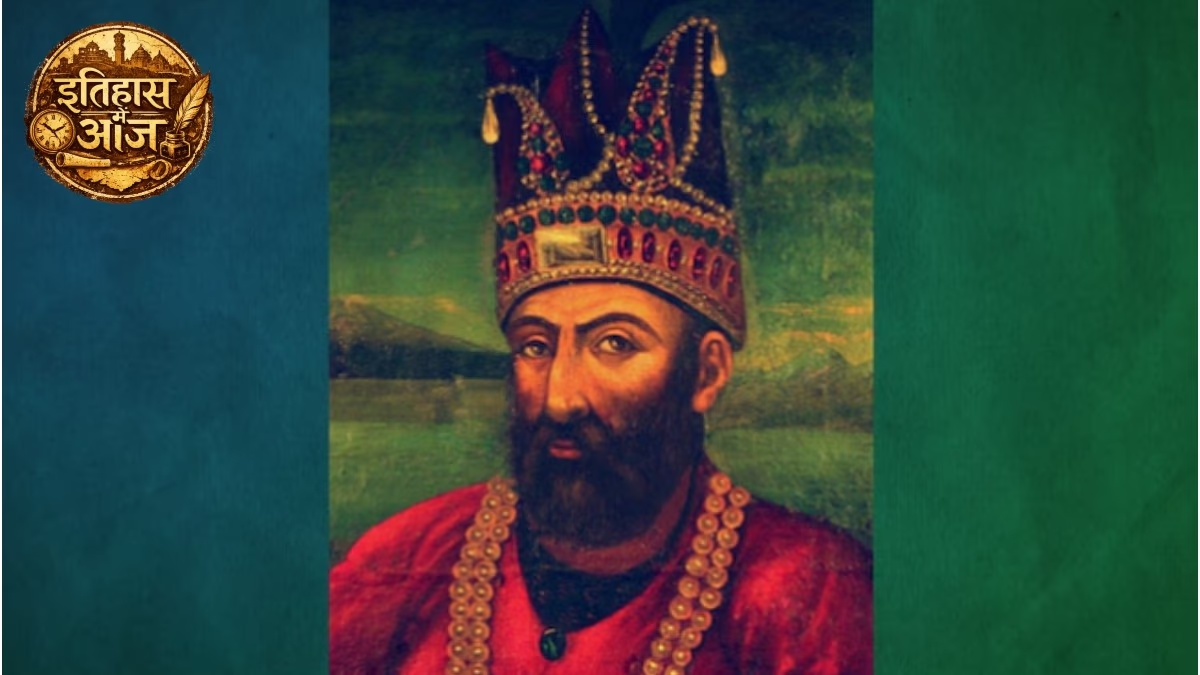
It was the year 1738, during the reign of Mughal Emperor Muhammad Shah, when Delhi sprawled from the fertile plains of northern India to the outskirts of the Aravalli range in the south. All of India's wealth was concentrated in the royal court of Delhi, a city ranked among the richest in the world, and the Mughal Sultanate was considered the most prosperous. This magnificence caught the eye of Nader Shah, who seized the Kohinoor and plundered wealth equal to approximately 10,500 billion rupees.
When Iran's ruler, Nader Shah, set his sights on Delhi's opulence, the founder of the Afsharid dynasty planned his invasion. In February 1739, Nader Shah crossed the treacherous passes of the Hindu Kush (present-day Afghanistan), capturing the Kabul province, which never again became part of India. Another western city, Attock, also soon fell, and Nader Shah swiftly approached Lahore.
Lahore attempted to stave off plunder by offering Nader Shah two million rupees. He then advanced via Sirhind, Ambala, and Shahabad. Within a month, he breached all the forts in the western region. Soon the fires of war reached Karnal (now in Haryana), ultimately leading to the Battle of Karnal.
The Nawab of Awadh, Saadat Khan, was summoned from Awadh to lead the battle. Even upon reaching Delhi with his weary forces, the Mughal Empire found no aid. Thus, on February 24, 1739, the unfortunate Battle of Karnal occurred, irrevocably altering the paths of India and the Mughal Empire. Nader Shah wreaked brutal devastation for 58 days, pillaging India and even removing the Kohinoor from the crown of Mughal Emperor Mohammad Shah.