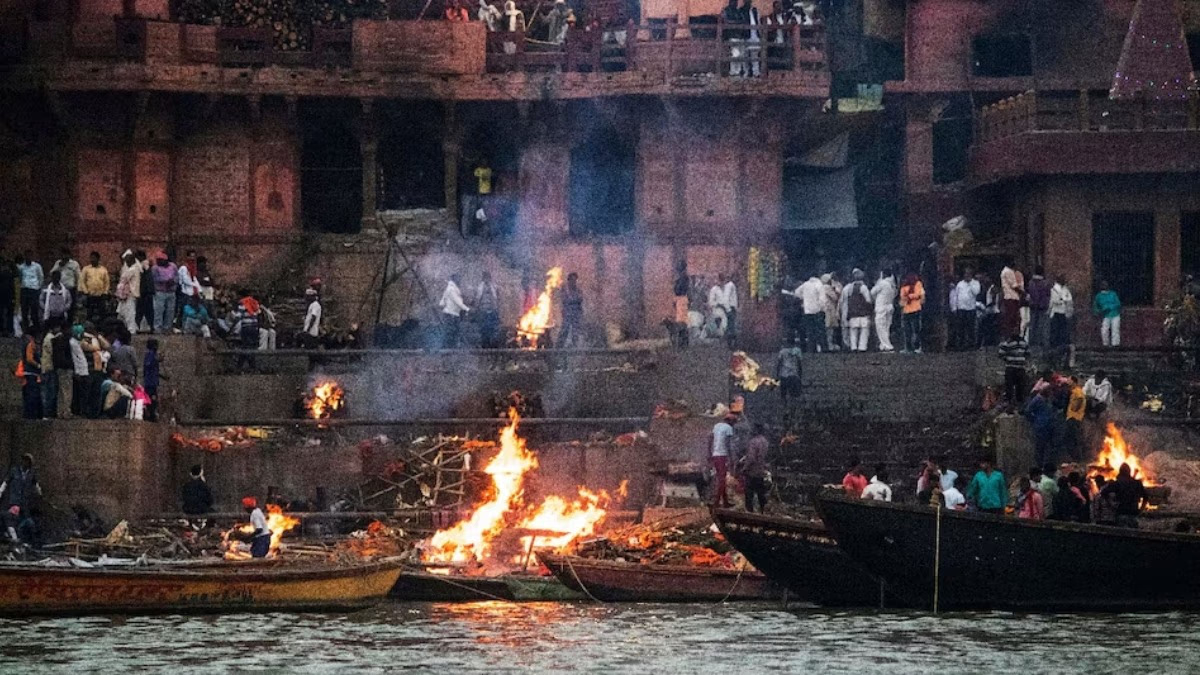
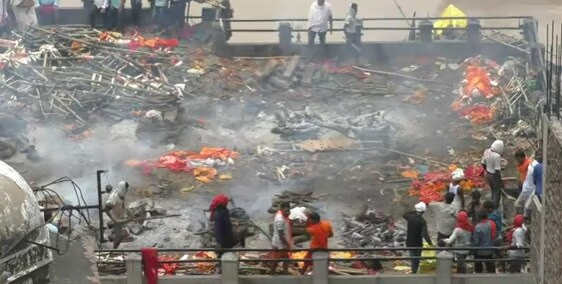
These days, Varanasi's famed Manikarnika Ghat finds itself at the heart of a discussion. Post the construction of Baba Vishwanath Corridor, there arose a need to structure this sacred 'cremation ground' better, yet recent modifications have stirred discontent among some local communities.
The story of Manikarnika Ghat is not confined to current disputes. Its layers are covered with tales of blazing pyres, billowing smoke from heaps of burning logs, and centuries of hidden tumult buried under ashes.
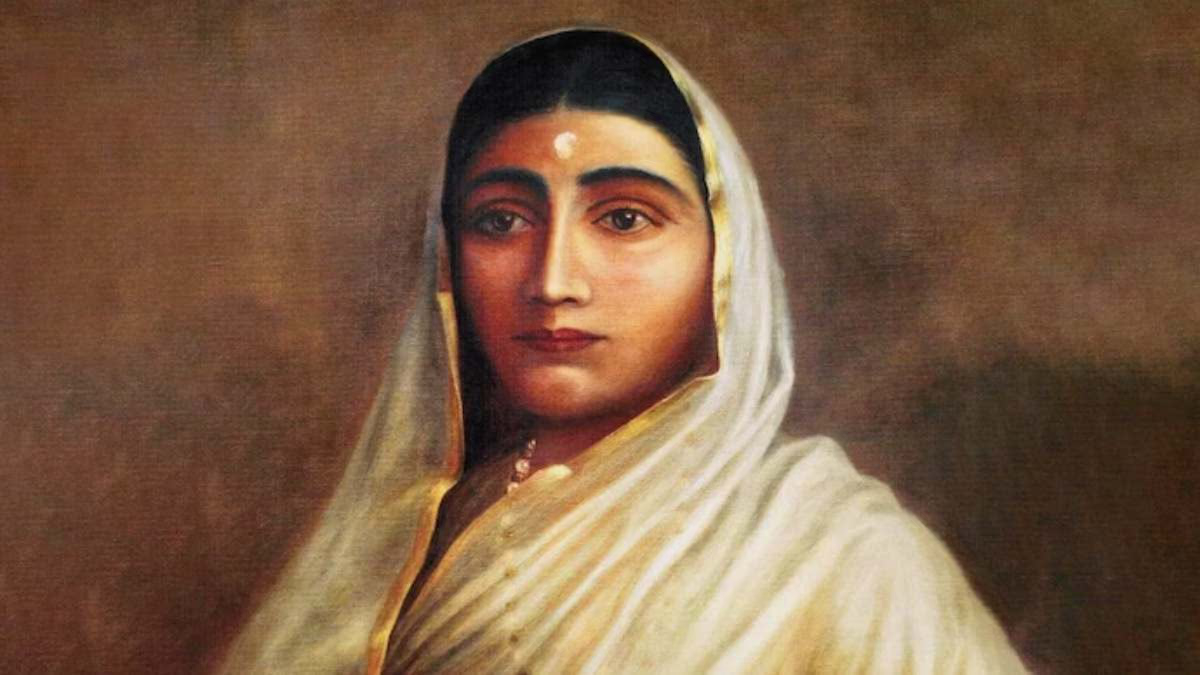
Within these tales are mythological beliefs, historical attacks, and the repeated renovations to recover from them. Often, discussions about restoring Manikarnika elicit the name of Malwa's ruler, Queen Ahilyabai Holkar. She restored numerous damaged temples and pilgrimage sites across the country, including the cremation site of Manikarnika along with Baba Vishwanath Dham.
Manikarnika's story, however, is not limited to Ahilyabai alone. Many rulers, saints, and patrons, both preceding and succeeding her, contributed to the construction and preservation of this ghat.
The Glory of Manikarnika in Puranas
The history of this renowned cremation ground has its origins in legends. According to the Kashi Khanda of Skanda Purana, Lord Vishnu created a pond here. Matsya Purana echoes this, where Manikarnika is noted as one of the five sacred water sites.
This pilgrimage site has served as a symbolic confluence of Shaivism and Vaishnavism. The Vishnu Charanapaduka Temple, located in the ghat area, underscores this harmony, with the footprints of Lord Vishnu engraved on a marble stone.
According to legend, Lord Vishnu stood in penance here for nearly five hundred thousand years to appease Lord Shiva. Pleased with the penance, Shiva appeared and granted Vishnu a boon, staying here ever since. Due to this, the area distinctly features Vishnu territory to the north and Shiva to the south.
Manikarnika Ghat is elaborately described in Kashi Khanda (Chapter 26, verses 119 to 122).
Source: aajtak
Historical Evidence and Initial Construction
The significance of Manikarnika extends beyond sacred texts into historical records. Gupta era inscriptions from the fifth century reference this ghat.
The stone steps of the ghat were constructed in 1303 AD, although records do not clearly attribute this to any individual patron. During the Mughal era, local kings, rulers, and landlords discreetly contributed donations and support for the maintenance of Baba Vishwanath Temple and Manikarnika Ghat.
The Era of Invasions and Attacks
When the flames of external invasions reached the pilgrimage sites across the nation, Varanasi was no exception. It endured attacks, with the most notable one being in 1664 AD.
Historian Jadunath Sarkar's book ‘A History of Dashanami Naga Sannyasis’ mentions the steadfast opposition by Naga ascetics against Mughal Emperor Aurangzeb’s army during this period. The conflict spanned from morning till evening, culminating in the retreat of Mughal soldiers.
Writer James G. Lochtefeld's ‘The Illustrated Encyclopedia of Hinduism’ also cites Aurangzeb's assault on Varanasi and the resistance by Naga sadhus. Amid these struggles, Varanasi's numerous religious symbols, including Manikarnika Ghat, suffered damage.
Renewals Under Maratha Rule
In 1730 AD, under Peshwa Bajirao’s aegis, Manikarnika Ghat and its steps were reconstructed. The tradition of connecting the three significant sites dedicated to Shiva in Kashi – Gyanvapi, Vishwanath Temple area, and Kedar Ghat – was fortified during this period.
The construction of a nearby ghat was commenced under Bajirao Peshwa around 1735 AD, but an elevated base led to a landslide due to heavy stone structures. The entire structure collapsed, halting the incomplete works. Decades after its construction, this structure sank by several meters.
A New Vision by Ahilyabai Holkar
In 1791 AD, Maharani Ahilyabai Holkar undertook extensive renovations of the entire Manikarnika Ghat, initiating numerous new constructions and giving the ghat an organized appearance.
In 1795 AD, she commissioned the construction of the Tarakeshwar Temple here, known as the 'Lord of Liberation'. The temple features a rectangular structure with six pillars. The entrance has a statue of Ganesh, and the sanctum contains a four-faced Shivalinga within a basin.
This Panchayatana-style temple in the Banaras tradition has representations of the Sun, Durga, Ganesh, and Vishnu in the four corners. According to belief, this form of Shiva whispers the liberation mantra in the ears of the deceased, promising salvation. The worship of Tarakeshwar post-cremation remains a tradition fulfilled today.
In 1830 AD, Queen Baijabai of Gwalior repaired and partially reconstructed the ghat. The entire cremation area underwent repairs again in 1872, followed by the construction of Manokameshwar Temple in 1895 by Maharaja Mangal Singh of Alwar, marking a significant identity for the ghat.
Source: aajtak
In 1965, the government of Uttar Pradesh executed repairs on Manikarnika Ghat, preserving its form for a long time. Currently, yet again, renovations are in progress, prompting scrutiny.
History shows that Manikarnika Ghat has never remained constant. It has evolved repeatedly with time, power, and society. The pressing question is how faith and tradition will find balance in this latest cycle of changes.