
Greenland is currently in the spotlight as the Trump administration seeks to gain control, employing techniques ranging from diplomacy to coercion. This brings attention to Greenland’s military defense, which falls under the Danish defense forces due to Greenland’s semi-autonomous status under Denmark. These forces conduct regular patrols amid heavy snowfall and barren lands.
The Sirius Dog Sled Patrol, an elite unit, vigilantly monitors the ice-covered regions for foreign activity. Named after the Latin word for "bright" or "alert," the soldiers and dogs navigate these stormy zones with precision.
Why Such a Military Presence is Necessary
Greenland, the world’s largest island, spans nearly two-thirds of India’s size but has a population of just over fifty-five thousand. The reason: 80% of the land is hidden under massive ice sheets, many kilometers thick. Temperatures remain below 40°C for months, making traditional military vehicles and equipment impractical. Without roads or bridges, safeguarding the region demanded an innovative approach – the dog sled.
The Sirius Dog Sled Patrol, recognized as one of the world’s most unique and elite military units, is stationed on Greenland’s frozen northeastern terrain, among the planet’s coldest, most desolate, and most inaccessible areas.
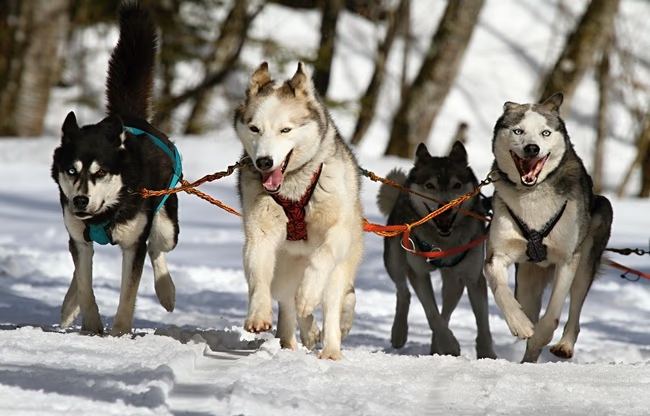
Source: aajtak
Established in 1950, the sled patrol unit monitors for any foreign activities, illegal entry, covert research missions, or suspicious movements. Modern tanks or armored vehicles cannot operate here, so patrols continue in the traditional way.
The Breed and Training of the Dogs
The unit employs Greenlandic sled dogs, specially bred for stamina and work in the cold. Starting young, these dogs are trained to traverse snow, pull sleds, and function as a team. Trained to respond to commands and human presence, the dogs are largely left to their intuition during operations, often alert to changes before humans can be.
The dogs are taught to maintain balance on snow-paths, pull sleds in deep snow and on slopes, and navigate around ice crevasses. They are also conditioned to withstand stormy winds and long periods of darkness to ensure they remain comfortable.
Soldiers also receive training in collaboration with dogs, learning to comprehend dog language, behavior, and signals. In the sled patrol, dogs and soldiers function as a streamlined team.
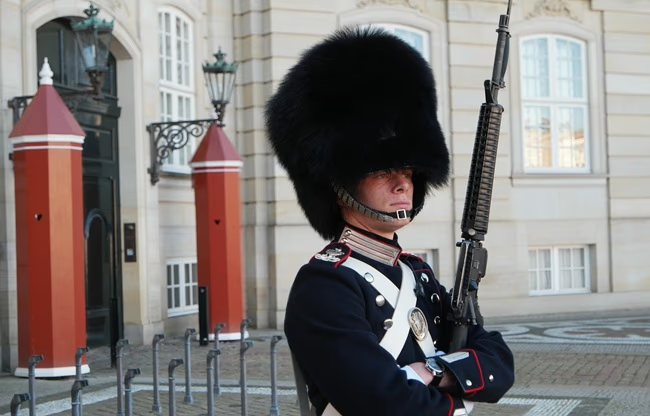
Source: aajtak
Sleds made of wood and lightweight metal frames slide over snow on attached pads. Soldiers use them to carry gear and necessities, occasionally for seating during treks, though patrols mostly require walking.
Typically, a team comprises two soldiers and one sled with 10 to 14 dogs, shuttling across icy plains, glaciers, and mountainous paths for hundreds of kilometers. Soldiers rotate duties, spending two to three months each in these icy landscapes. Periodic tent setups offer resting spots during missions.
Aiding as the Eyes and Ears of Defense
The Sirius Patrol plays a challenging yet non-combat role, serving as Greenland’s eyes and ears. The unit lacks fighter jets, missiles, or sufficient troops. Instead, it patrols vast empty zones, reporting any clandestine or experimental activities back to military command should a trespasser slip through. Their dogs detect foreign scents or movements, making concealment difficult.
Other Active Military Units
The Jæger Corps, or "hunter" troops, are likened to U.S. Army Rangers, specializing in extreme Arctic warfare. The Frogman Corps, operating under the Royal Danish Navy, rivals the U.S. Navy, capable of underwater combat in frozen waters.