The sudden strain in India and Bangladesh's cricketing relations has captured global attention. The Bangladesh Cricket Board's (BCB) position regarding the ICC Men's T20 World Cup 2026, co-hosted by India and Sri Lanka, raises questions about whether BCB has forgotten the long-standing support from the Board of Control for Cricket in India (BCCI).
Recently, on BCCI's advice, Kolkata Knight Riders (KKR) released fast bowler Mustafizur Rahman from their team. This decision was made in response to recent events, where the Indian government has criticized human rights abuses under Mohammed Yunus's interim government in Bangladesh, prompting questions about the Bangladeshi player's participation in the Indian Premier League (IPL). After public outcry, this decision became necessary.
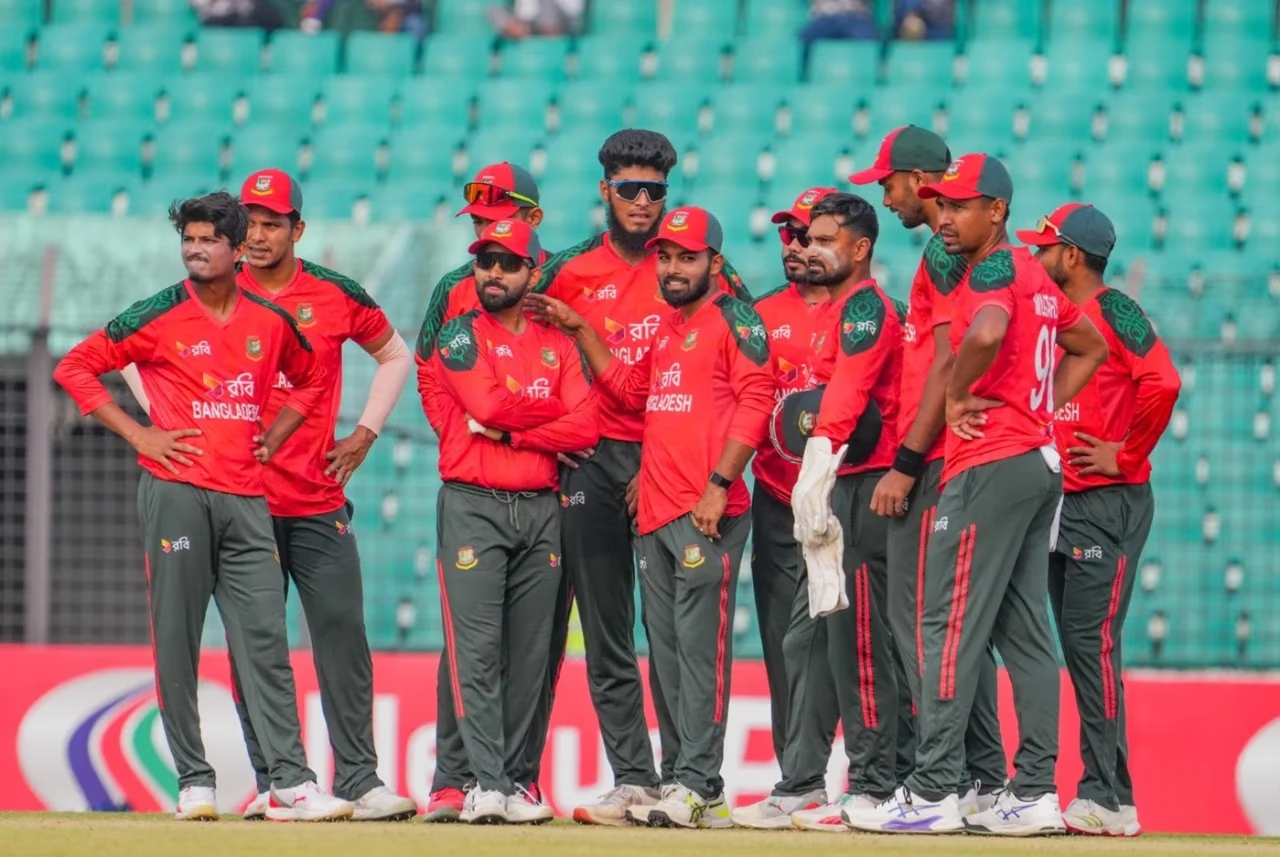
Now, after BCCI's stern action, BCB has decided to express its displeasure. With aggressive posturing, they've declared that discussions will occur only with the ICC, not BCCI. They even went a step further, indicating their team would not participate in the T20 World Cup matches in India, demanding in a letter to the ICC that for security reasons, the matches should be relocated to Sri Lanka.
Bangladesh's request to change T20 World Cup venues was dismissed by the ICC, as their security concerns lacked merit. Nevertheless, BCB persisted, sending another formal letter. Meanwhile, Bangladesh has banned IPL broadcasts, signaling their deep discontent with BCCI's decision and their pursuit of a confrontational path.
Source: aajtak
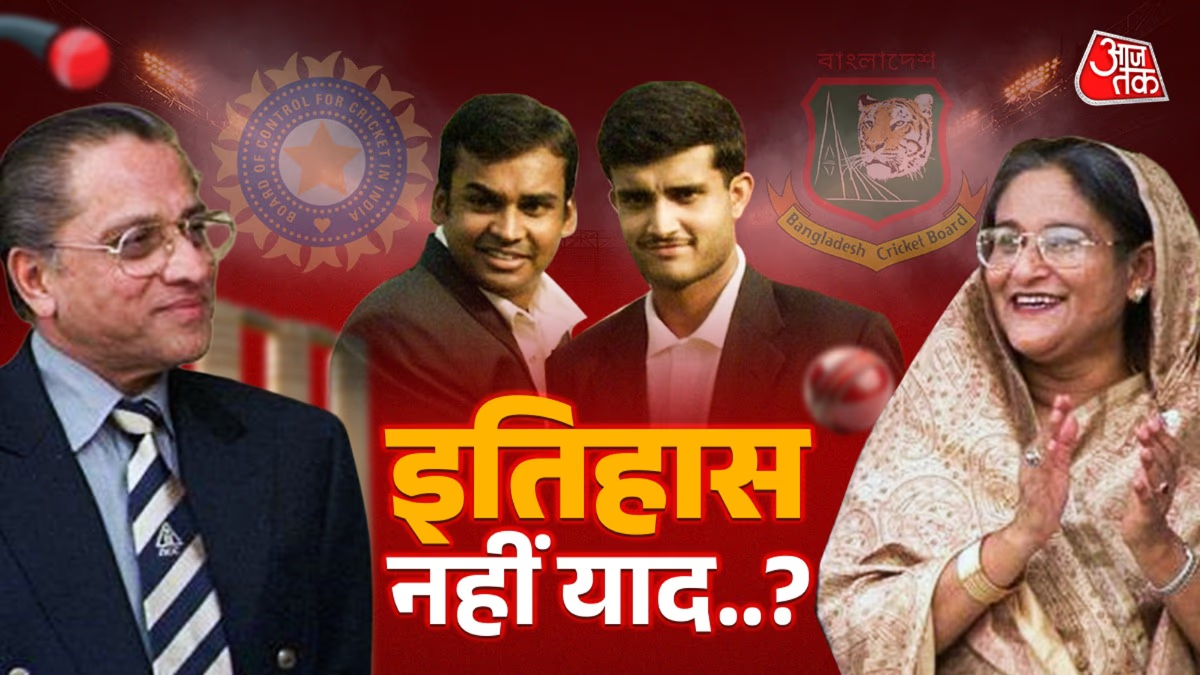
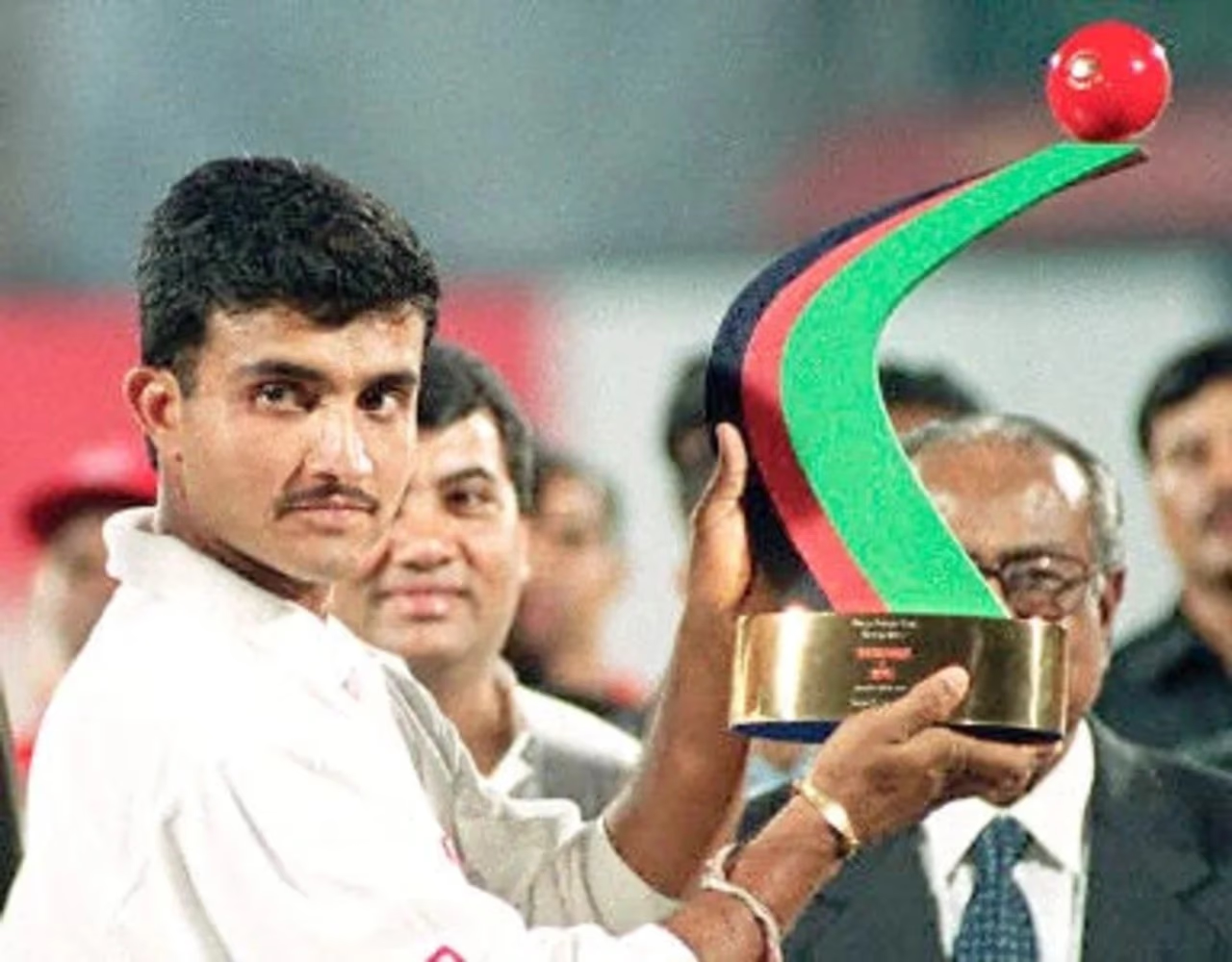
Where Bangladesh cricket stands today, BCCI's role was crucial. Yet, BCB is now showing defiance. Back in 1998, the then-ICC President and former BCCI Chief, Jagmohan Dalmiya, decided to host the ICC Knock Out tournament in Bangladesh. At the time, Bangladesh was not even a full ICC member, so this was significant. The event in Dhaka granted Bangladesh international cricket recognition. Hosting a major ICC tournament at Bangabandhu National Stadium was a dream come true. In the 1998 tournament, South Africa claimed the title, defeating the West Indies in the final.
Bangladesh's entry into Test cricket wasn't easy, either. BCCI's strong support played a key role. Bangladesh became an ICC associate member in 1977, but obtaining Test status took nearly 23 years. In 1999, Bangladesh made its World Cup debut, defeating Scotland, then a surprising win over Pakistan. These victories strengthened their case before the ICC.
Ultimately, in June 2000, ICC unanimously granted Bangladesh Test status, an achievement many cricket boards yearn for decades. Bangladesh played its debut Test match at Bangabandhu National Stadium in Dhaka against India in November 2000. This game was historic in Bangladeshi cricket and marked Sourav Ganguly's first Test as India’s captain. Bangladesh scored 400 runs in the first innings, a strong start, though the experienced Indian team won by 9 wickets.
Source: aajtak
In the early years of Test cricket, Bangladesh faced challenges and continuous defeats. However, by 2005, they won their first Test series against Zimbabwe. Even after achieving Test status, India played a vital role in Bangladesh's cricket development, engaging in regular bilateral series, and offering opportunities for Bangladesh to play ODI and T20 series in India.
Bangladesh hosted the Asia Cup and several ICC tournaments with India's support, training several Bangladeshi players in India. Stalwarts like Shakib Al Hasan, Mashrafe Mortaza, and Mohammad Ashraful gained invaluable experience in IPL. Bangladesh benefitted from India's strong position in the ICC, which aided their international cricket establishment.
Yet recently, when BCCI took an administrative decision regarding Mustafizur Rahman, BCB reacted harshly, displaying their disagreement aggressively. This reflects a political pressure-driven choice to confront BCCI, overlooking the shared history and support from India in establishing Bangladesh cricket.