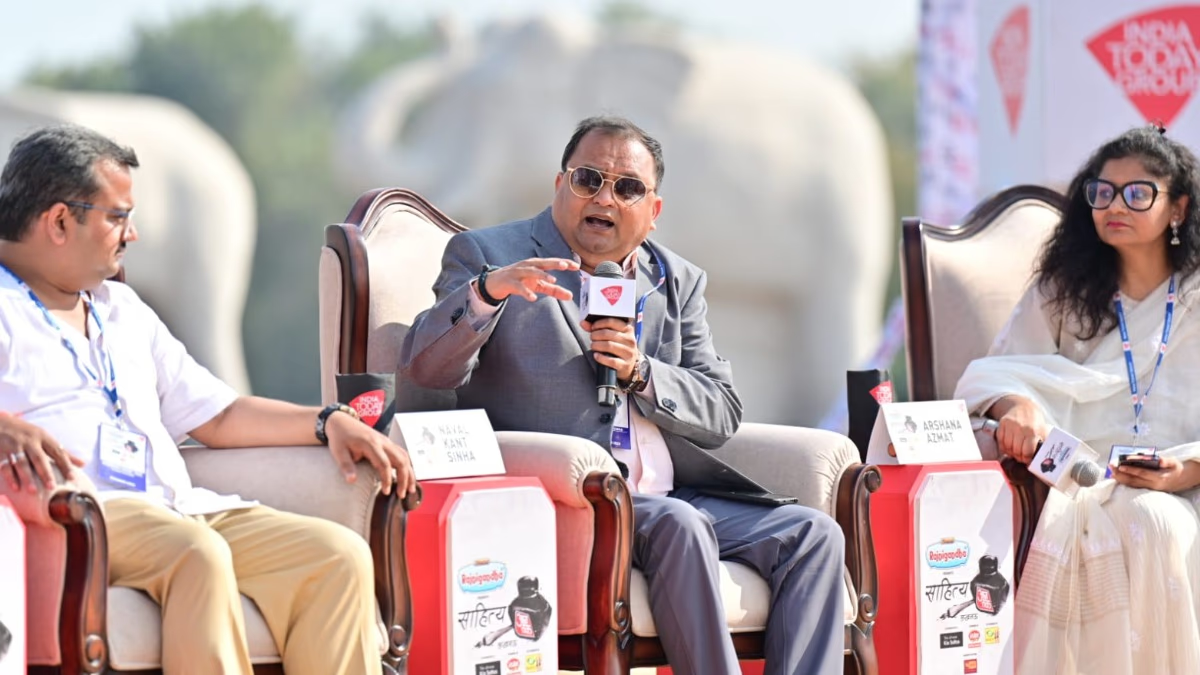
During the 'Non-Nawabi Vegetarian' session on the Sahitya Aajtak platform on Sunday, guests explored the unique culinary traditions of Lucknow. Navalkant Sinha, Archana Azmat, and Hemendra Dhar shared many intriguing insights. Navalkant Sinha began by recalling significant aspects of Lucknow's history.
Navalkant explained that the essence of Lucknow's name, once 'Avadh,' implies 'the indomitable.' Lucknow boasts a history of opulence and a multifaceted cultural tapestry, transitioning from the rule of Surya dynasty kings to Chandra dynasty rulers.
Peering into historical chronicles, between 1000 to 1030, Lakhna Pasi emerged as a formidable ruler, with the city's identity linked to his name. Subsequently, around 1190, Bijli Pasi assumed leadership. With time, Sheikhzadas arrived on the scene.
Seasonal Vegetables: A Hidden Gem of Lucknow
Hemendra Dhar remarked, “People often associate Lucknow with kebabs.” However, seasonal vegetables once took center stage here, such as 'nimona,' a winter dish. Additionally, 'arbi ka salan' was a unique offering.
Besides these, 'tahri' was a popular feast, cooked by blending vegetables with spices and rice. The Nawabs greatly contributed to Lucknow’s food scene, being avid food enthusiasts themselves.
Brahmin households crafted culinary delights like jackfruit biryani, while Kayasths indulged in a variety of vegetarian and non-vegetarian cuisines.
Source: aajtak
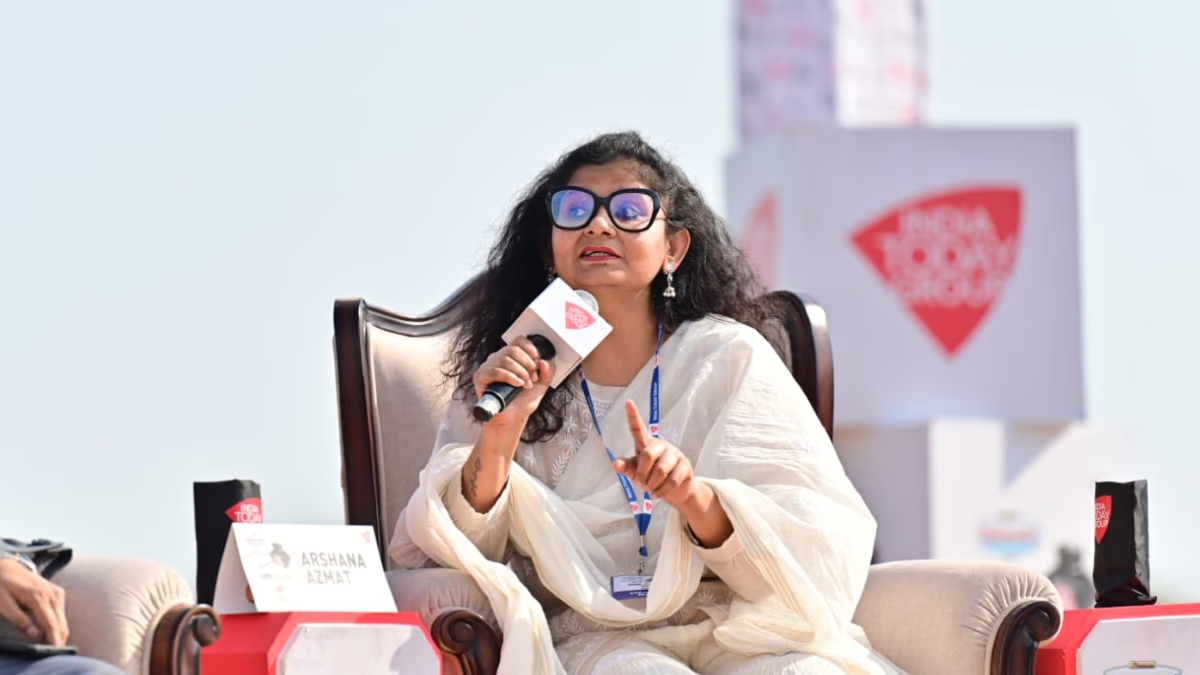
Archana Azmat shared that vegetarian dishes lacked documentation, thus are less recorded. She mentioned that some Nawabs were vegetarians too. Naval stated that typically, men cooked in Nawabs' kitchens, whereas women cooked in normal households.
Cooking was perceived not as a chore but an art. One of the oldest dishes, 'kheer,' developed in three distinct styles in Lucknow. The Nawabs were not warriors nor intrigued by diplomacy but reveled in music, dance, and the culinary arts.
The Unique Charm of Lucknow’s Paan
Naval explained, in Lucknow, serving even paan is an art. There were methods to present paan, and a special way to arrange utensils. Paan was crafted by slicing it into four pieces. Archana remarked that paan reflects our etiquette. In the past, during weddings, the size of the paan-kit was significant as it represented the bride's pocket money.
Hemendra Dhar noted that while paan is popular across India, Lucknow's paan holds a special charm. Biryani also defines Lucknow, being a unique marker. It's the residents of Lucknow who introduced this biryani variation to Kolkata.