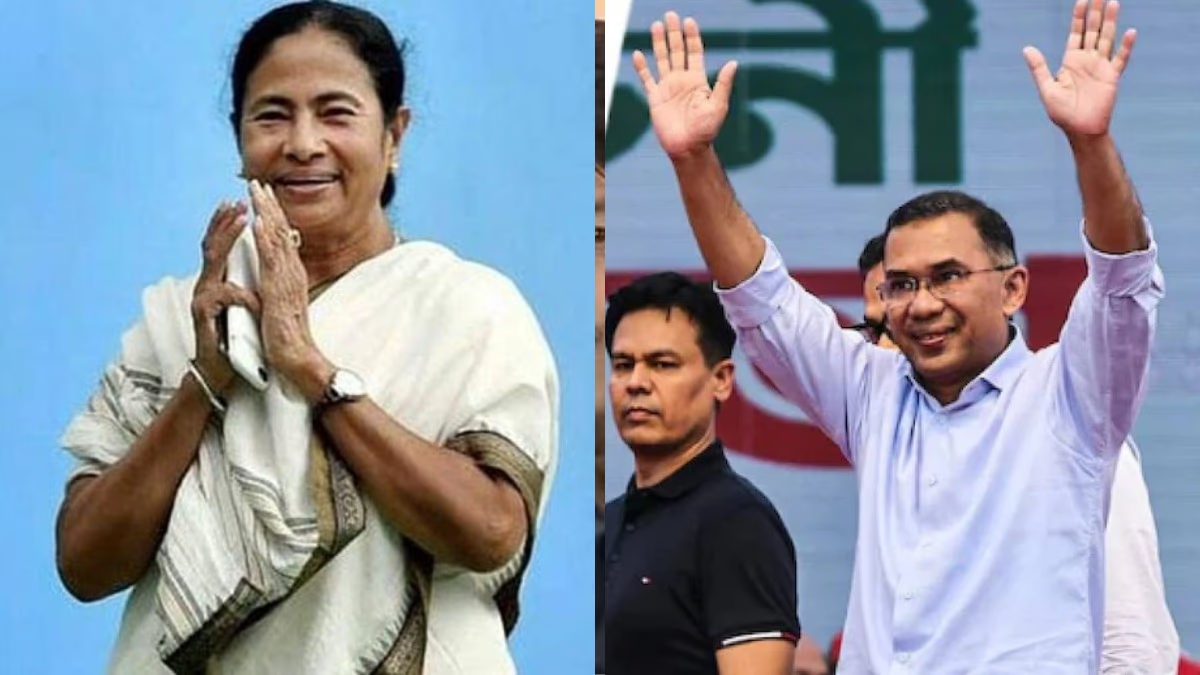
In politics, nothing is permanent—not friends, not foes. Tarique Rahman understood this timely. After enduring years of exile, legal challenges, and political uncertainty, he strategically aligned his moves. Meanwhile, student leaders who orchestrated Sheikh Hasina's ousting missed the mark in electoral mathematics.
The outcome is in front of everyone. Tarique's Bangladesh Nationalist Party (BNP) clinched a record-breaking win in the Bangladesh elections. In stark contrast, the students from the National Citizen Party (NCP), who toppled Sheikh Hasina, lagged behind.
In this electoral contest with 300 seats, voting was conducted for 299, postponed on one due to a candidate's death. Meanwhile, results for Chattogram-3 and Chattogram-8 remain withheld by the court.
According to available results, the
Bangladesh Nationalist Party
won 212 seats. Conversely, the
Jamaat-e-Islami
coalition secured only 77 seats, with the remaining 8 going to 'others'. Sheikh Hasina's Awami League was barred from contesting.
More Discussed: Students' Defeat than Rahman's Victory
Besides Jamaat and BNP, another notable party in this election was the
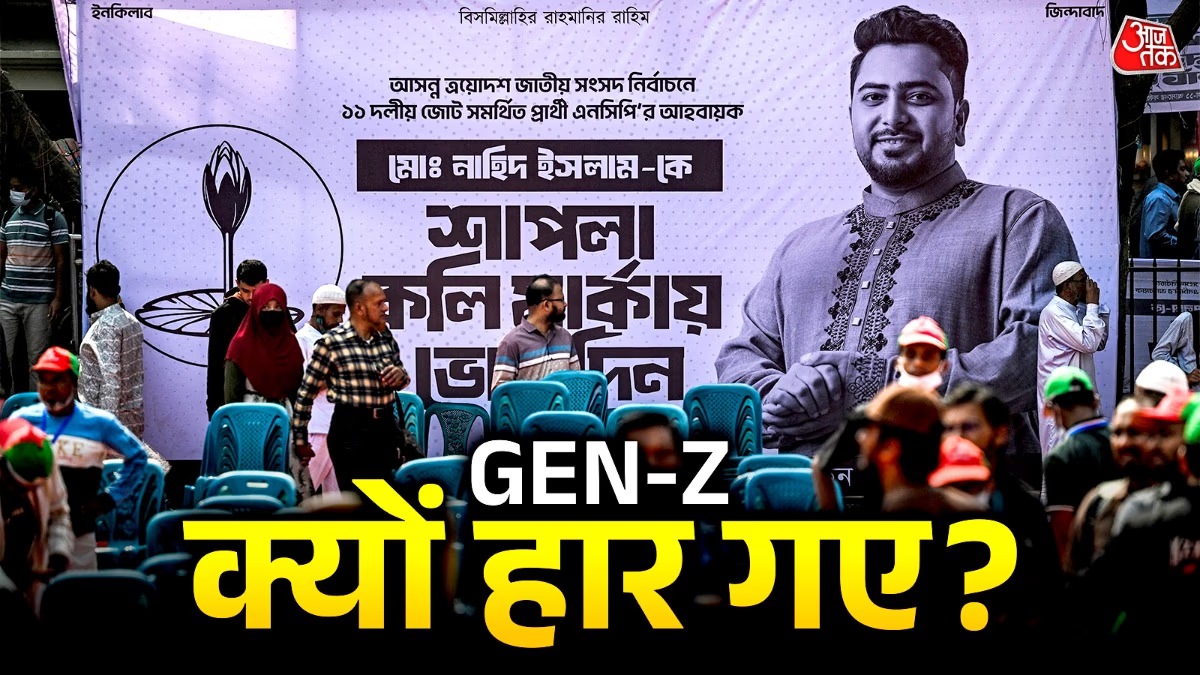
National Citizen Party (NCP)
. This relatively new party orchestrated nationwide protests against Sheikh Hasina, leading to her government's downfall. They also played a pivotal role in bringing Muhammad Yunus to power in Bangladesh.
It was anticipated that NCP would make a significant impact in the elections. However, the ballot box revealed otherwise. NCP fielded candidates in 30 seats but won only six.
Prominent faces like Nahid Islam and Hasanat Abdullah did taste victory, but it wasn't the landslide expected.
The search for causes points largely to one factor...
their alliance with Jamaat-e-Islami.
Rahman Distanced from Old Allies, Students Courted Trouble
The partnership with Jamaat-e-Islami proved detrimental for the student-driven party, NCP. Historically, Jamaat was an ally of Rahman's BNP. However, this election, Tarique Rahman kept his distance from Jamaat, which proved to be beneficial.

Source: aajtak
Jamaat-e-Islami predates Bangladesh itself, having supported Pakistan during the 1971 liberation war. Their militia groups committed atrocities including intellectual assassinations, mass rapes, and Hindu minority genocide, for which they were condemned.
After Bangladesh's independence, it was banned by Sheikh Hasina's father, Sheikh Mujibur Rahman. But with his assassination and the rise of Ziaur Rahman, secularism was removed from the constitution, allowing religious political parties to operate. Jamaat capitalized on this.
Subsequently, Jamaat allied with BNP and even held ministerial portfolios. However, Sheikh Hasina reinstated the ban during her return to power. When her government fell last year, Jamaat regained its freedom. Jamaat often argued the 1971 allegations were politically motivated and contested in court.
NCP's Miscalculations Proved Costly
Disagreements over seat allocation and Jamaat’s infamous reputation led BNP to keep them at arm's length, saying 'farewell from afar'. Before the election, NCP suspected their struggle wouldn't last independently. Ground enthusiasm existed, but organizational roots were still immature.
The shoulder they leaned on,
Jamaat-e-Islami
, turned into a pivot of downfall. Internal party rifts appeared, leaders publicly voiced dissent, and eventually left. Voters identifying as moderate or progressive found Jamaat's religious politics unpalatable.
Coordinator Nahid Islam defended the alliance, calling it an electoral strategy over ideology. But voters likely weren't convinced.
Was Proximity to Yunus Detrimental?
It's unclear, but Yunus's proximity might have hurt the student party. During his regime, Bangladesh didn't see much benefit. Issues like security breakdown, minority oppression, and inflation were rampant.
Under Yunus's government, some student advisors linked to NCP were sidelined by a united Jamaat and BNP effort. Allegations against Yunus included delaying elections to give NCP time to establish as a solid political entity.