Our Earth is primarily composed of four layers: the Inner Core, the Outer Core, the Mantle, and the Crust. The Crust is the outermost layer, followed by the Mantle. Together, these form the Lithosphere, which is about 50 kilometers thick and consists of multiple layers known as Tectonic Plates.
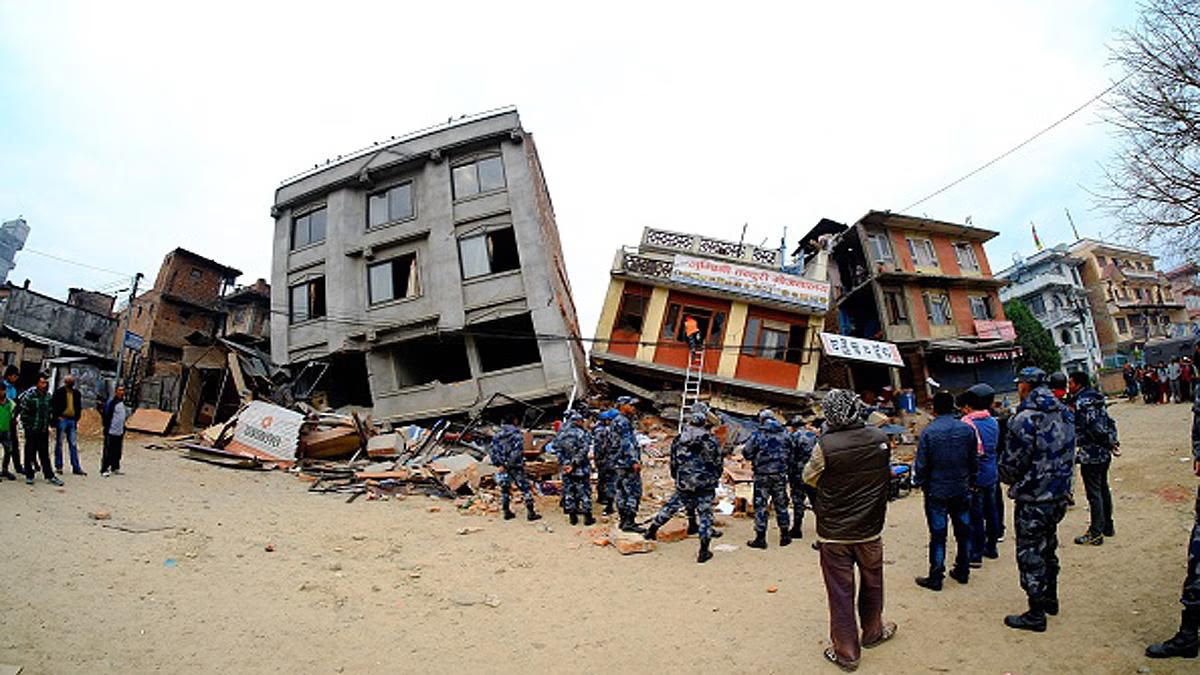
Beneath the surface, there are seven Tectonic Plates that are constantly in motion. When these plates collide, rub against each other, rise, or move apart, the ground starts shaking. This phenomenon is known as an earthquake. Earthquakes are measured using the Richter Magnitude Scale.
The Richter Magnitude Scale ranges from 1 to 9. The intensity of an earthquake is measured from its epicenter, where energy release is gauged on this scale. A rating of 1 indicates low energy release, whereas 9 signals a catastrophic and destructive wave, which diminishes with distance. An intensity of 7 on the Richter Scale results in strong tremors within a 40-kilometer radius of the epicenter.
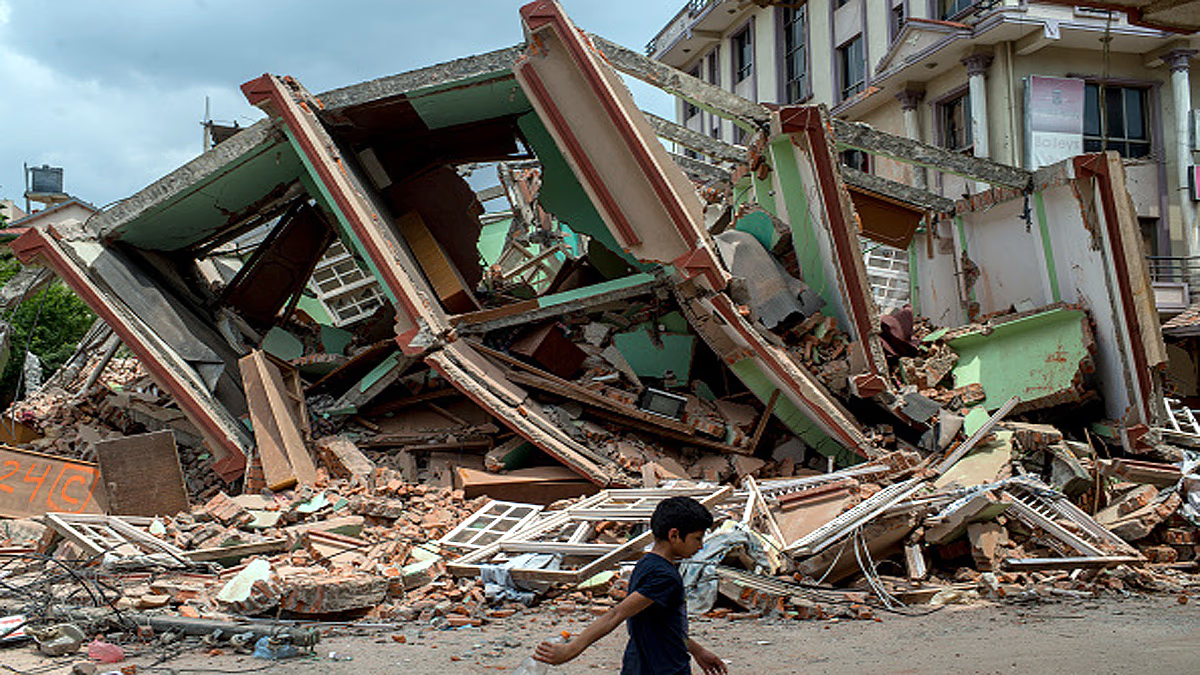
Source: aajtak
Earth’s Most Cataclysmic Quake, 3,800 Years Ago
Researchers have uncovered the largest earthquake in human history. Professor Diego Salazar from the University of Chile studied this formidable event. With a staggering intensity of 9.5 on the Richter Scale, this earthquake induced a tsunami that spanned 8,000 kilometers. It forced people to abandon coastal areas for 1,000 years. Occurring 3,800 years ago in what is now northern Chile, the quake resulted from a tectonic plate's rupture, causing the coastline to rise and generating tsunami waves up to 66 feet tall.
Valdivia: The Largest Earthquake in Modern History
The largest recorded earthquake to date was the 1960 Valdivia earthquake, with a magnitude between 9.4 and 9.6, devastating southern Chile and claiming 6,000 lives. It triggered repeated tsunamis in the Pacific Ocean. The tectonic plate rupture responsible for the Valdivia quake stretched 800 kilometers.
The Indian Tectonic Plate's Northeast Drift Towards China
Stretching from the Himalayas to Antarctica and merely grazing the Pakistan border, the Indian Tectonic Plate lies south of the Himalayas. Meanwhile, the Eurasian Plate is located north. As the Indian Plate advances northeast towards the Eurasian Plate and China, a collision may lead to a significant earthquake centered in India.
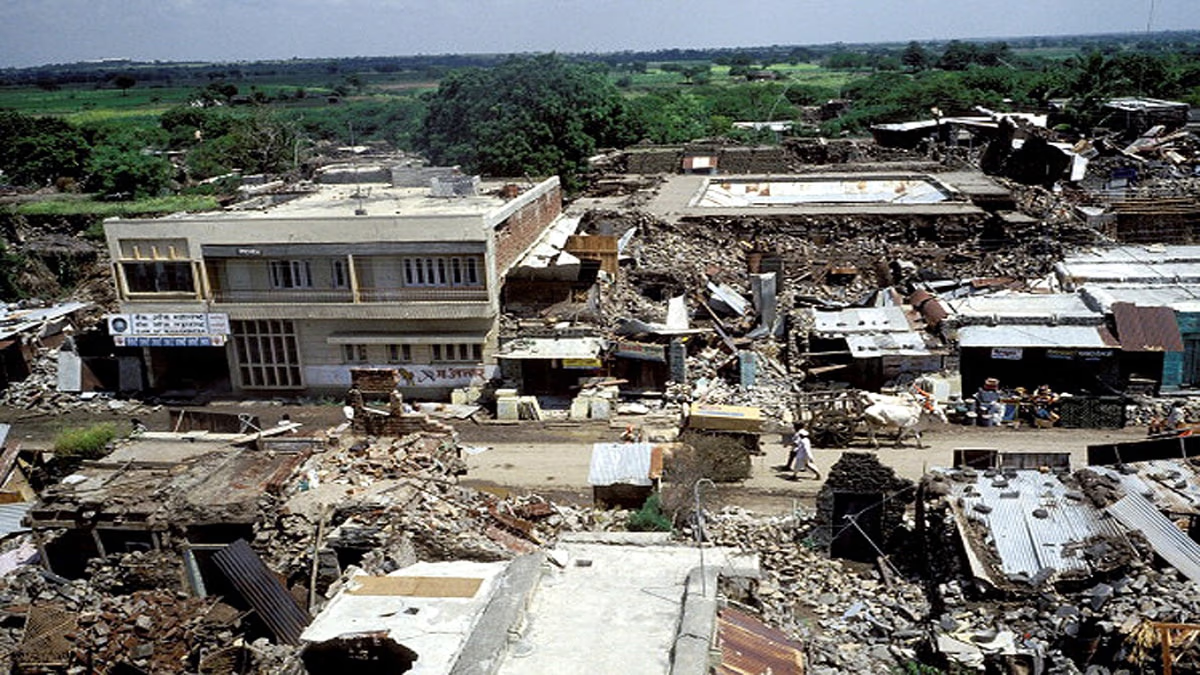
Source: aajtak
Understanding the Four Types of Earthquakes
Earthquakes come in four forms. Induced Earthquakes are caused by human activities, such as tunnel excavation, filling reservoirs, or large-scale geological or geothermal projects. Dam construction also triggers these quakes.
Volcanic Earthquakes occur before, during, or after a volcanic eruption, driven by escaping lava or subterranean flows.
Collapse Earthquakes arise from the collapse of underground caves and tunnels, often due to subterranean explosions.
Explosion Earthquakes result from nuclear or chemical detonations.
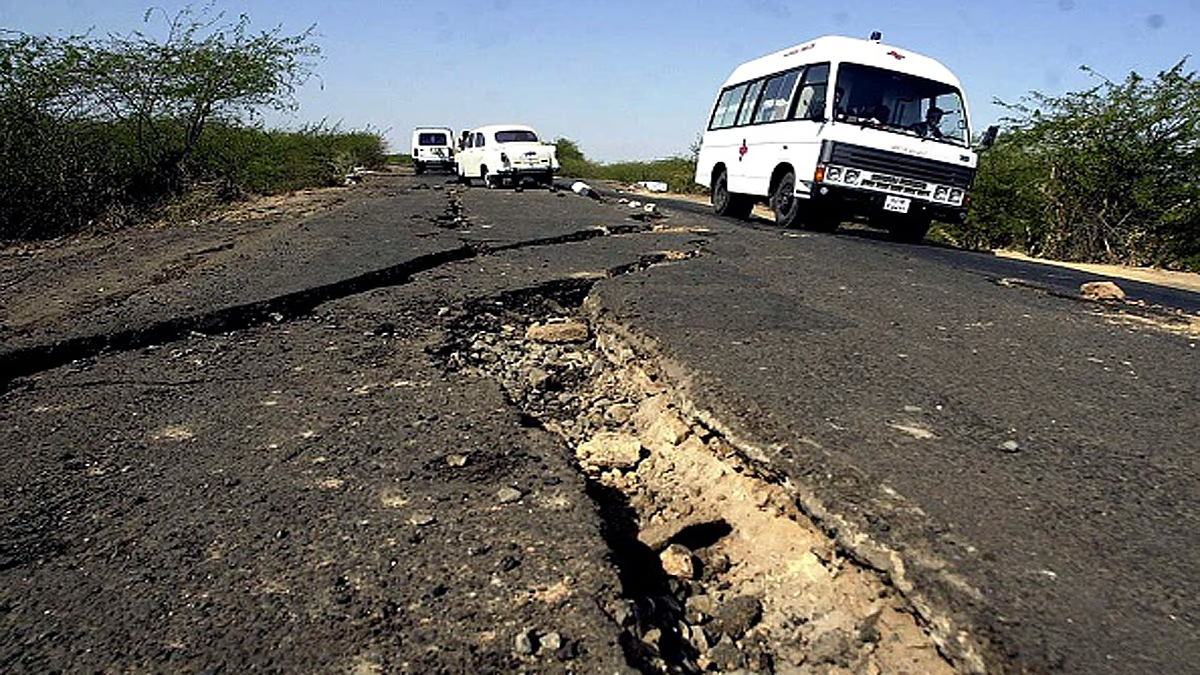
Source: aajtak
Can Earthquakes Have Benefits?
Earthquakes provide scientists with insights into Earth's internal structure. They contribute to the formation of high-altitude regions, positively impacting the local climate with the creation of mountains, plateaus, and valleys. These landscapes foster rich biodiversity, facilitate life growth, and enhance soil fertility. The world we see today owes its form to these dynamic forces. Despite these benefits, the loss of life and property cannot be overlooked.