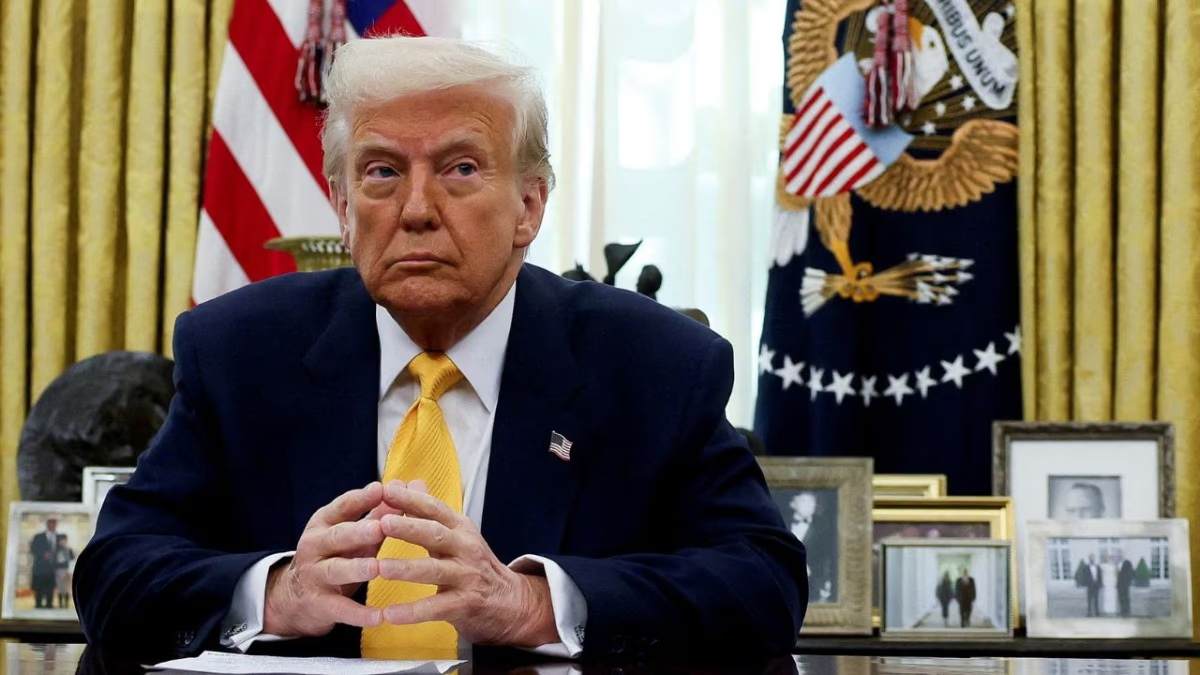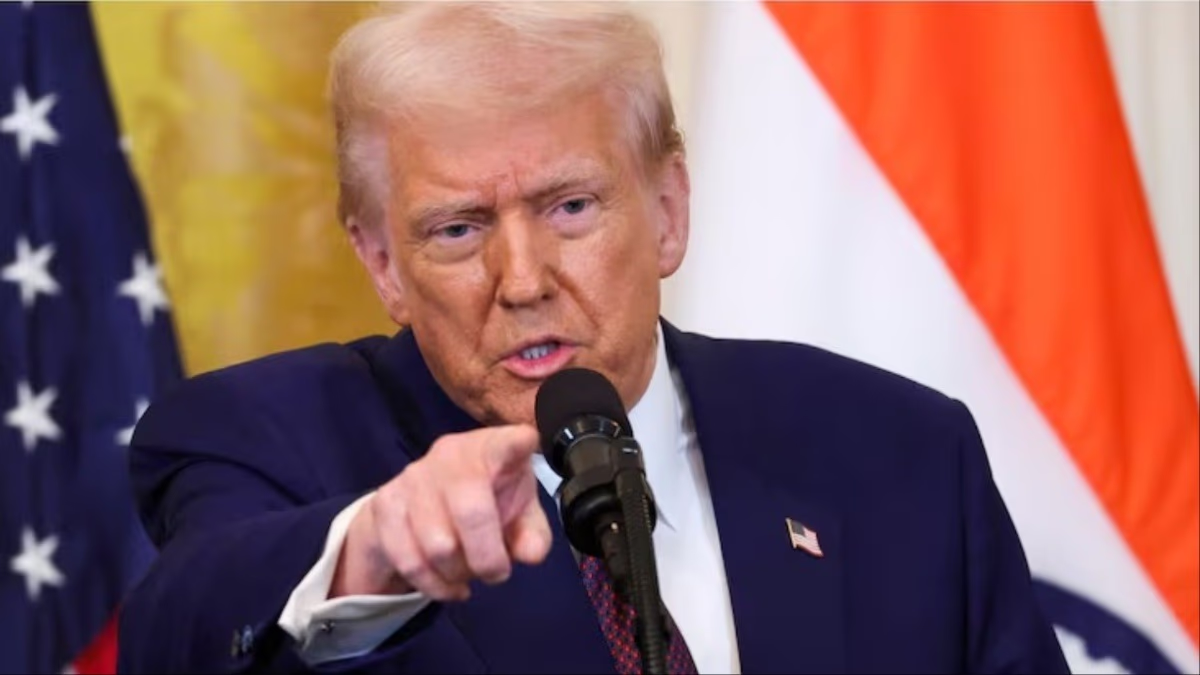
On Thursday, President Donald Trump declared a permanent halt on migration to the United States by individuals from what he termed as 'Third World countries'. Trump explained that his administration is taking this measure to allow the U.S. to recover fully and to remove any illegal immigrants who entered under the Biden administration.
In a post on the social media platform 'Truth Social', Trump stated that the goal is to cease all federal benefits and subsidies to non-citizens, revoke citizenship from migrants disturbing domestic peace, and deport foreign nationals who are a burden or security threat, or fail to uphold Western civilization values.
This announcement follows a tragic shooting near the White House resulting in two National Guard members being seriously injured. One of the individuals sadly passed away during treatment, while the other remains in critical condition. Investigators reported that the attack was carried out by an Afghan national who arrived in the U.S. during the Biden administration.
The term ‘Third World countries’ used by Trump is ambiguous, as historically during the Cold War, it referred to nations that were neither allies of the United States nor the Soviet Union.
Nations allied with the U.S. were termed First World, while those aligned with the Soviet Union were known as Second World. During that period, India was considered a Third World country due to its non-alignment policy.
With the Soviet Union's dissolution in 1991, the political usage of the term faded, and it currently often refers to economically less developed nations or those in the development phase.
Today, Third World countries are often associated with high poverty rates, political or economic instability, and higher mortality rates. Many are either unindustrialized or in the early stages of industrialization.
Due to its distinct historical and economic implications, there remains confusion over what constitutes a Third World nation.
There is no official list of 'Third World countries'. However, the United Nations classifies the most vulnerable nations economically and socially as Least Developed Countries (LDCs).
This classification is based on the following criteria:
Per Capita Income
Human Assets Index
Economic and Environmental Vulnerability
Currently, 44 countries are recognized as LDCs, with Afghanistan included in this list.
To exit this category, a nation must meet thresholds in two of the three criteria.
According to the original Cold War ideology articulated by Sauvy, India was classified as a non-aligned country, fitting historically into the Third World category.
However, in today's debatable economic interpretation, India is generally seen as a developing country, not part of the LDCs.
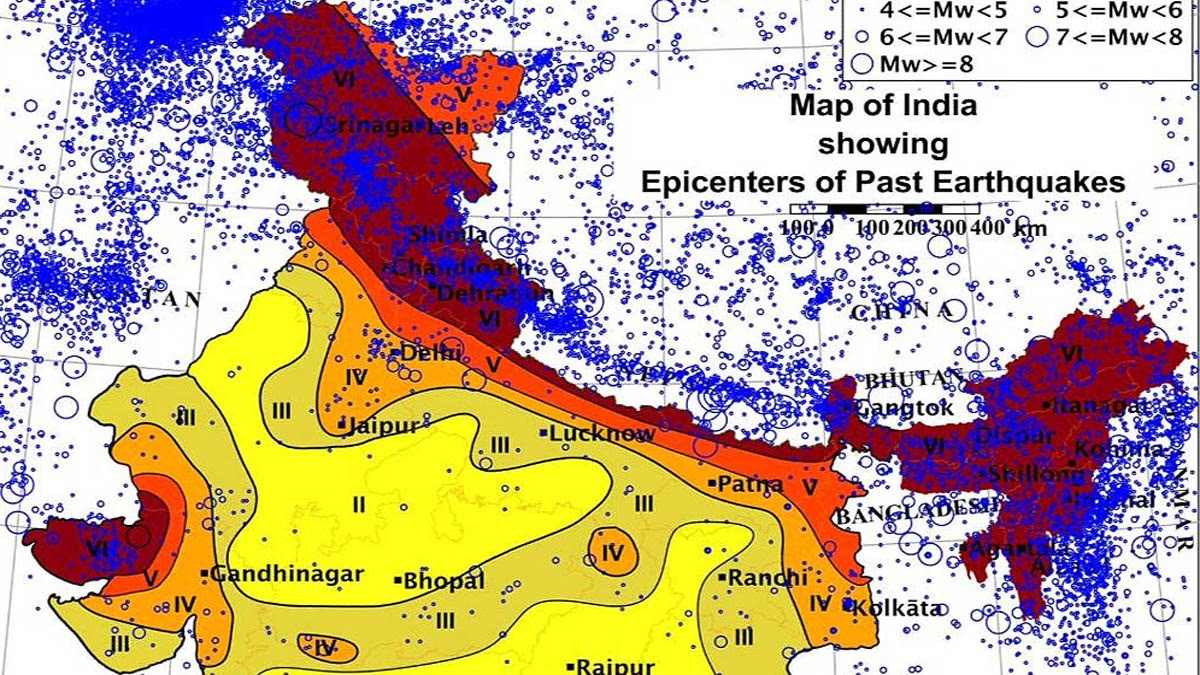
Therefore, India is not listed among the 44 least developed nations as identified by the UN. Since Trump has not clearly defined his usage of the term in policy or definition, it remains uncertain whether this immigration halt applies to India or exempts it.