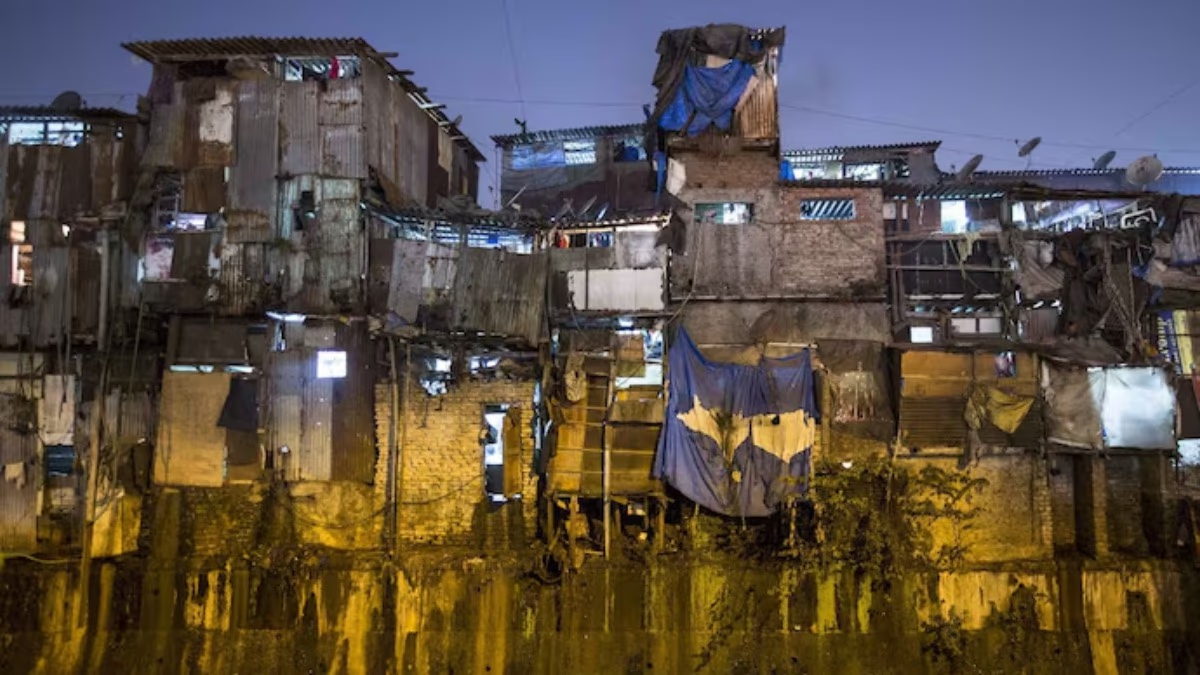
What new can be written about Dharavi, Mumbai? Authors, poets, and filmmakers worldwide have penned countless tales about this place. Dharavi is one such place where words often fall short in describing its conditions. Famous author Salman Rushdie once said that to truly understand Dharavi, you must live here for months. Yet, this slum repeatedly captures our attention, as its narrow lanes hide much that remains unseen by the world.
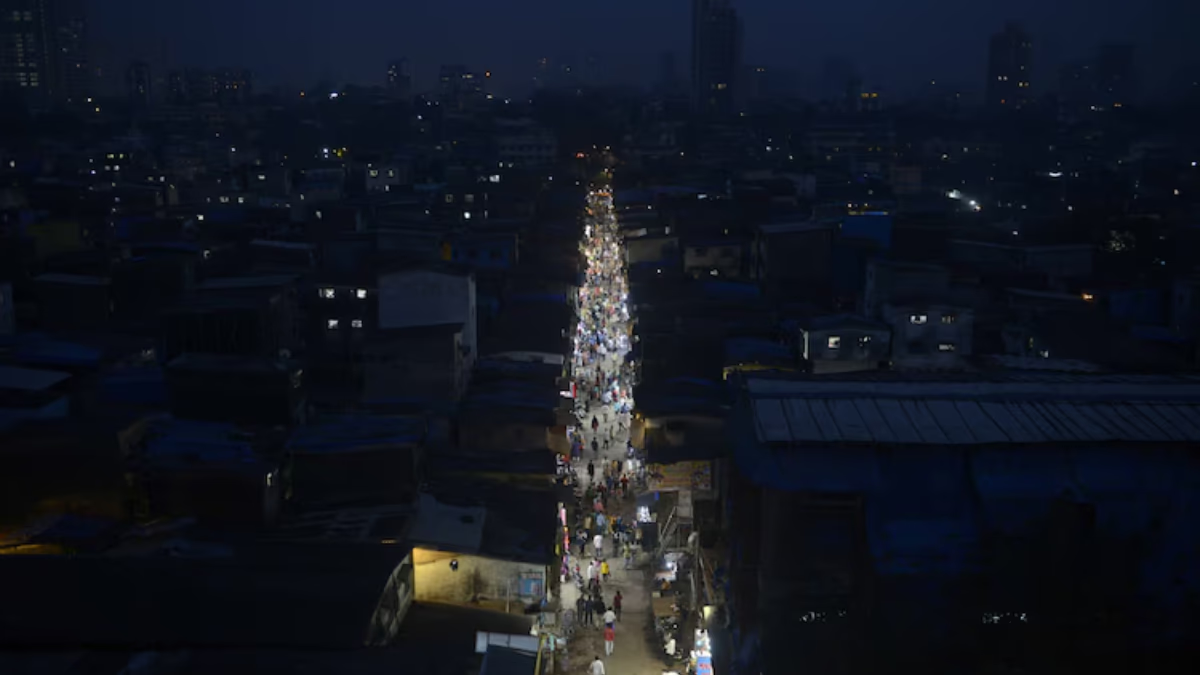
Stepping into Dharavi's lanes, one gets the feel of a thriving business and a different world altogether. Often termed a 'city within a city,' millions of lives begin and end within its cramped slums. Born and raised here, plumber Raju Hanumanta aptly summarizes Dharavi's reality in one phrase: 'It's a gutter, but a golden one.'
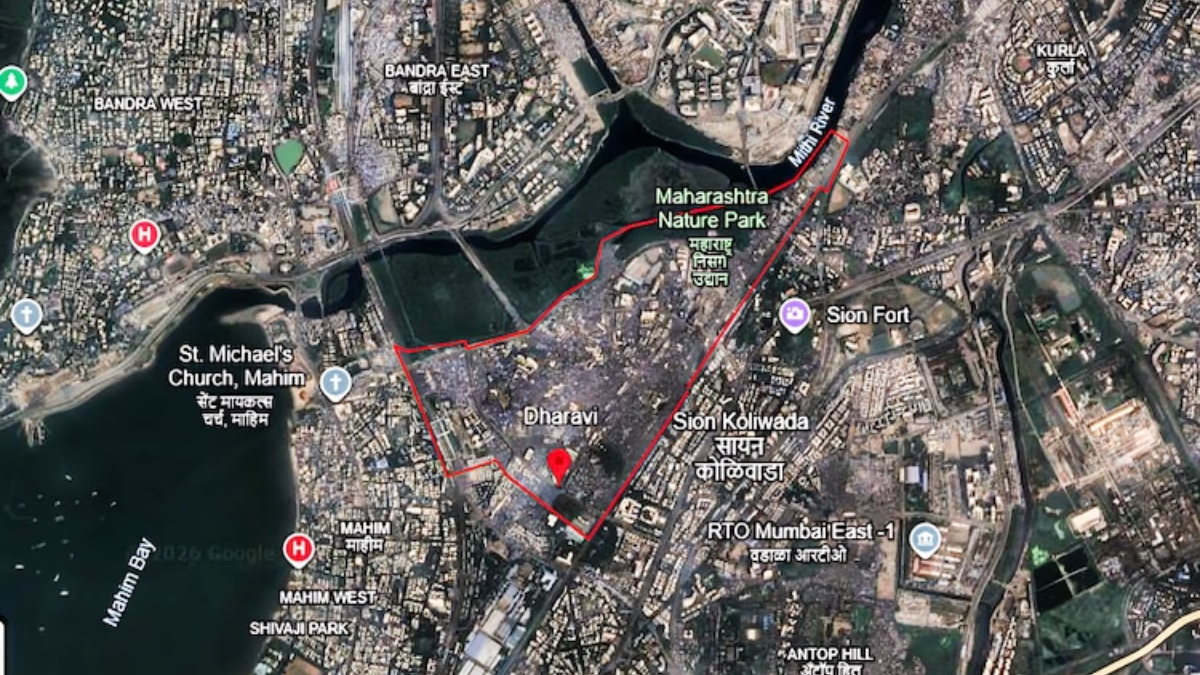
The small businesses in Dharavi play a pivotal role in keeping the pace of greater Mumbai alive. While some view Dharavi merely as a slum, the reality is that its business scene competes directly with the historic 'Ballard Estate' and the gleaming 'Bandra-Kurla Complex' of South Mumbai. Huge boardroom deals are matched, if not surpassed, by the quiet businesses booming in Dharavi's lanes.
Source: aajtak
Outsiders often assume that real estate prices in a place like Dharavi must be low. However, the figures here can shock anyone. Rental prices for commercial shops in Asia's largest slum can reach up to 500,000 rupees a month, equaling or exceeding those in Mumbai's posh areas. This highlights just how precious every inch of land here is.
Spanning a mere 2.4 square kilometers, this tiny area hosts billions of dollars of business activity year-round. Dharavi's annual turnover exceeds 90 billion rupees. Two stark realities coexist here: on one hand, a visible lack of basic amenities and poverty, while on the other, an economic structure so robust it underpins the economy of all Mumbai. This makes Dharavi a subject of interest for business experts worldwide.
While many see Dharavi as a backdrop for films or narratives, and others find inspiration in its poverty, we aim to uncover the ground realities driving its economy. We seek to understand why doing business in these expensive slums is so costly, despite the inadequate living conditions.
Read More:
Why Is Business Here So Expensive?
For someone raised in Bandra or the affluent areas of South Mumbai, navigating Dharavi’s winding and narrow lanes for even a few minutes can be daunting. The layout is such that emergency vehicles cannot easily enter in crises. Fires challenge access for fire engines. Even today’s delivery boys, reliant on mobile apps, often find navigating these lanes bewildering.
Yet despite these challenges, Dharavi remains the first stop for laborers and workers seeking livelihoods in Mumbai. This is chiefly due to its basic simplicity. Renting a slum here doesn’t require police verification procedures. Though clean drinking water and sewage systems might be lacking, tenants aren’t subjected to excessive questioning. The main requirement is timely cash payment to the landlord. A tiny 100-square-foot room rents between 3,000 to 7,000 rupees, offering newcomers a substantial support in Mumbai.
Yet, the scenario drastically changes when transitioning from residential shanties to business shops. Commercial property rents here are shockingly high. Even in an area with scarce basic amenities, shop rents reach sky-high.
Comparing to big apartments across Mumbai, a space measuring slightly over 1,200-1,300 square feet, equivalent to a two-bedroom apartment, could run into lakhs a month. Rents for spaces roughly 1,800 square feet can climb to 500,000 rupees monthly. It's indeed astounding that while living with dignity can be tough, business thrives to an extent that lakhs are willingly paid as rent, showcasing Dharavi's paradox as the world's most expensive and unique slum.
Source: aajtak
Read More:
The Real Strength of Dharavi: Its Craftsmanship
Witnessing the prices of shops and trade here is deeply saddening, considering the lack of human dignity and basic comforts. Yet astonishingly, commerce not only runs but flourishes extensively despite these struggles.
Mumbai's true strength lies here, carried on its shoulders daily. This comprises factory workers, security staff, domestic helpers, taxi and auto drivers, as well as street vendors selling idlis and coffee. Potters, scrap dealers, bag and shoe makers, alongside skilled leather artisans, have all carved niches in Dharavi's pathways. What transpires here is nothing short of miraculous, though even self-proclaimed staunch Mumbaikars seldom set foot in this small city within a city.
Dharavi's expanse belies its tiny designation. On paper, it shows a 2.39-square-kilometer area, yet its roots stretch across Bandra, Mahim, Matunga, Sion, Kurla, Chunabhatti, and Kings Circle—seven prominent districts. Even parts of Saki Naka and Kurla fall under its influence. Approaching Mumbai via plane, passengers are first greeted by the endless sprawl of this slum. In a way, it welcomes those traveling to Mumbai.
The stark contrast between the western and eastern sides of Bandra Station could bewilder anyone. On one side, there’s the iconic station building, upscale Linking Road, Hill Road, and luxurious bungalows, while slums begin just 200 meters on the other side. Show an outsider unfamiliar with Mumbai photographs of both sides, and they'd scarcely believe they’re parts of the same locality. The western suburb of Bandra is renowned for heritage and affluence, while the eastern part narrates a tale of struggle starting from Dharavi.
Dharavi's Leather Trade and Tanneries
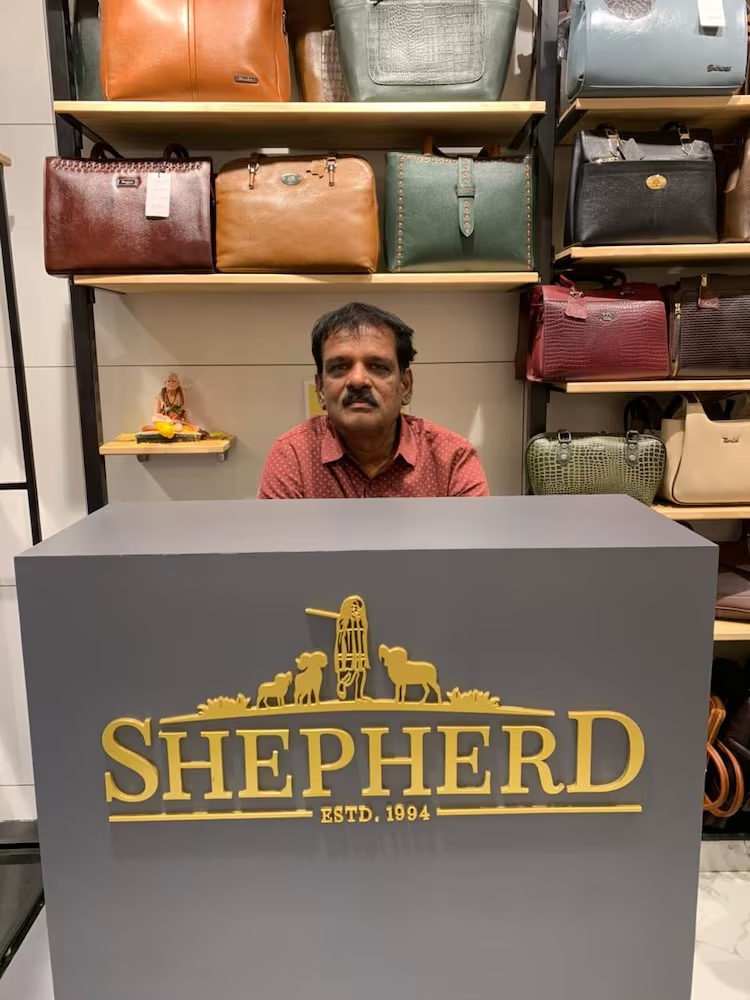
Let’s delve into Dharavi's work that has cemented its identity: leather trade. This isn’t just business but has been the slum's true strength since the late 19th century. Raju Bhoite, owner of 'Shepherd Leather Goods', has been in the trade for the past 20 years, proudly declaring it his family business.
Source: aajtak
Today, over 5,000 small factories operate in Dharavi, where craftsmen work magic with their hands. Bags, jackets, wallets, along with equestrian gear and shoes, are crafted to meet global demand. Bhoite boasts a showroom, but not all Dharavi factories are as polished. Nonetheless, business booms, with traders earning 20,000 rupees a day while small shop owners achieve a daily target of 5,000 rupees with ease.
It's astonishing that while slum dwelling rents range between 3,000-7,000 rupees, commercial shop rents beside roads soar from a staggering 150,000 to 500,000 rupees monthly. On merely 500 meters of the Koliwada Road, a small leather market handles a business worth 2.5 billion rupees annually. This drives up land values and rental prices sky-high.
Despite the trade being predominantly Chamar community-owned, Dharavi represents India’s melting pot. People from Maharashtra's Satara to Jharkhand, Uttar Pradesh, and Bihar are all engaged in this work. The leather is sourced from Kanpur and Chennai, and craftsmen here transform it into treasured products. Dharavi’s significant contribution to India's billion-dollar leather export is undeniable, with the bags crafted eventually adorning shopping racks of Europe's and America's high-end markets.
Craftsman Sunil Sonawane says that although governments have come and gone, none have paid heed to them despite being at Mumbai’s core. According to him, if provided with proper machinery and government aid, their craftsmanship could challenge brands like 'Gucci' and 'Prada'. Sonawane explains this work is tough due to chemical waste creating clogs in drains, but his leather goods remain 'golden' to him, despite challenges.
Read More:
Pottery Finds Form in Kumbharwada
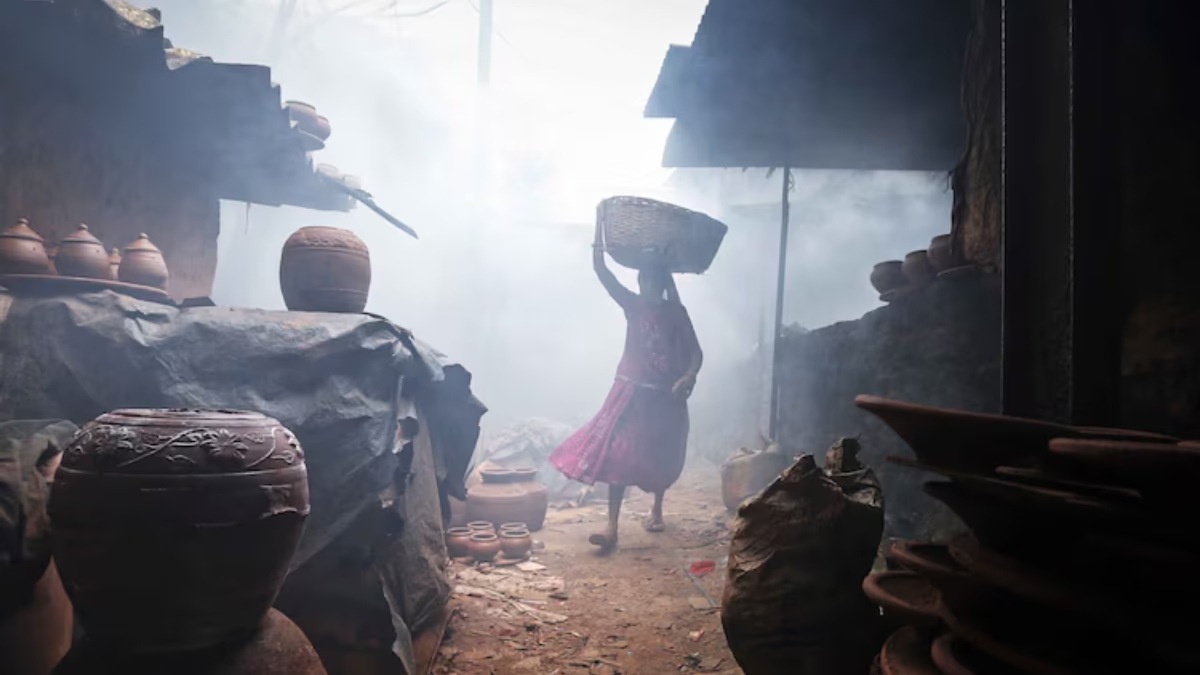
After leather, we turn to Kumbharwada, Asia's largest pottery hub. Upon entering its streets, will see oil lamps, clay cups, elegant pots, and artworks beautifully displayed. The scent of wet clay and kiln smoke is ever-present. Around a thousand families from Gujarat have kept this craft alive with pride.
Every year, Kumbharwada generates a turnover exceeding 10 billion rupees. Except for the four rainy months, potters' wheels never stop throughout the remaining eight months. During Diwali, they work day and night since their lamps illuminate not just India but shine globally. Yet, a bitter reality accompanies this profit. Smoke released by kilns in cramped slums acts as a silent killer, worsening workers' respiratory conditions, leading to diseases like cancer. Arranging this work orderly could tangibly improve many families' lives.
Source: aajtak
The Aroma of Idli-Vada and the City’s Hustle
Dharavi’s street food is a defining identity, tasting across Mumbai. Initially a Tamil settlement, it later welcomed individuals from Karnataka and Kerala. Today, the morning aroma of idli-vada and filter coffee across Mumbai has Dharavi at its roots.
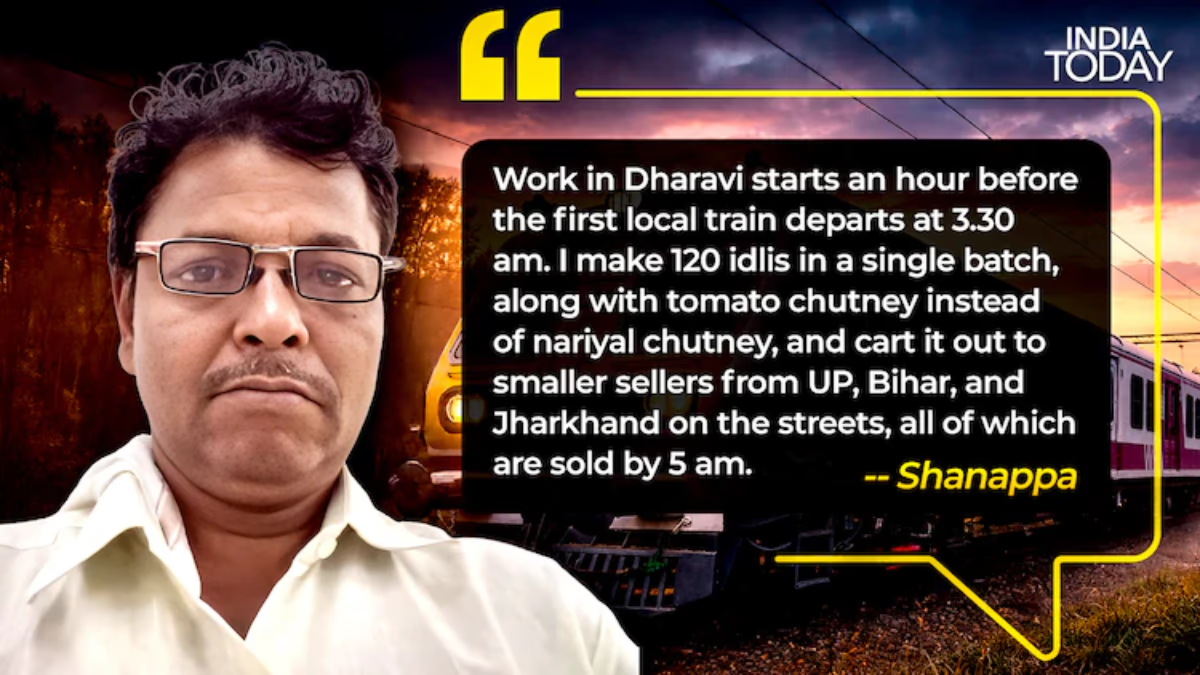
Dharavi’s craftsmen begin at 2:30 AM. By 5 AM, tons of idli are prepared, bought in bulk by vendors, and transported across Bandra to Kandivali on bicycles. Karnataka's Yadgir-native Shanappa has done this for 30 years, describing how during mornings, tea and coffee aromas overtake musty smells here. Despite lacking formal statistics, this remains a crucial part of Dharavi's 'informal economy'.
Source: aajtak
The True Protectors of Mumbai: The Scrap Traders
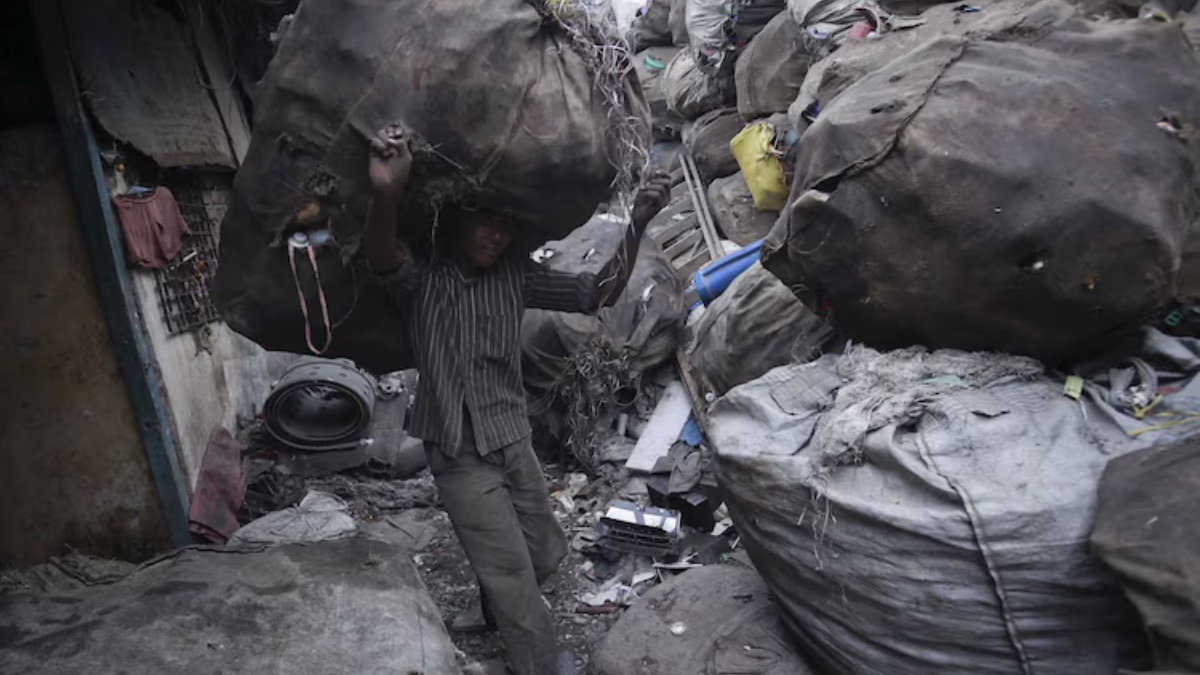
Dharavi's largest 'heroes' are the scrap traders dealing in everything from waste paper to old luxury car frames. Around 80% of Mumbai’s waste, about 20,000 tons daily, is recycled here, maintained by 250,000 waste pickers and traders.
Plastics are sorted, shredded, washed, and dried on slum roofs, occurring at every corner. Azamgarh-native Alam narrates the hazardous nature of this work. Medical needles and sharp glass among the litter pose ongoing injury risks. His workers often manage tasks barefoot or with mere flip-flops. Even old clothes are repurposed into bags, stating his work is business on par with major enterprises, albeit reluctantly facing the camera.
As Dharavi undergoes redevelopment, a wave of anxiety surges among its residents. They fear this initiative is more about a 'real estate scheme' than benefiting them genuinely. There’s concern of being ousted as 'unqualified' amidst dreams of recreating a 'Manhattan' in New York. If this occurs, both livelihoods and identities stand threatened.
Source: aajtak
Residents like Lawyer Alam who’ve grown amid these gutters, offer profound insights that new buildings could rise, but Dharavi's nature will remain unchanged. Establishing oneself here demands arduous labor. Detractors often turn away repulsed by the filth, yet fail to see one of the world's most unique and formidable business ecosystems thriving amidst it. Plumber Hanumanta's words still ring true, suggesting that while this place might appear a gutter, it indeed is a "golden gutter."
Report by Anand Singh