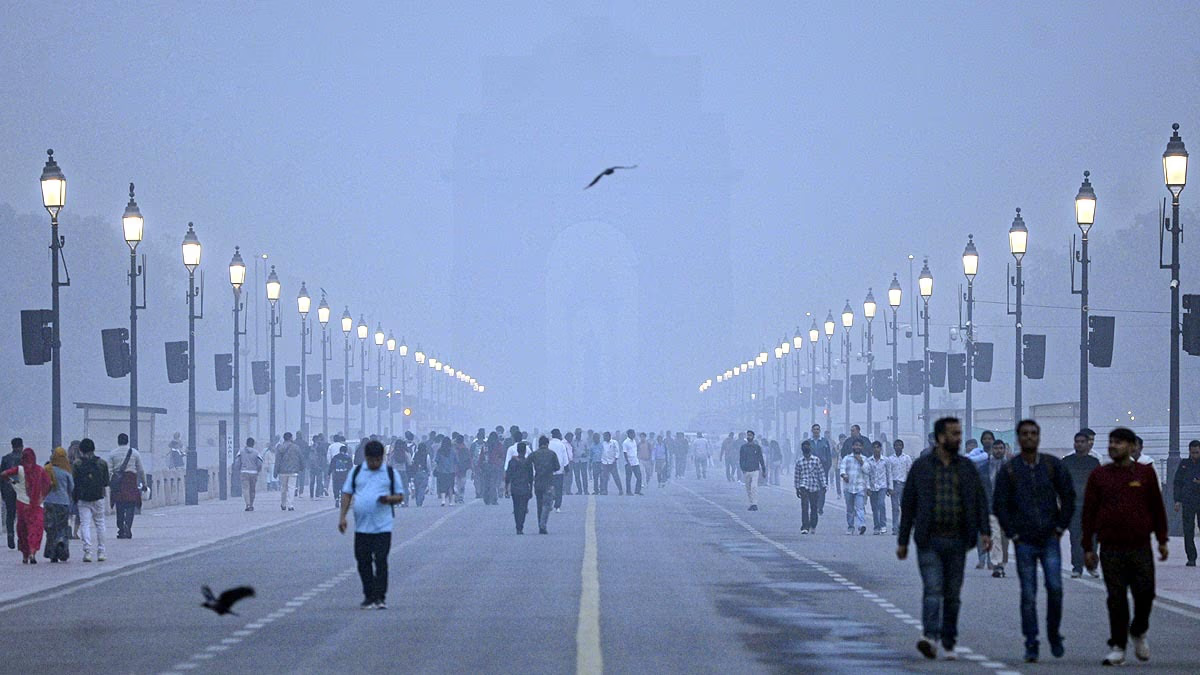
For the past two months, the air in Delhi and its neighboring areas has been toxic. From November to December, the Air Quality Index (AQI) consistently hits 'severe' levels. There's a brief improvement, only for it to worsen again. GRAP (Graded Response Action Plan) rules come into effect and then slacken.
Where exactly is Delhi going wrong in its fight against pollution? And what lessons can we gather from other global cities? Let's delve into the scientific facts and reasons.
Read more:
Delhi's pollution isn't caused by a single factor. Multiple sources contribute to the noxious air. According to scientific studies, the main causes are...
Vehicle Emissions:
The number of vehicles in Delhi is extremely high. They release PM2.5 (particles smaller than 2.5 microns) and NO2 (nitrogen dioxide). A report from the Center for Science and Environment (CSE) states that during winters, daily pollution surges primarily due to traffic. Pollution spikes during the morning and evening peak hours because these gases get trapped in the cold air.
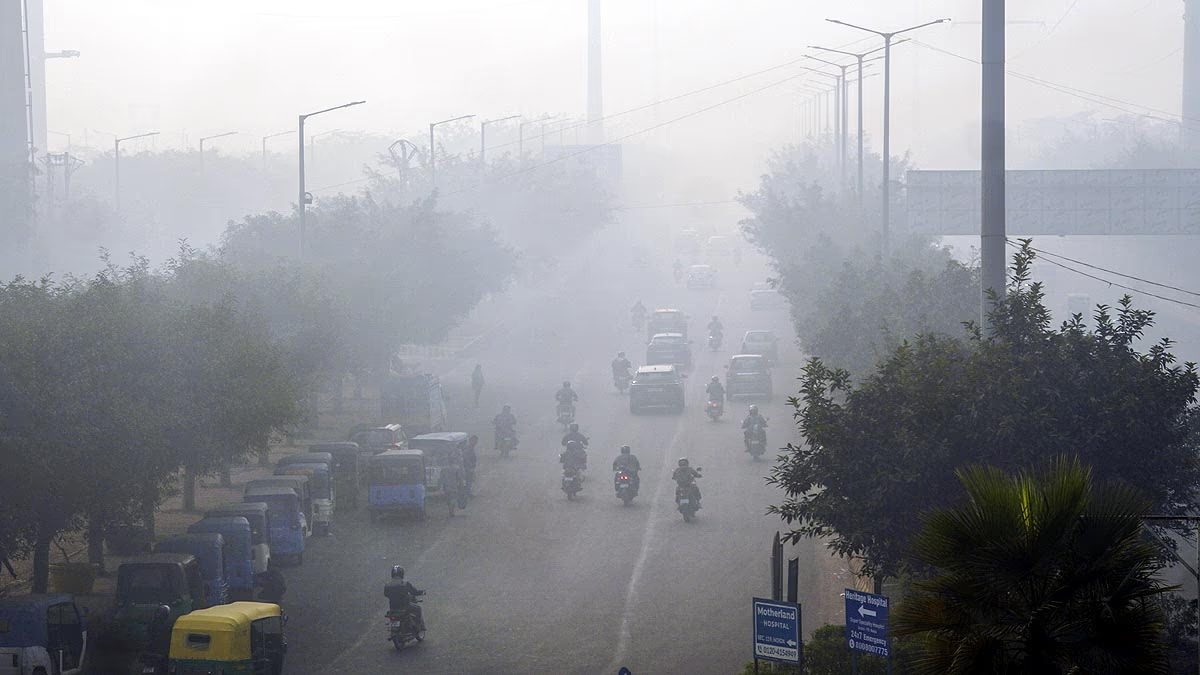
Source: aajtak
Stubble Burning:
Farmers in Punjab and Haryana burn rice stubble. The smoke reaches Delhi. Although incidents of stubble burning decreased this year due to floods, pollution didn’t reduce. Studies reveal that from November to December, its contribution is 5-15%, but local sources account for more.
Winter Weather and Inversion:
During winters, temperatures drop. Wind speed decreases, and an 'inversion layer' forms. Pollutants get trapped closer to the ground. Scientifically, cold air stays below while warm air stays above, preventing pollutants from dispersing. In December, the AQI reaching 400-500 is primarily due to this.
Other Sources:
Construction dust, industrial emissions, open waste burning, and the use of coal/wood. Delhi's geographical position (Indo-Gangetic Plain) also traps pollutants.
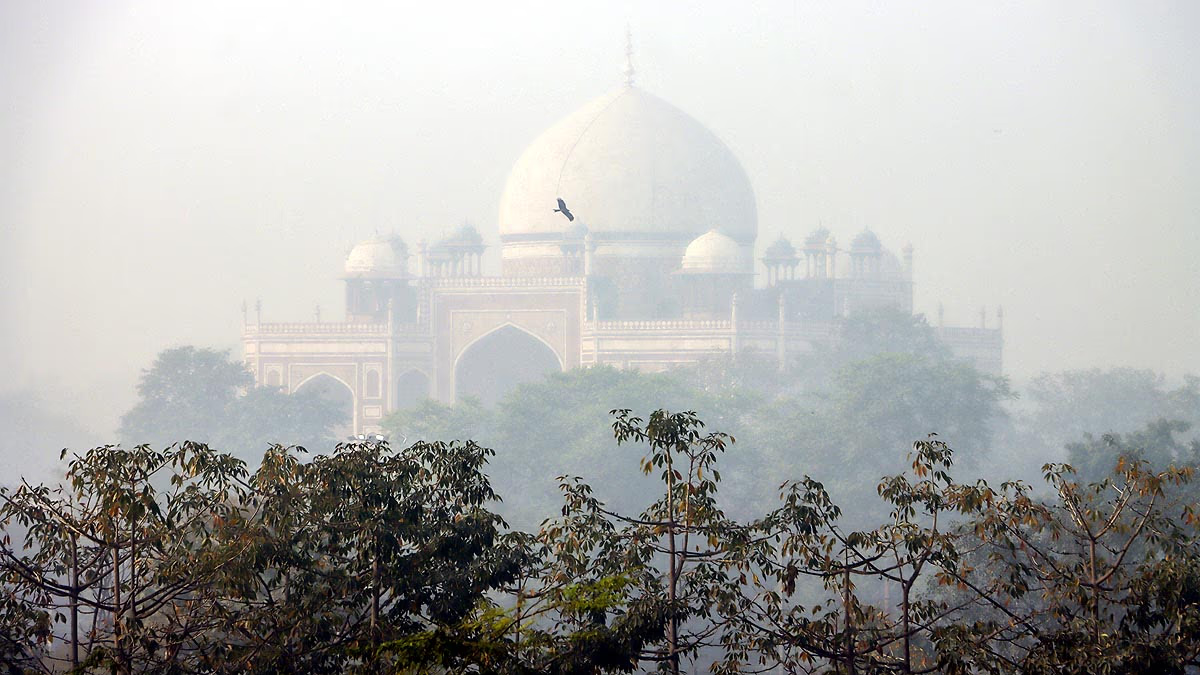
This November, AQI rose to 428 and exceeded 450-500 from December 13-15. On December 15, some areas recorded AQI above 600. PM2.5, 30 times higher than WHO limits, is present in Delhi's air, penetrating lungs and causing ailments.
Source: aajtak
GRAP implements rules in four stages...
Stage 1: AQI 201-300 (Dust control, ban on DG sets)
Stage 2: 301-400 (Change office timings)
Stage 3: 401-450 (Halt construction, ban old vehicles)
Stage 4: 450+ (Ban on truck entry, switch schools online)
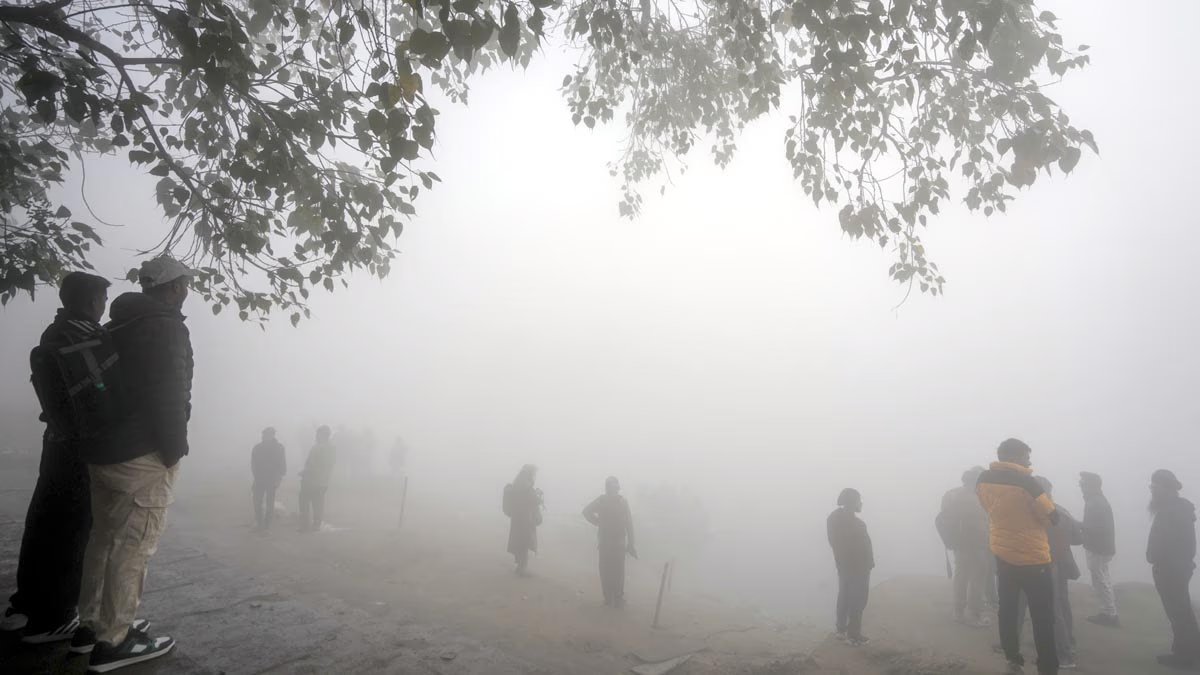
This December, Stages 3 and 4 were enforced, but the impact was minimal. Reasons include...
GRAP is reactive; rules are enforced post pollution surge. Lacks long-term planning.
Inadequate enforcement: Lack of punishment for violations, weak monitoring.
Focus mainly on winters, less attention to year-round sources.
Experts say GRAP offers temporary relief but isn't a permanent solution.
Source: aajtak
Several cities have managed to control pollution. Delhi can learn from them...
Beijing (China): Heavily polluted in 2013. Now cut PM2.5 by 50%. How? Switched from coal to gas, shut/shifted factories, increased electric vehicles, strict rules, and monitoring. Rapid changes through political will.
London (UK): Learned from the Great Smog of 1952. Banned coal, introduced congestion charge (reduced traffic), improved public transport. Clean air now.
Los Angeles (USA): Smog from vehicles was rampant. Set tough emission standards, mandated catalytic converters, encouraged electric cars.
Mexico City: Scrapped old vehicles for new ones, expanded metro, control on industry.
These cities show the need for: stringent laws, year-round strategies, boosting public transport and electric vehicles, regional collaboration (as in cooperation with Punjab and Haryana).
Delhi must think beyond GRAP. Increasing electric buses, phasing out old vehicles, environmentally greening the city, and collaborating with neighboring states is crucial. Scientists assert that significant improvements are possible within 5-10 years, provided there’s political will and public support.