Breathing in Delhi-NCR was tough, but now even seeing clearly has become a challenge. The air is thick with invisible smog. On December 15, 2025, the AQI in Delhi shot past 450, hitting severe levels in some areas. People are forced indoors. The question is, will Delhi-NCR's pollution remain this hazardous throughout the winter? And why is it so dangerous?
No, pollution isn't consistently this bad throughout the winter. Weather changes bring temporary relief, but generally, pollution remains high in the season. The scientific reasons are clear — cold air stays closer to the ground, while warmer air rises, creating an inversion layer that traps pollutants. With low wind speeds and no rain, smog forms.
This isn't just Delhi's problem; air pollution has become a hidden epidemic across India. A study in The Lancet reports that air pollution is linked to 1.5 to 2 million deaths annually in India, posing a greater threat than smoking or high blood pressure.
As soon as winter arrives, pollution in Delhi-NCR peaks. The main scientific reasons for this are...
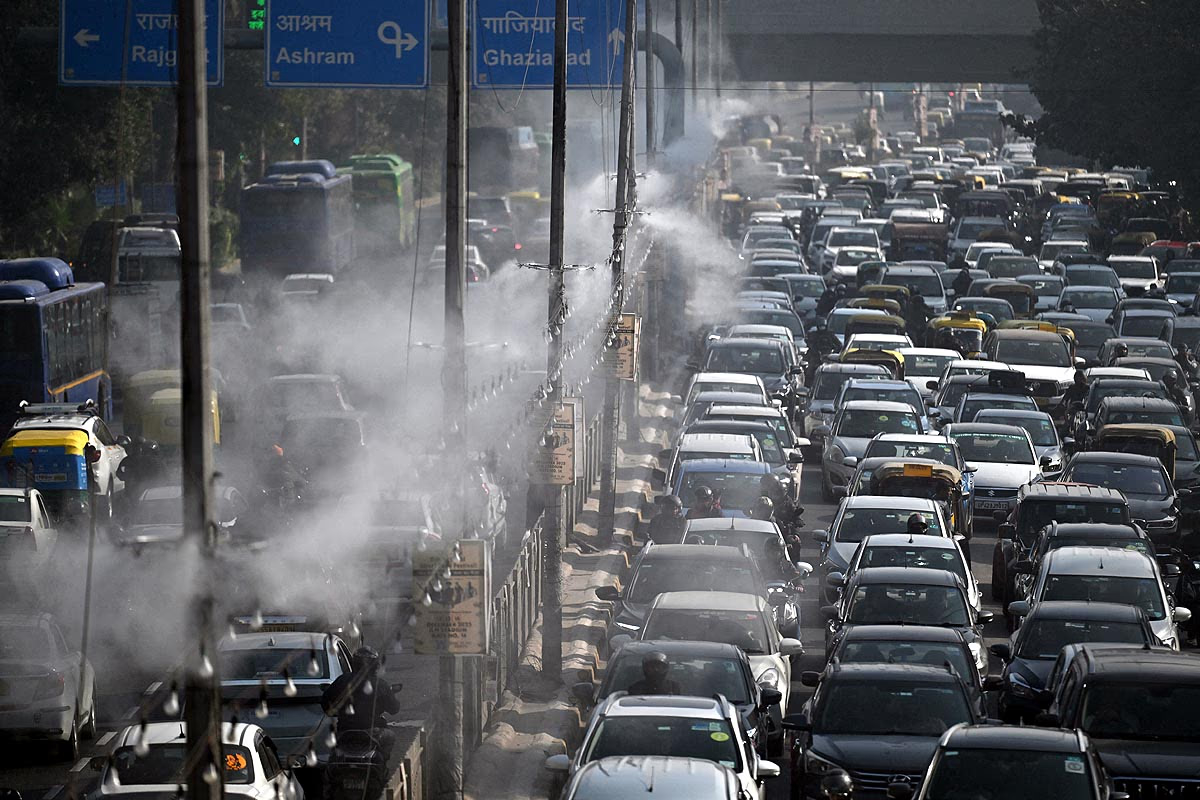
Source: aajtak
Temperature Inversion: During summer, warmer air rises and disperses pollutants. In winter, cold air remains close to the ground, while warm air rises, creating a lid that traps pollutants.
Low Wind Speed: Wind moves slower in winter, failing to disperse pollutants effectively.
Additional Sources: Stubble burning in Punjab-Haryana-UP, Diwali fireworks, vehicle emissions, construction dust, industrial exhaust, and waste burning—all contribute to increased PM2.5 levels.
Looking at 2025 data, Delhi's AQI ranges between 400 and 500 in December. GRAP Stage-4 is in effect, but forecasts predict improvement by December 17, with AQI descending to 'Very Poor'. While fluctuations will occur, poor air quality will prevail throughout winter.
PM2.5 is the main culprit in air pollution—these are fine particles smaller than 2.5 microns, which penetrate deep into the lungs, causing blood contamination. According to WHO, the safe annual level is 5 micrograms/cubic meter, while in India, it exceeds 50-100 microns on average, escalating to 200-500 in Delhi's winters.
Lungs and Respiratory Tract:
PM2.5 damages lung walls, leading to inflammation. Asthma, bronchitis, and COPD are exacerbated. Studies show that with rising PM2.5 levels, hospital cases for respiratory diseases increase by 10-20%. Children’s lung development is also hindered.
Read More:
Heart and Blood Vessels:
These particles enter the bloodstream, causing artery inflammation and plaque build-up. The risk of heart attacks and strokes rises by 10-15%. The Lancet studies indicate that air pollution is linked to 25% of heart disease-related deaths in India.
Brain and Nervous System:
PM2.5 causes brain inflammation, leading to conditions like depression, Alzheimer's, and decreased IQ in children. Intellectual development can lag by 2-5 years in polluted regions.
Kidney and Liver: Filtering these pollutants puts pressure on these organs, increasing chronic kidney disease.
Cancer: WHO has declared PM2.5 a carcinogen, doubling lung cancer risk.
Pregnancy and Infants: Pregnant women may experience low birth weight and preterm births, with newborns suffering respiratory issues.
Lancet Planetary Health 2024 Study: 1.5 million additional deaths attributed to PM2.5 annually in India.
Global Burden of Disease: In 2019, 1.67 million pollution-related deaths—India's biggest health threat, surpassing COVID-related deaths.
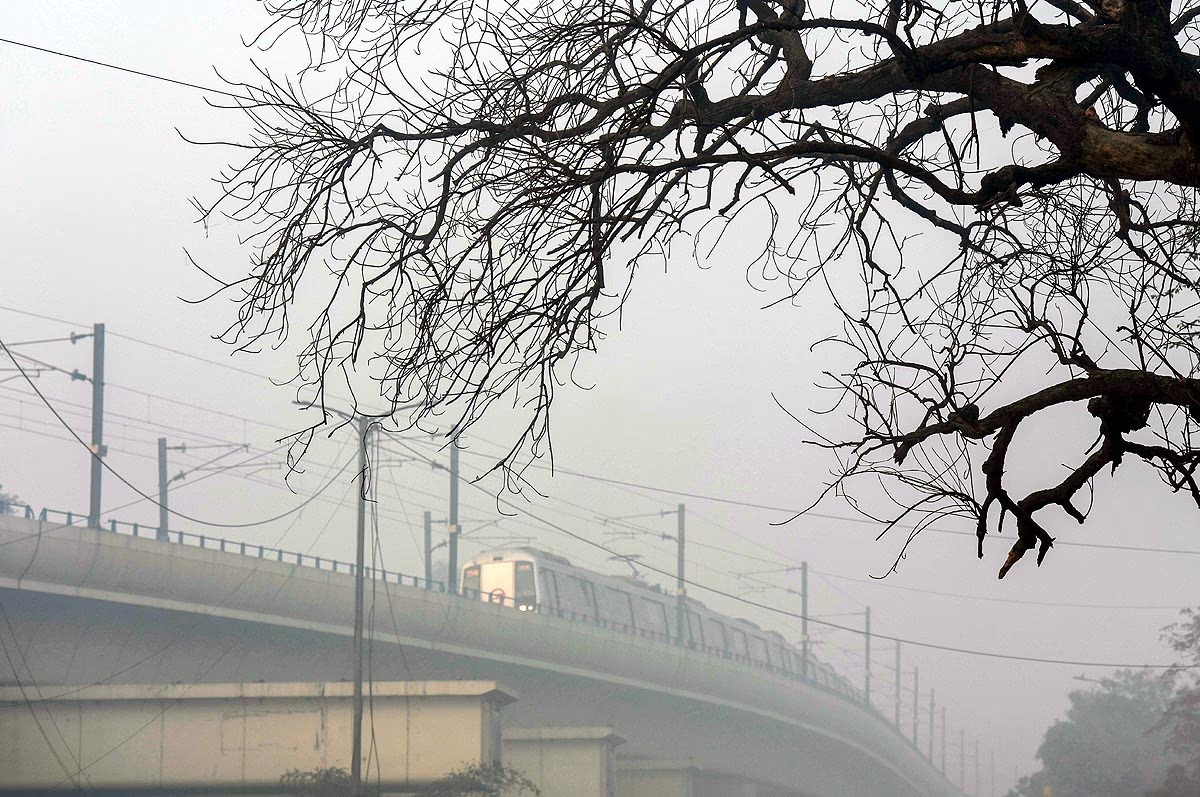
Source: aajtak
Beyond health, pollution weakens the economy...
World Bank: In 2019, India suffered losses of nearly INR 3 trillion—1.36% of its GDP.
The Lancet: Premature deaths and illness lead to output losses of 28-37 billion USD.
Reasons: Illness hampers workforce productivity. Healthcare costs rise. Education is interrupted. Tourism declines. In Delhi, productivity decreases by 8-10% due to pollution, posing a major obstacle for India's 5-trillion economy target.
This issue can be tackled. The National Clean Air Program (NCAP) is underway. Strict enforcement of regulations and promoting BS-6 fuel, electric vehicles, and alternatives to stubble burning is essential. At an individual level, wearing N95 masks, using indoor plants, and carpooling can help.
The government must control industries and enhance public transport. Green energy should be promoted. Air pollution is a silent killer, taking millions of lives discreetly. Delhi's winters showcase its worst, but it pervades all of India.
Scientific facts are clear—PM2.5 affects every organ. If we don't act now, future generations will pay with their breath. Clean air is our right. Together—government, society, and individuals—we must fight. Breathing freely is a fundamental right of life.