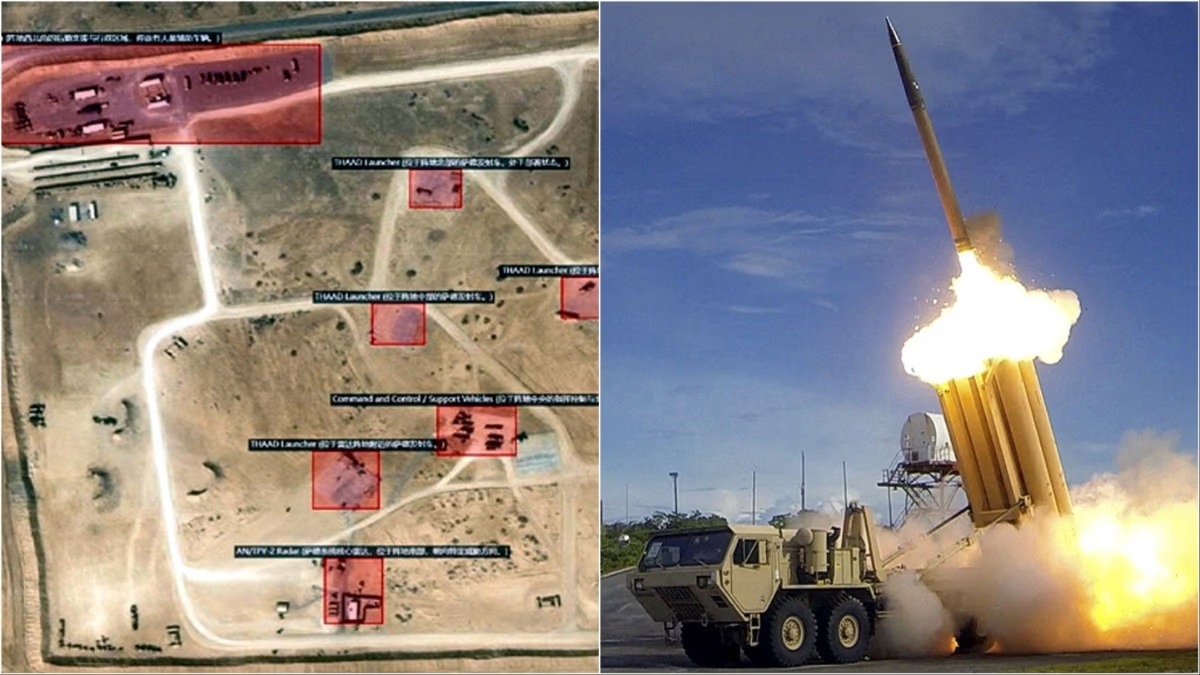
Amid escalating tensions with Iran, images captured by MizarVision, a Chinese commercial satellite company, have unveiled a significant revelation. They distinctly display the deployment of the U.S. Army's THAAD (Terminal High Altitude Area Defense) missile defense system at Muwaffaq Salti Air Base in Jordan.
This base is becoming a crucial forward location for U.S. forces in the Middle East. We must fortify our defenses prior to any action against Iran. Is this system capable of intercepting Iranian missile strikes?
Learn more: Obama claims aliens exist, but he hasn't seen them, a revelation in Brian Cohen's podcast.
What is the THAAD system and why is it deployed?
THAAD is an advanced anti-ballistic missile system designed to intercept ballistic missiles at high altitudes, operating both inside and outside the atmosphere. The U.S. Army only possesses eight THAAD batteries, with a very limited stock of interceptor missiles.
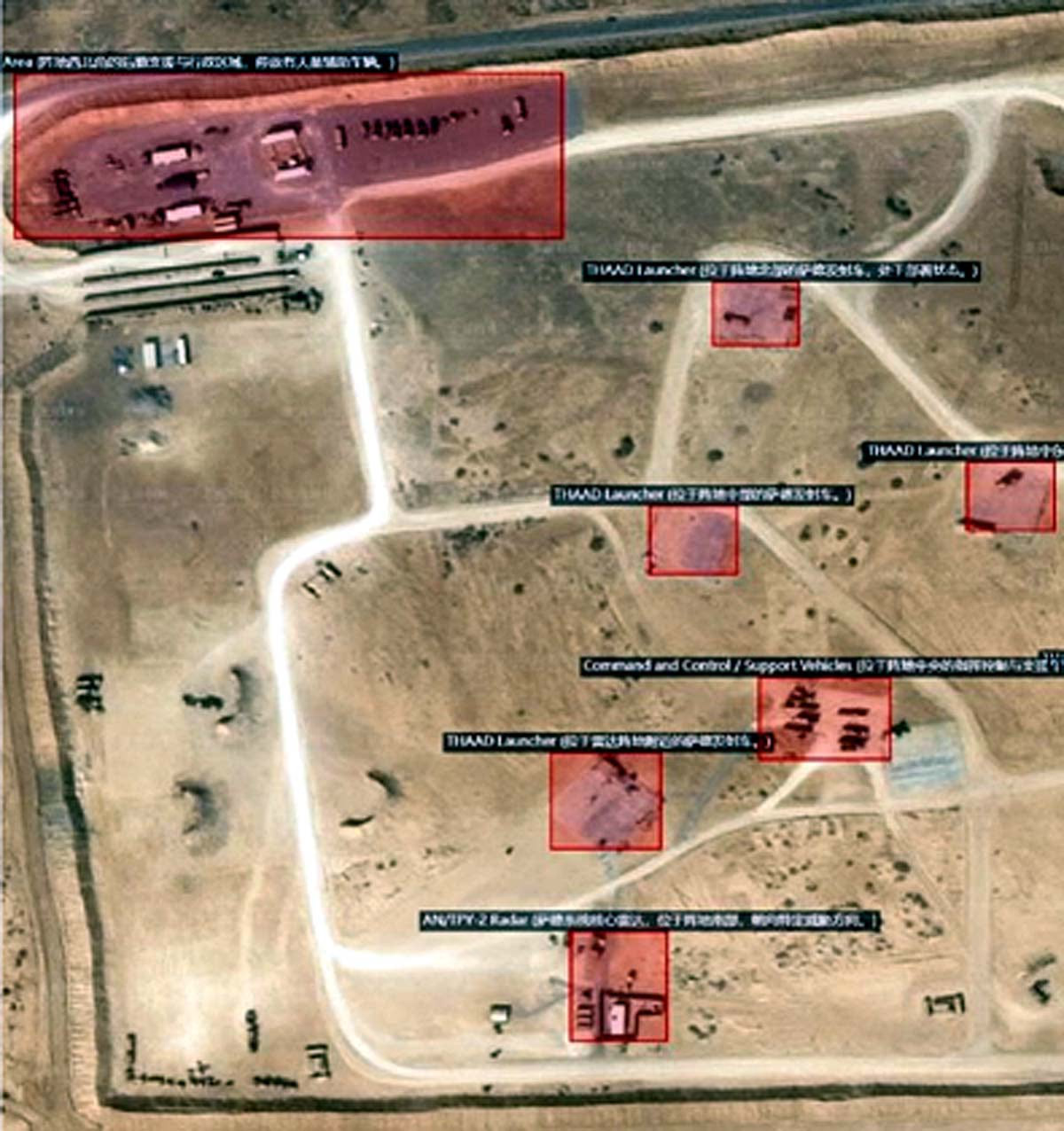
Source: aajtak
Significance of the deployment in Jordan...
Protect a large number of U.S. troops from potential Iranian attacks.
From October 2024, at least one battery is also deployed in Israel.
Jordan's base is strategically significant due to its proximity to Iran.
The role of Chinese satellites and potential signals...
Before these images were made public, the deployment was a secret. Now, the question arises—is China intentionally sharing this information with Iran? Some reports suggest Chinese warships are stationed near the Persian Gulf, potentially using their sensors to monitor U.S. activities and provide intelligence to Iran.
Read more: The world's largest aircraft carrier, part of Operation Maduro, was sent by Trump towards Iran.
This could be China's way of signaling support to Iran, reducing the likelihood of American strikes. Due to satellite technology, hiding ground deployments has become challenging. Israel too engaged in satellite jamming post-Iranian attacks to prevent damage assessment.
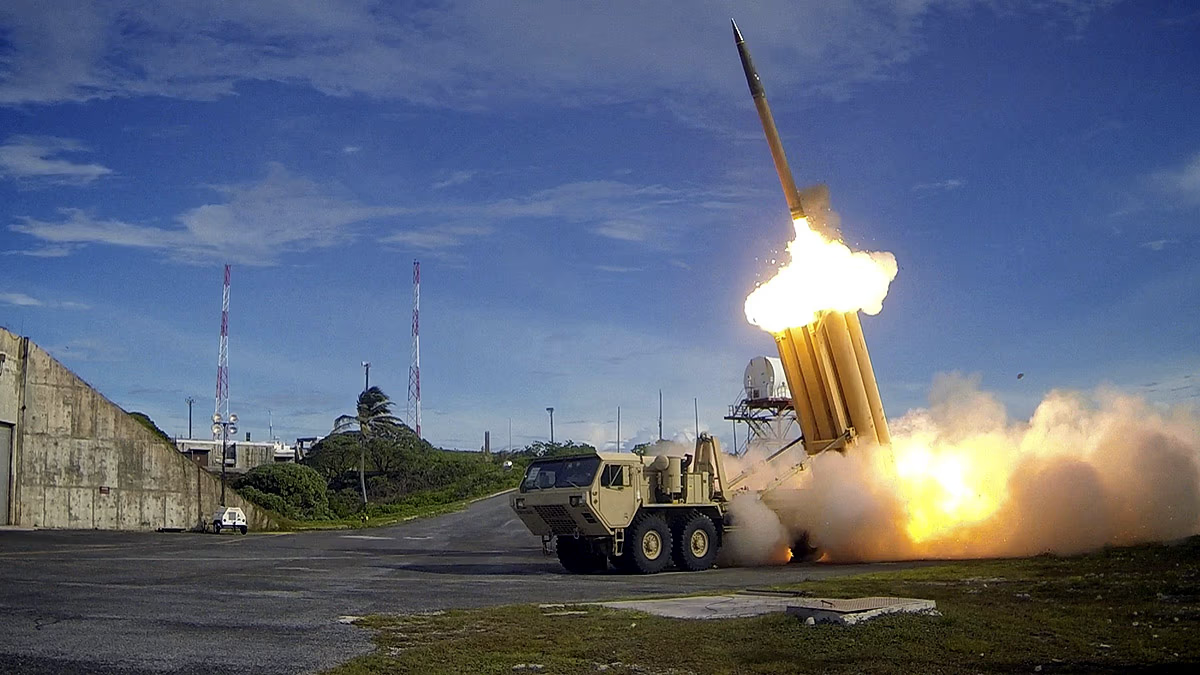
Source: aajtak
THAAD's past performance: Lessons from June 2025
The first high-intensity test of THAAD occurred between June 13-25, 2025, during the Israel-Iran conflict, when Israel launched a major air assault on Iran, prompting ballistic missile retaliation from Iran.
The U.S. fired over 150 interceptors with THAAD—over 25% of the global stock.
Each interceptor costs about $15.5 million, resulting in defense expenses over $2.35 billion (roughly INR 20,000 crores) within just 11 days.
Israel's own systems and the U.S. Navy's SM-3/SM-6 missiles also incurred significant costs.
Read more: Israel achieves major success with countermeasures against Iran's hypersonic missiles.
But questions over THAAD's effectiveness...
Iran's strikes inflicted severe damage on military and strategic sites in Israel. Trump mentioned that in the concluding days, Israel suffered considerable losses. Ballistic missiles destroyed numerous buildings.
Iran's limited use of its new Fateh hypersonic missiles posed a grave threat to THAAD—these missiles can alter direction, making them elusive for THAAD. The system is also threatened by overwhelming attacks with concurrent missile launches.
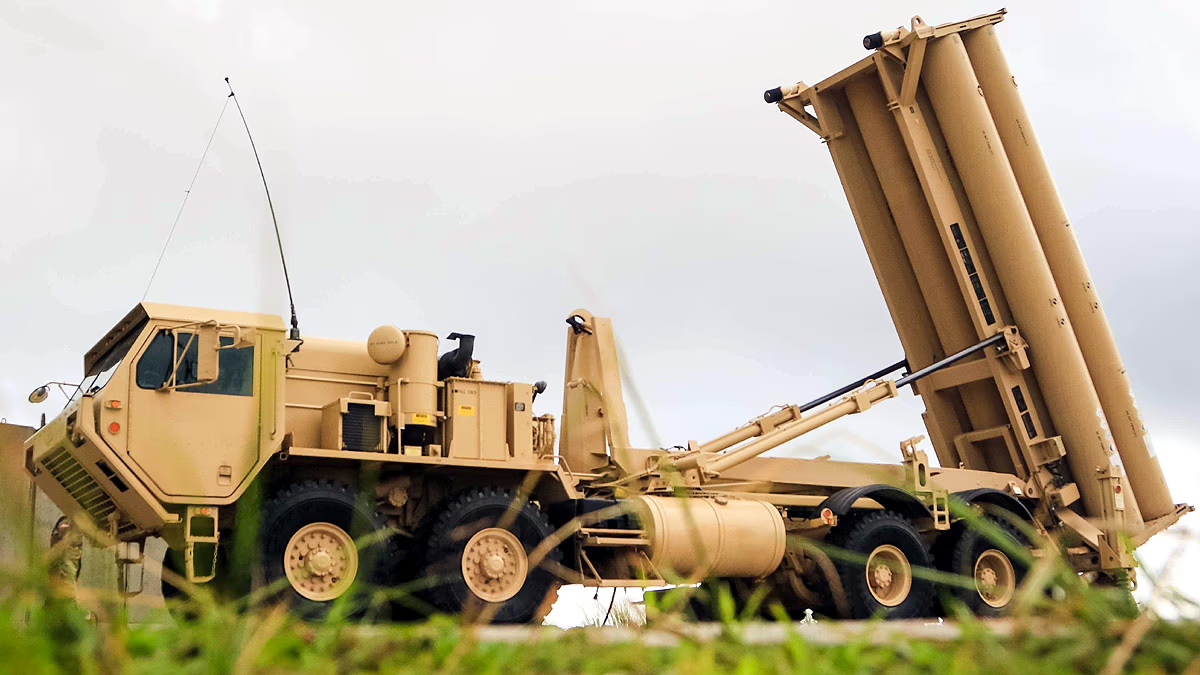
Source: aajtak
Can THAAD counter Iranian attacks?
THAAD is a very expensive system with limited stock. Iran now possesses hypersonic and maneuverable missiles that can evade THAAD. Missiles like Fateh could target the THAAD battery itself—destroying one could weaken the rest of the defense.
The deployment of THAAD in Jordan signals the U.S.'s readiness against Iran, but the experiences from June 2025 indicate that this system is not perfect. The revelation by Chinese satellites and potential intelligence support is bolstering Iran's deterrence. Will this prevent an American strike?