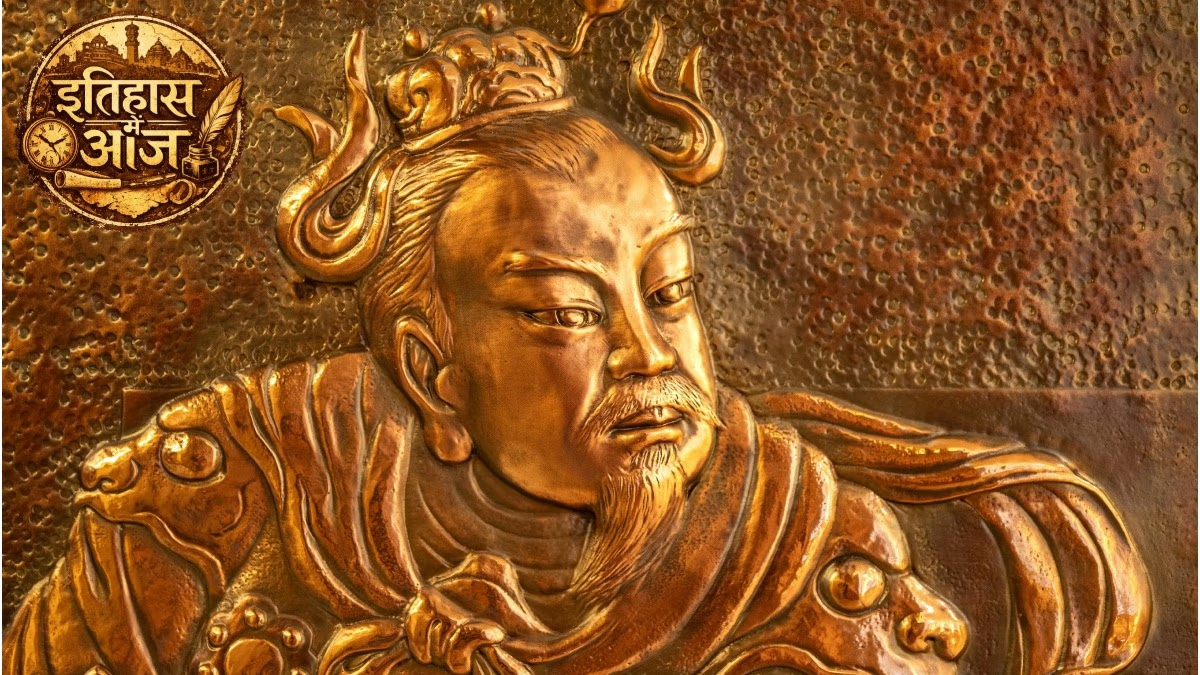
Today marks a significant transformation in China's history. On February 12, 1912, following the republican revolution led by Sun Yat-sen, the last emperor of China, Xuantong, was compelled to relinquish his throne. An interim government was subsequently established.
On this very day, China saw the end of 267 years of Qing rule and over 2000 years of monarchy. At the tender age of six, the former emperor was allowed to remain in Beijing's Forbidden City under a new name, Henry Pu Yi.
Pu Yi ascended the throne in 1908 following the death of his uncle, Emperor Guangxu. During his rule, he operated under the guidance of a regent and underwent preparation for future leadership. However, the revolution by Sun Yat-sen in October 1911 swiftly toppled his dynasty, leading to his abdication just four months later.
Read More: The Decline of French Dominance in America – The 7-Year Struggle
The newborn Chinese government granted him a substantial pension and permission to reside within the imperial palace until 1924, when he was forced into exile. After 1925, he resided in Japanese-occupied Tianjin, and in 1932, Japan established Manchukuo, a puppet state under his nominal rule.
Read More: Africa's 'Gandhi', Nelson Mandela, Freed from Jail after 27 Years
In 1934, Henry Pu Yi was installed as the emperor of Manchukuo. Despite guerrilla resistance against his puppet administration, he remained emperor until 1945, when Soviet troops captured him. In 1946, Pu Yi testified at the Tokyo War Crimes Tribunal, admitting he was merely a pawn of Japan, contradicting Japanese claims of independent Manchurian support.
Read More: History Made - Bernard Harris, First African-American in Space
Eventually, Manchuria and the Rehe Province were returned to China, and in 1950 Pu Yi was handed over to the Chinese communists. He was imprisoned in Shenyang until 1959, when Mao Zedong granted him amnesty. After his release, he worked at a mechanical repair shop in Beijing.