When Bangladesh was established, Hindus made up 20 to 22% of the total population. At that time, the Hindu population was between 10 to 15 million. From 1971 to 2025, Bangladesh has undergone numerous social, religious, political, and demographic transformations. These changes have negatively impacted the Hindu community most significantly.
If the Hindu population in Bangladesh had grown at the global average rate (approximately 1.1% per year) from 1971 to 2025, there would be around 21.7 million Hindus today. However, the Hindu population, which comprised 22% in 1971, now represents less than 8%, a reduction of 14% over 54 years.
According to the 2022 census, Bangladesh's total population was about 170 million, with Hindus numbering around 13 million. Based on population growth and migration trends, the estimated Hindu population in Bangladesh could range between 13 to 15 million by 2025, making up approximately 7.5-8% of the total population.
54 Years of Declining Hindu Population
Despite advancements in science and modern amenities, the Hindu population in Bangladesh has not increased over the past 54 years. The percentage of Hindus, which was 22% at independence in 1971, has now decreased to 7.5%.
The first census in independent Bangladesh in 1974 recorded Hindus at 13.5%, but this rate dropped to 12.1% in 1981, 10.5% in 1991, 9.3% in 2001, and 8.5% in 2011, indicating a continuous decline post-independence.
Conversely, the Muslim population has grown. In 1974, Muslims made up 85.4% of the total population; by 2011, this figure had risen to 91.5%.
Why Have Hindus Diminished in Bangladesh?
The decline in the Hindu population in Bangladesh can be attributed to a multitude of historical, social, and political factors. Upon detailed examination, it's evident that systemic discrimination against Hindus has been prevalent, leading to their ongoing victimization.
Migration of Hindus
Hindu families have been migrating from Bangladesh to India in search of religious, cultural, familial, and political safety. Since the partition in 1947, millions of Hindus have migrated. An estimated 8.1 million Hindus moved to India between 1964 and 2001, averaging roughly 219,000 per year.
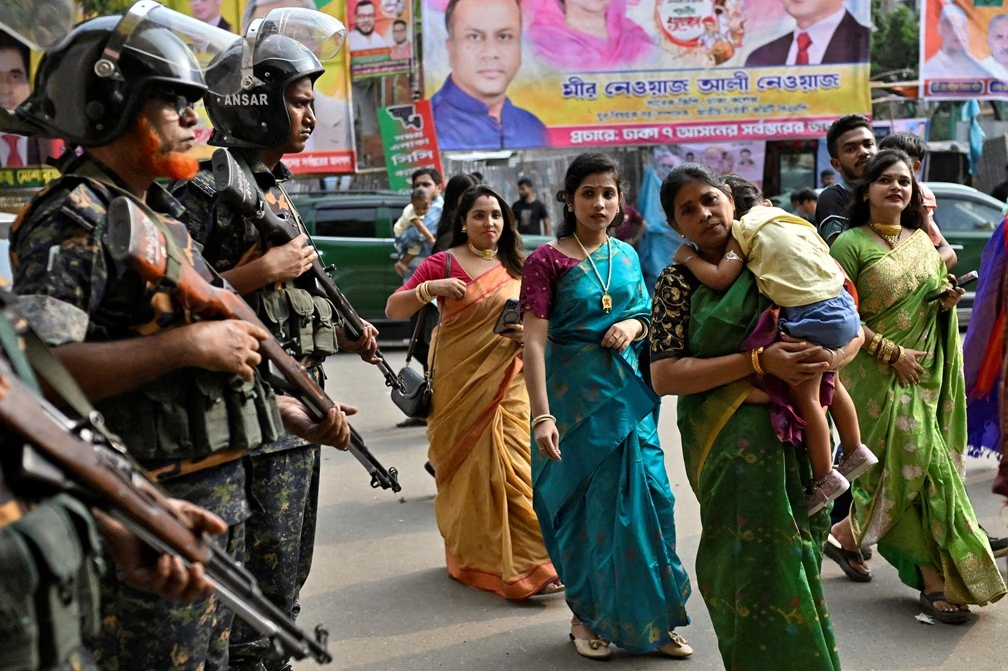
Source: aajtak
Recent political unrest in 2024 has heightened feelings of insecurity among Hindus, prompting them to seek opportunities to migrate.
The Bangladesh Center, focusing on Bangladeshi Hindus, reports that many Hindus wish to migrate to India for a more culturally familiar atmosphere due to India's Hindu-majority. Additionally, many Hindus have relatives in West Bengal and Assam, making marriage and family ties natural migration pathways.
Pew Research reports that 1.6 million Hindus born in Bangladesh now reside in India, including many who arrived during the 1947 partition.
Religious Persecution and Violence
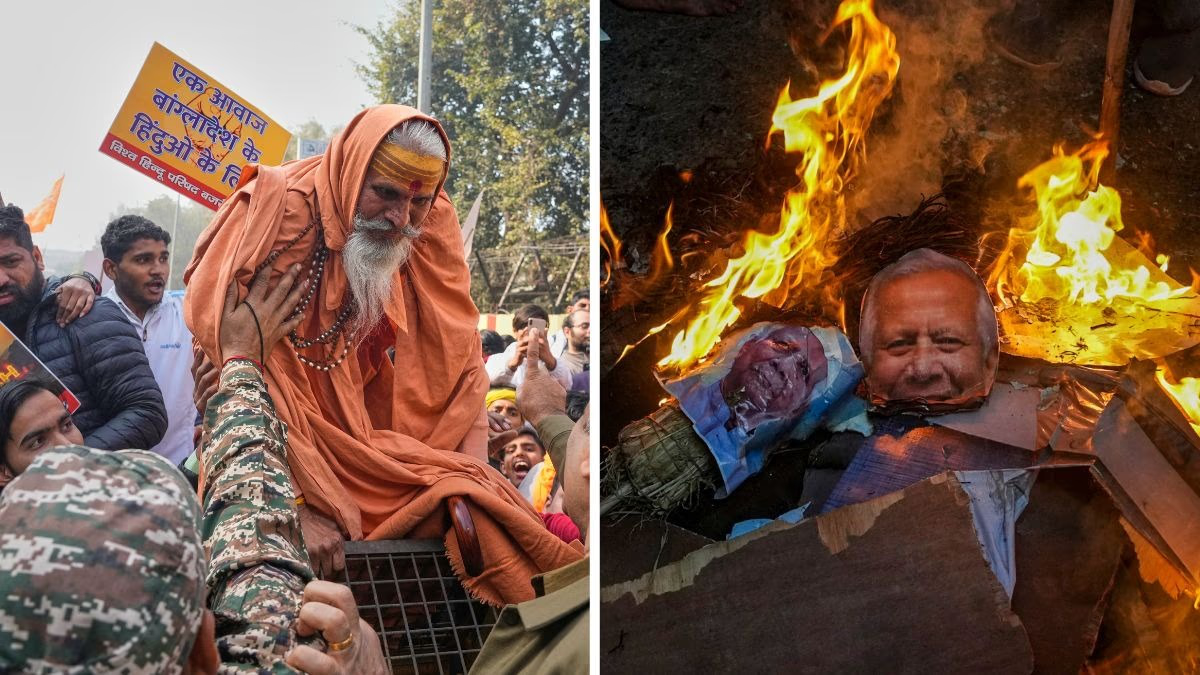
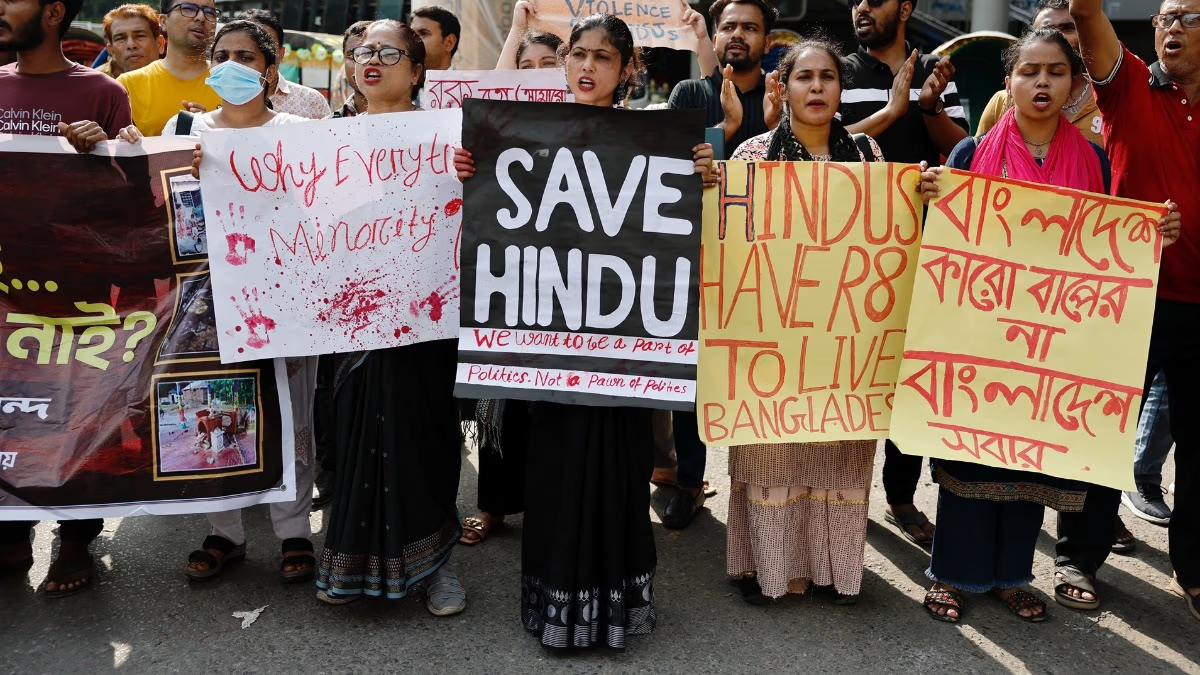
Attacks on Hindus, temple destruction, land appropriation, and related crimes are prevalent in Bangladesh. Numerous cases have emerged, including targeting Hindus during the 1971 war by Pakistani forces and increased violence post-1990 riots, the 2001 elections, and over 200 attacks following the 2024 fall of the Sheikh Hasina government.
Lower Reproduction Rate among Hindus
The fertility rate of Hindus in Bangladesh is lower than that of Muslims. In 2014, the fertility rate for Hindus was 2.1, while for Muslims, it was 2.3, contributing to a slower growth rate of the Hindu population compared to Muslims.
The Bangladesh Center cites three researchers highlighting a 2019 study that found the Hindu population's growth rate between 1989 and 2016 was slower than that of Muslims, primarily due to migration, lower fertility, and a relatively higher mortality rate.
Professor Mohammad Mainul Islam from Dhaka University's Population Sciences Department explains that population changes are mainly driven by birth rates, death rates, and migration. These factors have cumulatively contributed to the decline in the Hindu population.