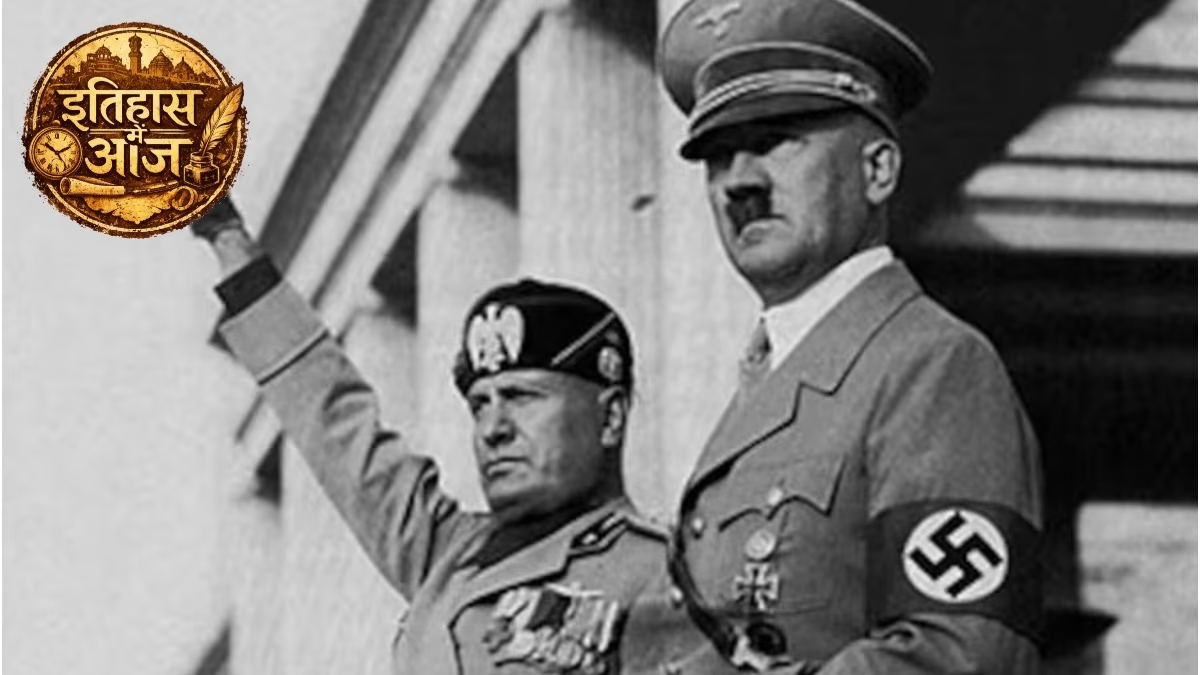
On February 5th, a significant historical event unfolded that changed the course of World War II. Libya was under Italian control. However, as British forces arrived and gained momentum, Italian troops began retreating from the front in Libya. By early 1941, Italy's hold on Libya began to wane. On February 5, 1941, Adolf Hitler admonished his ally Benito Mussolini, urging him to command his troops to staunchly fight the British forces.
At that time, Britain threatened to completely push Italy out of Libya. The situation deteriorated, weakening Italy’s grip on Libya, and Britain even threatened to reach Tunisia. Consequently, Mussolini had to seek help from Hitler.
Despite expansions into East Africa and parts of Egypt, Mussolini’s forces were ultimately unable to withstand the British. British troops drove the Italians westwards, inflicting significant losses on Axis armies in the Battle of Beda Fomm. When Britain threatened to oust Italians completely from Libya and advance into Tunisia, Mussolini set aside his pride and sought assistance from Hitler.
Reluctantly, Hitler agreed to help. This decision marked the first direct confrontation between Germany and Britain in the Mediterranean. Hitler conditioned his assistance on Mussolini's ability to prevent the retreat of Italians and keep the British away from Libya’s capital, Tripoli. This was the first time Hitler had expressed anger towards Mussolini.
Read More: On this day, Facebook was launched... How it captivated the world after emerging from Harvard’s campus
Italians continued to suffer defeats. In three months, 20,000 soldiers were either injured or killed, and 130,000 were captured. Only after the arrival of German General Erwin Rommel did the Italian resistance against British invasions gain strength. Despite Germany's assistance, Italy managed to defend its North African territories only until early 1943.