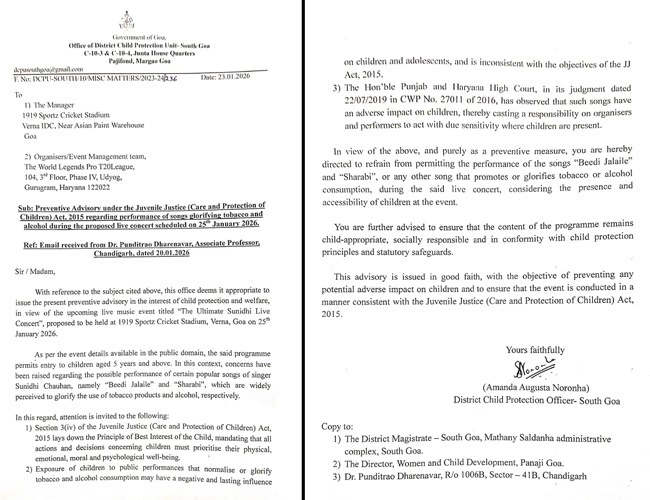
A significant news has emerged just before renowned singer Sunidhi Chauhan's live concert in Goa. The state's Child Protection Unit has released a stringent advisory for the organizers, explicitly instructing them not to perform songs that promote vices such as tobacco, smoking, or alcohol during the concert.
This action has been taken under the Juvenile Justice (JJ Act) of 2015, with a focus on the protection of children and their mental well-being. Anticipating a large number of children attending the show, the authorities have emphasized maintaining the dignity of the event.
When is Sunidhi's Concert?
The 'Ultimate Sunidhi Live' concert is slated to be held on January 25, 2026, at the 1919 Sportz Cricket Stadium in Verna, Goa. The notable aspect of this show is that children aged five and above are permitted entry, which has raised administrative concerns as the selection of songs is deemed critical in their presence.
Which Songs Raise Concerns?
This entire action commenced following a complaint by Chandigarh's Associate Professor Dr. Panditrao Dharenwar. He objected to the performance of some of Sunidhi's popular songs like 'Beedi Jalaile' and 'Sharabi'. Dr. Panditrao argues that such songs glamorize the consumption of tobacco and alcohol, presenting them as attractive. Exposure to such performances can negatively impact children, making them perceive the use of intoxicants as normal.
Source: aajtak
This advisory also references a 2019 ruling by the Punjab and Haryana High Court, stating that songs promoting tobacco and alcohol can have adverse effects on children, placing the responsibility on organizers and artists to exercise sensitivity in the presence of minors.
Through the advisory, organizers have been instructed to ensure the entire content of the concert is suitable for children and socially responsible. It has been clarified by the administration that this is merely a 'preventive measure' aimed at safeguarding children's welfare, not hindering anyone's work. It is the duty of organizers and artists to conduct the event within the boundaries of law.