Climate change is no longer just about rising temperatures or extreme weather; it's about the flow of money worldwide. The recent United Nations Environment Programme (UNEP) report,
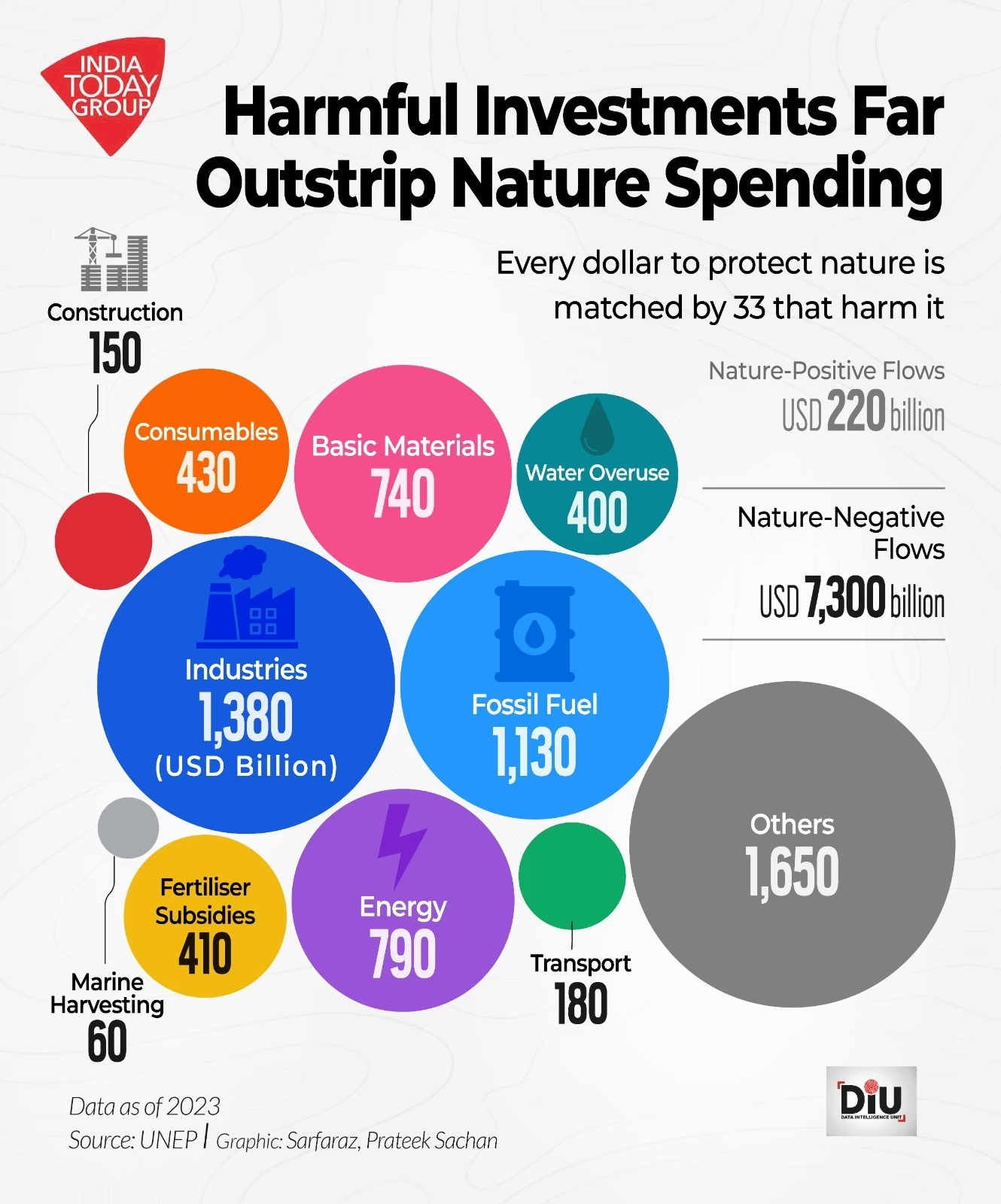
, revealed that in 2023, global financing contributing to nature's degradation totaled 7.3 trillion US dollars, with a significant portion rooted in private investments such as debt, bonds, and equity. In contrast, public funds accounted for 2.4 trillion dollars in environmental-harming subsidies.
Alarmingly, spending on nature-based solutions, such as forest preservation, ecosystem restoration, and strengthening soil and water resources, was a mere 220 billion dollars. Essentially, for every dollar spent on protecting nature and tackling the climate crisis, 33 dollars were directed towards actions reversing these efforts.
Sector-Wise Breakdown
When tracking these funds across various sectors, the picture becomes crystal clear. The health and technology industries top the list, with 1.38 trillion dollars in nature-adverse financing.
This is followed closely by the fossil fuel sector at 1.13 trillion dollars, the energy sector at 0.79 trillion dollars, and basic materials (chemicals, metals, construction) at 0.74 trillion dollars. Even everyday consumer products and agriculture added up to over 0.8 trillion dollars in climate-damaging financing.
Source: aajtak
The Global Picture, India's Reality
Globally, the way money flows is deepening the climate crisis, and India is already paying the price. Within just nine months, almost every day of the year experienced some form of extreme weather in India. From the Himalayan regions to Jammu and Kashmir, and the southern coast of Tamil Nadu, hardly any part of the country was spared.
The
reveals Himachal Pradesh as the most affected state, encountering extreme weather for 217 days. Disasters such as winter floods, pre-monsoon landslides, and monsoon cloudbursts have wrought destruction, with 380 deaths and widespread damage.
Nationwide, extreme weather events have resulted in 4,064 fatalities, the loss of nearly 59,000 animals, damage to over 99,000 homes, and significant crop destruction. These figures indicate that the climate crisis is not a future threat but a present catastrophe. Until the direction of global finance pivots, the greatest burden will fall on countries least responsible for this crisis.