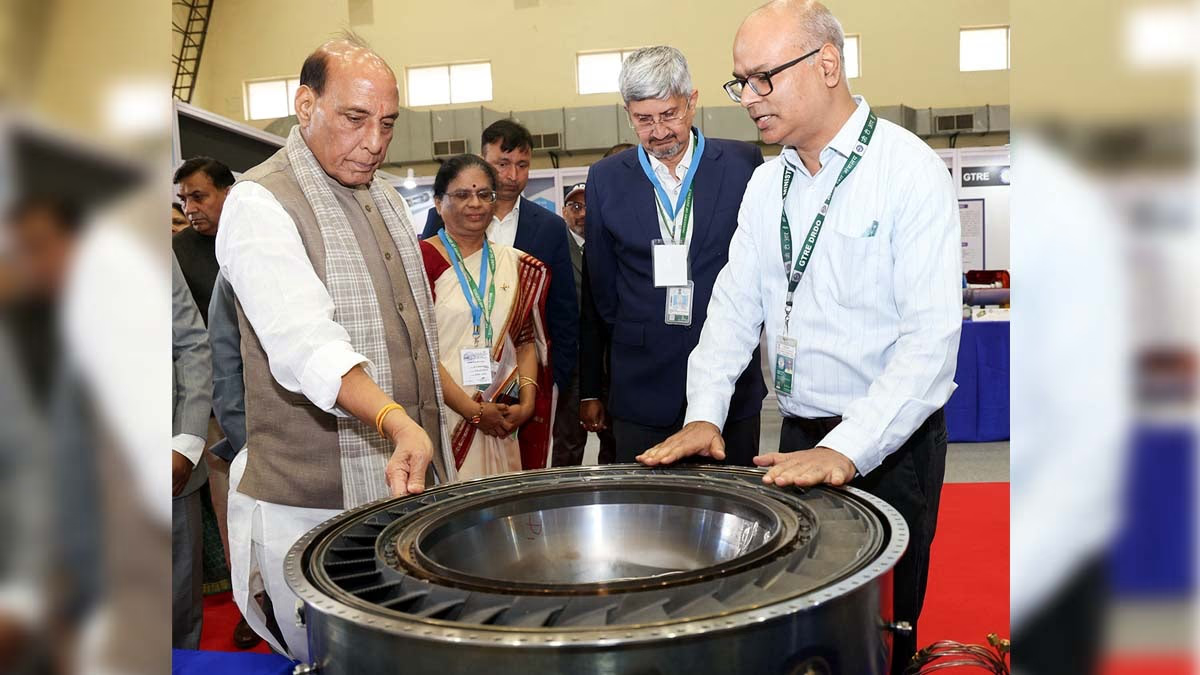
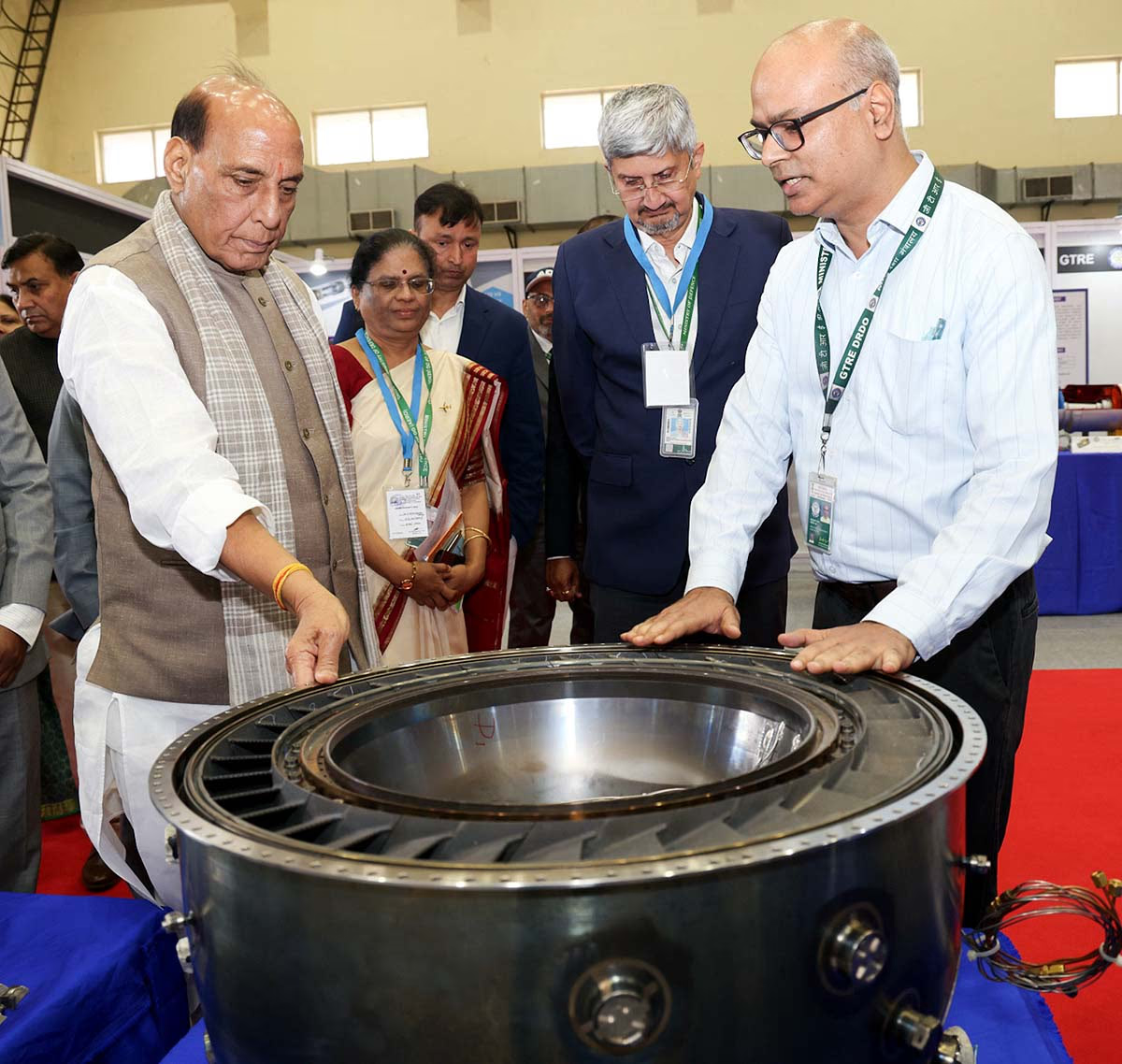
Defense Minister Rajnath Singh toured the Gas Turbine Research Establishment (GTRE) at DRDO in Bengaluru, where he examined the ongoing projects to build indigenous military gas turbine engines powerful enough for combat fighters. This visit marks a crucial step in strengthening India's self-reliance in the defense sector.
What Happened During the Visit?
The defense minister received a comprehensive briefing from GTRE scientists about the current projects, which include...
Development of new engines
Collaboration with Indian industries, universities, and other research institutions
Providing technological support to the Indian Armed Forces
Rajnath Singh also attended an exhibition showcasing various engines and their components manufactured in India, highlighted by the live full afterburner test of the Kaveri engine, a crucial endeavor in developing India's own fighter aircraft engines.
Source: aajtak
What Did the Defense Minister Say?
In conversations with scientists and officials, the defense minister praised GTRE wholeheartedly, asserting that DRDO underpins India's strategic prowess. He emphasized GTRE's role in reinforcing national security through self-reliance.
Necessity of Self-Reliance:
In today's shifting geopolitical landscape, attaining self-sufficiency in aero-engine technology is imperative. With supply chains fracturing and new alliances forming, countries possessing critical technologies shall remain secure.
Government's Full Support:
The government, under Prime Minister Narendra Modi, is committed to self-sufficiency across sectors. Prioritization of aero-engine development is a testament to this commitment.
Focus on Next-Gen Engines:
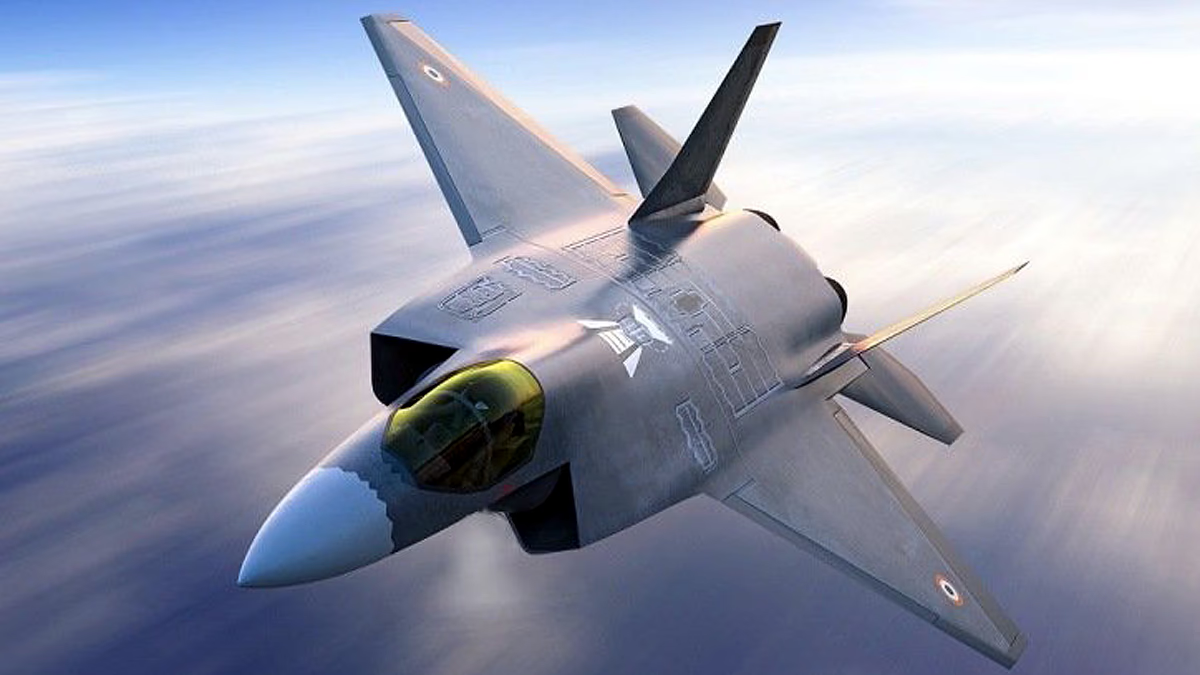
As we advance towards the Advanced Medium Combat Aircraft (AMCA) or the fifth-generation fighter aircraft, we must envisage going beyond to sixth-generation technologies. It's pivotal to begin working on artificial intelligence, machine learning, and innovative materials now.
Source: aajtak
Reducing Timeframes:
Creating aero engines is intricately complex, involving thermodynamics, material science, fluid mechanics, and advanced engineering. While developed nations take 25-30 years to design a new generation engine, India must aim to reduce this timeframe significantly. Imagine if 20 years have passed, leaving us with merely 5-7 years to complete our goals.
Example from Operation Sindhur:
In the recent Operation Sindhur, the Indian Army utilized entirely indigenous communication systems, surveillance devices, and offensive weaponry, boosting soldiers' morale and national pride. The focus now must be on developing more world-class systems indigenously.
International Collaborations
The defense minister disclosed ongoing joint studies on aero engines with the UK and collaborations with France under the National Aero Engine Mission. These partnerships will aid in learning new technologies and understanding age-old challenges faced by others.
Civilian Benefits
The high-temperature composite materials developed by GTRE could one day find applications in civil aviation, power generation, and the space sector. India, being the fastest-growing civil aviation market, could see defense technologies revolutionizing civilian aviation and the economy.
Rising Power of India
The defense minister referenced the recent completion of the long-pending free trade agreement with the European Union, symbolizing India's mounting economic and political influence. He also mentioned his meeting with the Greek defense minister, who described India as a superpower rather than merely an emerging power.
The clear message from the minister's visit is that India is on the path to eliminating foreign dependency, especially in defense technology like aero engines. Through the dedication of institutions like GTRE and its scientists, India will soon achieve world-class engine manufacturing, reinforcing not only our military strength but also elevating the economy.