The skies over Iran are ablaze with Israeli and American missiles. The Middle East finds itself in the throes of an explosive conflict as Iran mounts counterattacks. Tragically, over 80 schoolgirls have lost their lives in this Iranian onslaught. Reports reveal the loss of Iran's Defense Minister Amir Nasirzadeh and several IRGC commanders due to Israeli attacks. According to Iranian media and the Red Crescent, these attacks have affected 24 provinces, resulting in 201 casualties and 747 wounded.
On February 28, 2026, a joint assault by the US and Israel on Iran has heightened tensions across the Middle East. Israel has dubbed this operation the 'Roar of the Lion,' while the US calls it 'Operation Epic Fury'. The primary targets were Iran's missile capabilities, nuclear program, military infrastructure, and leadership.
President Donald Trump described this as a 'major combat operation,' urging the Iranian people to reconsider their governance. Demonstrating unexpected strength, Iran launched missiles at US military bases scattered across seven Middle Eastern countries, stunning the global audience.
Amidst the sleepy sunrise at 11 AM in India, missiles began raining down on Iran at 9 AM. Israel and the US targeted key locales including Tehran, Qom, Tabriz, Kermanshah, Karaj, and Isfahan. The assault on Minab was particularly heart-wrenching, as it struck a complete school of girls, resulting in 85 fatalities.
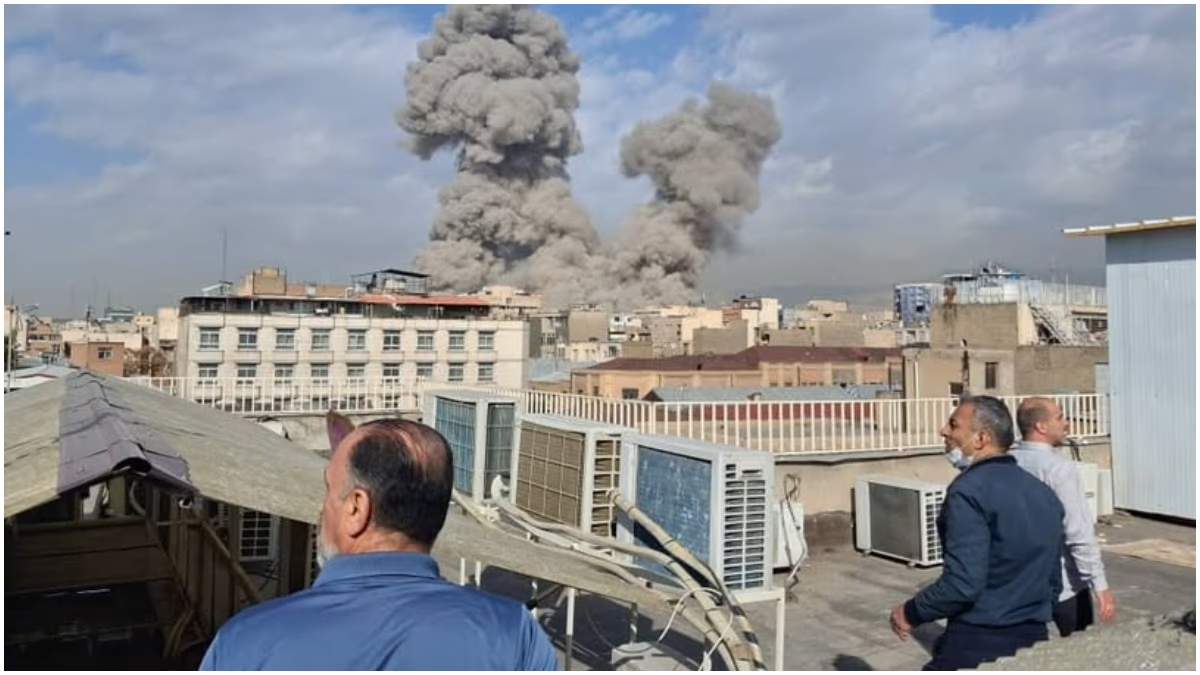
As Tehran's sky clouded with smoke, chaos ensued across Iran as people scrambled to find safety.
The US and Israel struck near the residence of Supreme Leader Ayatollah Ali Khamenei, dropping seven missiles in its proximity. However, current reports confirm Khamenei's safety. The assault extended to the President's residence, the Ministry of Defense, Intelligence Headquarters, and the Atomic Energy Organization of Iran.
The Iranian Parliamentary National Security Committee Chairman directly threatened Israel and the USA, asserting that they might have initiated this battle, but Iran would have the final word.
Iran announced the closure of its airspace, barring any flights from departing.
No Nukes for the Terrorist Regime
President Trump shared that recent US military operations in Iran aim to obliterate looming threats posed by the Iranian regime, ensuring the safety of American citizens.
Trump described Iran's government as a dangerous assembly of 'terrible people,' highlighting its 47-year history of opposition against America and its citizens. His declaration was unequivocal: the Iranian government will not possess nuclear weapons. They must capitulate or face dire consequences.
Gratitude to President Donald Trump
Echoing Trump's stance, Israeli Prime Minister Benjamin Netanyahu emphasized creating conditions for the brave Iranian people to seize control of their destiny.
Prime Minister Netanyahu stated, "My brothers and sisters, citizens of Israel, an hour ago, Israel and the USA undertook an operation to neutralize threats originating from the terrorist regime in Iran."
"I extend my gratitude to my great friend, President Donald Trump, for his historic leadership."
Iran’s Nuclear Program: A Catalyst for Conflict
The central cause of this offensive stems from Iran's nuclear ambitions. Trump alleged that Iran was nearing nuclear weapon capability, posing an existential threat to Israel and the US. After failed peace negotiations in Geneva, the decision to attack was made.
The Impossibility of Regime Change
Iran's Deputy Foreign Minister Abbas Araghchi labeled Trump's dream of regime change as an 'impossible mission,' stating Iran is defending itself by attacking US bases in the Middle East.
Mohammad Fathali, Iran's ambassador to India, accused the US and Zionist regimes of assaulting Iran's sovereignty and regional integrity by targeting their defensive infrastructure and civilian regions.
Iran’s Counterattack Stirs the Middle East
Initially stunned by the US-Israeli attack, Iran retaliated furiously within an hour, launching ballistic missiles at US bases in seven Middle Eastern nations.
Iran bombarded Saudi Arabia, the UAE, Bahrain, Kuwait, Qatar, Jordan, and Iraq with waves of ballistic missiles and drones.
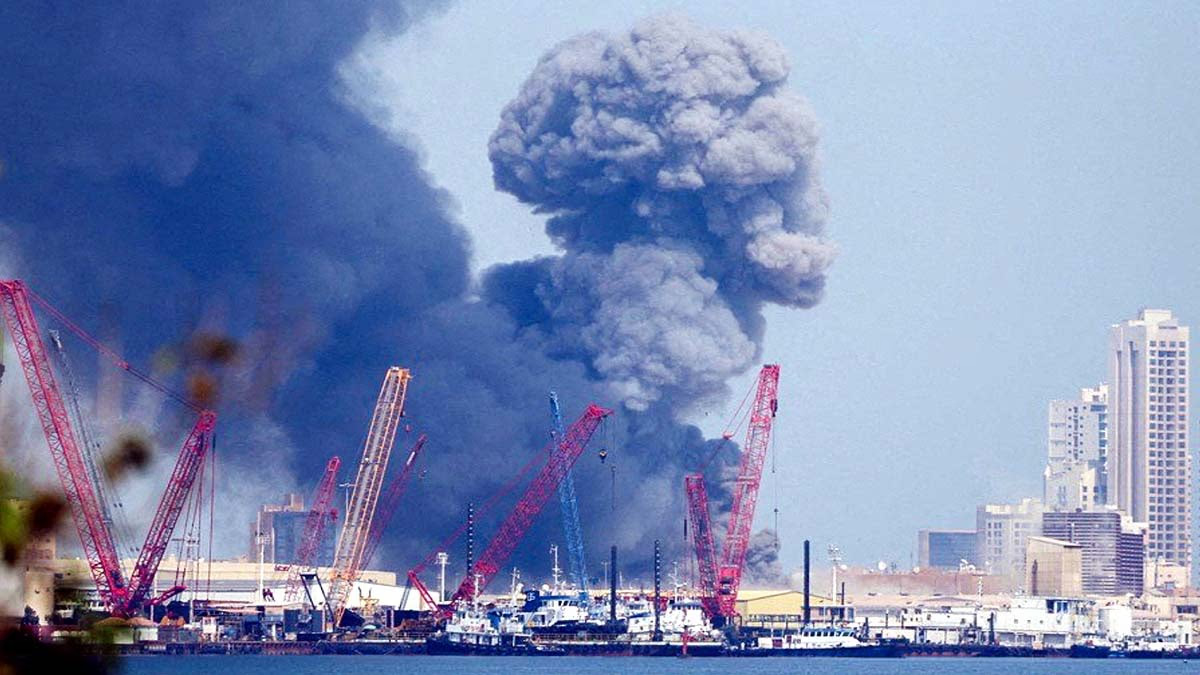
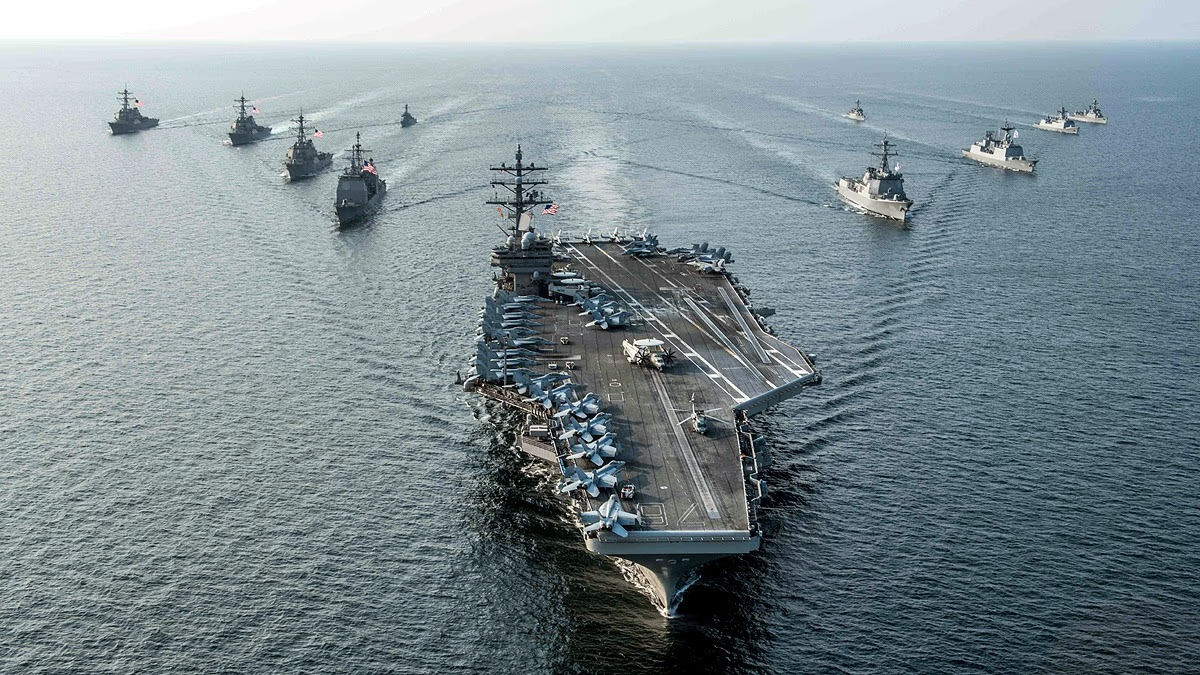
Bahrain's US Fifth Fleet headquarters sustained missile hits, with explosions rocking Manama. UAE faced attacks on Abu Dhabi and Al Dhafra. Qatar's Al Udeid Air Base, Kuwait's Ali Al Salem Base, and sites in Jordan also came under fire.
Iran unleashed a barrage of ballistic, supersonic, and cruise missiles targeting Israel, UAE cities, Saudi Arabia's capital Riyadh, and other strategic US installations, demonstrating formidable prowess.
While the UAE tried intercepting missiles with some success, the impact across Dubai and Abu Dhabi was felt. In Bahrain, the US Fifth Fleet suffered significant damage due to raging fires post-attack.
With a war raging throughout the Middle East, India advised its citizens in Israel and Iran to exercise "extreme caution" and stay close to designated shelters.