Few countries boast a history as ancient and intriguing as Afghanistan's. Nestled amidst mountains and deserts, this nation's portrayal often centers on conflict and fear. Despite this perception, a hidden beauty captivates and astonishes generation after generation.
Historically a hub of ancient trade routes, Afghanistan flourished with a convergence of diverse religions and empires. While the past few decades have been gripped with conflict and challenges, the sights and historical relics here continue to captivate and amaze travelers.
With a focus on safety and caution, the history and hospitality of the Afghan people offer a unique experience. Let's explore the cities that still define Afghanistan’s essence today.
Capital in the Mountains: Kabul
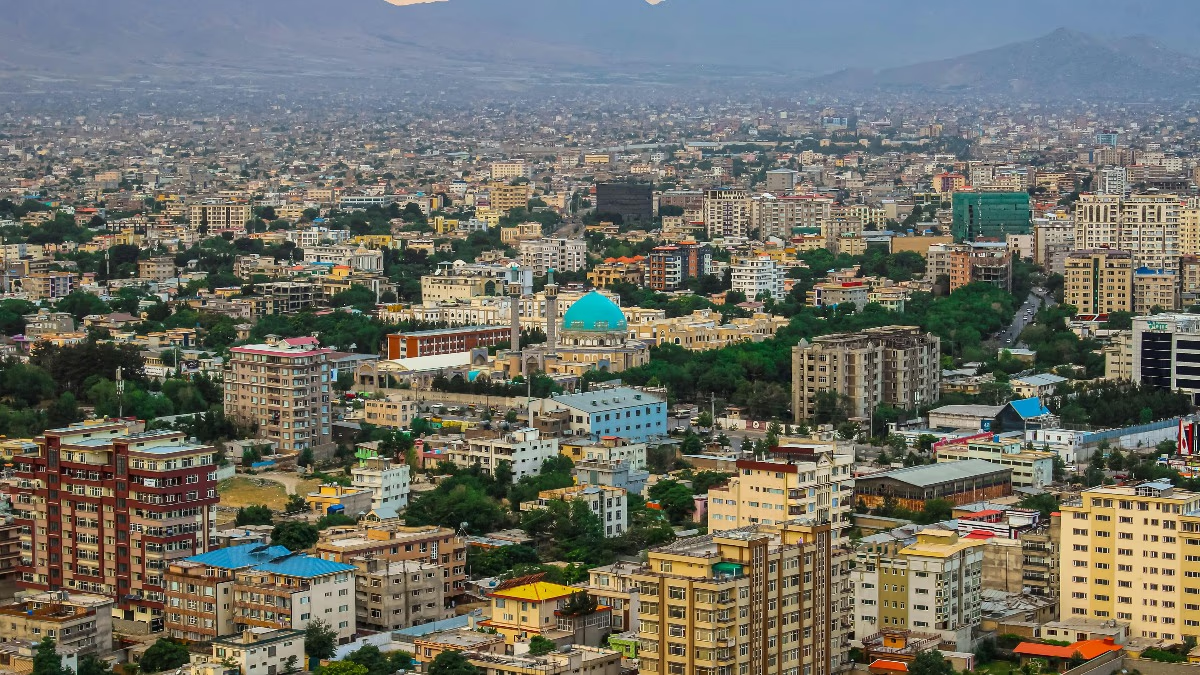
Kabul, the largest and most pivotal city in Afghanistan, is set in a grand mountainous valley where historical legacies meet present challenges. War has altered its visage, yet the serenity of Babur Gardens offers solace, decorated in traditional Mughal style. The National Museum and the distinctive yellow shades of the Shah-Do Shamshira Mosque are must-sees. Wandering through old Kabul’s alleyways provides an authentic glimpse into Afghan life and its traditional houses.
Timeless Arts and Cultures of Herat
Near the Iranian border, Herat stands as one of Afghanistan’s oldest cities. The winds carry whispers of Persian culture and arts. Renowned for its unique blue-tile craftsmanship, Herat’s Jumma Mosque exemplifies Islamic architecture's best. An ancient citadel, reportedly constructed by Alexander the Great, resides here. The local markets teem with exquisite handwoven carpets and the world-renowned saffron.
Legacy of Buddha and Azure Lakes: Bamiyan
Bamiyan is famed for its tranquil natural beauty. It was once a crucial stop on the Silk Road. Towering Buddhas, carved into cliffs, once stood here until destroyed in 2001, though their absence still draws visitors from afar. Nearby lies Band-e-Amir National Park, showcasing naturally formed, stunningly deep azure lakes, whose sheer beauty will make you forget your weariness.
City of the Blue Mosque: Mazar-e-Sharif
This northern Afghan city is seen as one of the nation’s most tranquil and safe areas. Its hallmark is the Blue Mosque with tiles in celestial and deep blue hues that gleam magnificently in sunlight. More than just a place of worship, locals gather here for rest and connection. The city’s atmosphere is more relaxed compared to larger metropolises like Kabul or Kandahar.
Heart of Traditions: Kandahar
Having served as Afghanistan’s first modern capital, Kandahar remains the epicenter of Pashtun culture and ancient traditions. Historical edifices and ancient strongholds echo the past's might and glory. The sacred Chadar Sharif shrine holds profound spiritual meaning. Strolling through local markets unveils shops steeped in time, selling exquisite textiles, aromatic spices, and handmade treasures.
Symbol of Old Kings: Ghazni
Once the capital of a mighty kingdom, modern Ghazni preserves tall minarets and historic tombs echoing eras when it was a beacon of arts and knowledge. The towering minarets in the surrounding plains continuously allure and astound.