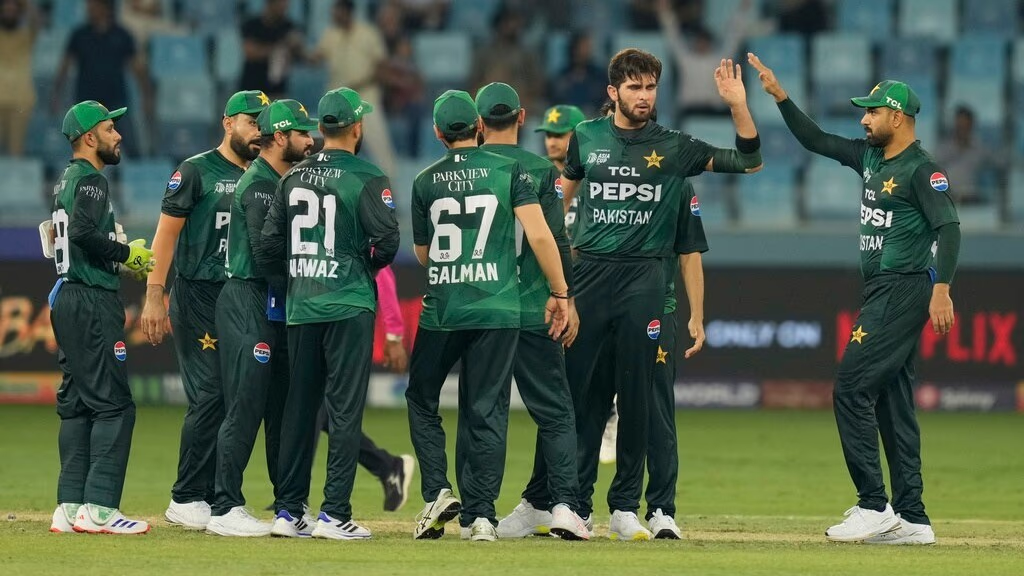
The International Cricket Council (ICC) has firmly reacted to the Pakistan government's directive instructing its national team to play selective matches in the T20 World Cup 2026. The ICC has stated that it is awaiting official written communication from the Pakistan Cricket Board (PCB), but such a decision goes against the very essence of a global sporting event. The Pakistan government has decided that their team will boycott the match against India scheduled for February 15. This match is set to take place at the R. Premadasa Stadium in Colombo, Sri Lanka.
In a statement, the ICC clarified that in any international tournament like the World Cup, all qualifying teams compete on equal terms according to the set schedule. The decision to play selective matches by any team undermines the principles of fairness, continuity, and sportsmanship in the competition.
The governing body of cricket stated that ICC tournaments are grounded in the sanctity of the game, competitive balance, and fairness. Selective participation undermines these values and casts doubt on the credibility of the competition. While the ICC reiterated its respect for government roles in national policy matters, this decision does not align with the interests of global cricket, the tournament’s integrity, or the millions of fans worldwide, particularly those in Pakistan.
Remember the Far-Reaching Consequences, PCB
The International Cricket Council expressed hope that the PCB will carefully consider the far-reaching and serious implications of this decision. In a cautionary tone, the ICC warned that the impact will not only be felt by Pakistan cricket but also by the entire global cricket ecosystem, of which the Pakistan Cricket Board is a part and from which it benefits.
The ICC made it clear that its priority is the successful and seamless hosting of the ICC Men's T20 World Cup 2026. This responsibility lies with all member boards, including the PCB. The council urged the PCB to pursue a mutually agreeable solution that protects the interests of all stakeholders involved.