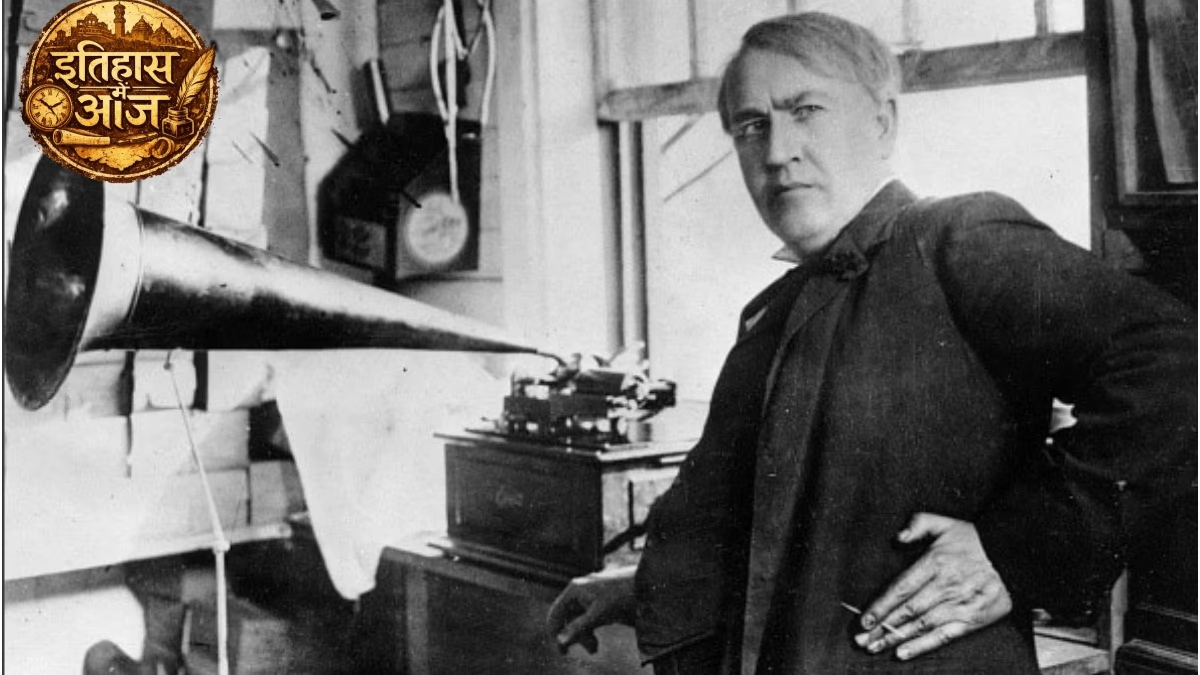
On February 19, 1878, Thomas Edison received the patent for the phonograph, an invention that could record sound and play it back. This was the first machine capable of capturing sound physically, which transformed entertainment and communication.
The American inventor was awarded patent number 200,521 for this groundbreaking technology, developed in his New Jersey laboratory. Here, Edison created the first device that recorded and replayed sound.
Edison's invention was a result of his ongoing work in telephony and telegraphy. To repeatedly send telegraph messages, Edison developed a method for embossing Morse code onto a reel of paper. This concept inspired him to create a similar method for telephones.
During this period, Edison crafted a system that conveyed the diaphragm's vibrations — essentially, sounds — to an embossed point, which was then mechanically transferred to an impressionable medium like paraffin paper. As he refined his concept, sound was transferred to a rotating cylinder wrapped in tin foil. Edison, along with his mechanic, John Kruesi, worked on this invention during autumn 1877 and soon had a functioning model ready for demonstration.
In the December 22, 1877 issue of Scientific American, it was reported that Thomas A. Edison recently visited their office, placed a small machine on their table, turned a crank, and the machine asked about their health. The patent granted to Edison on February 19, 1878, outlined a unique method of recording sound on tin-foil-covered cylinders. This invention revolutionized the music records domain, allowing music to be recorded and played.
Next significant advances in recording technology were facilitated by Edison's rival in the development of the telephone, Alexander Graham Bell. This led to the successful commercialization of recorded music in the 1890s and coined new terminology for the recording business — like cutting a record and spinning wax — which outlasted the technology on which it was based.