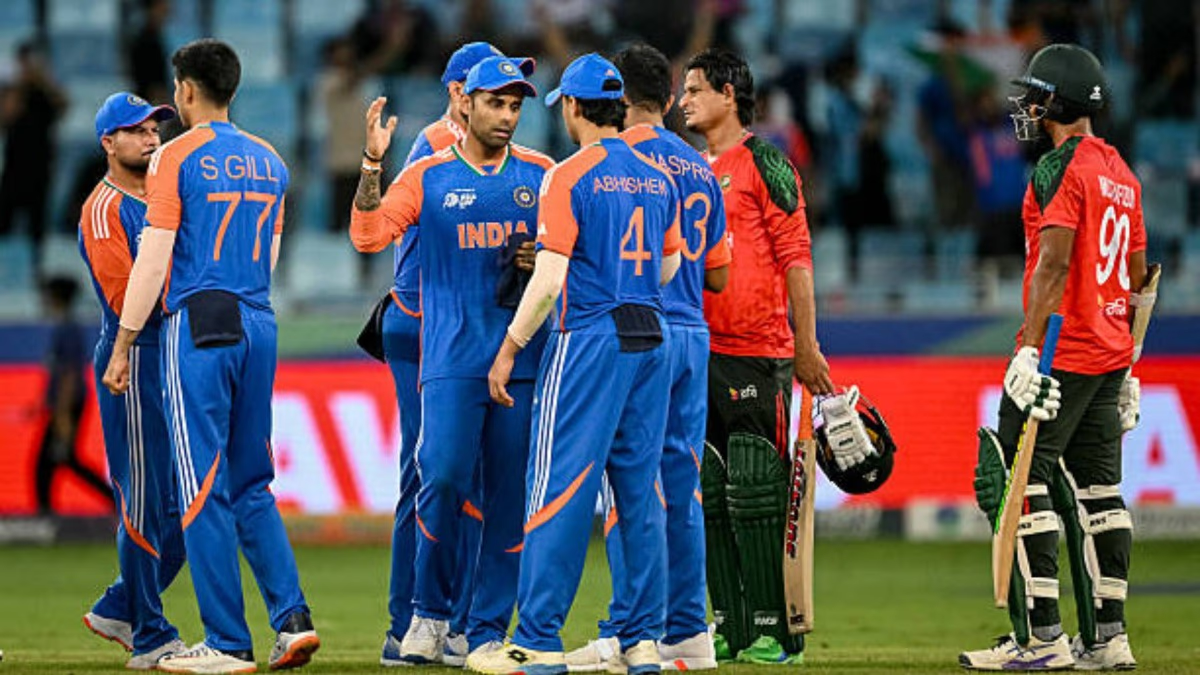
The Bangladesh Cricket Board (BCB) has made it clear that they will not send their team to India for the ICC Men's T20 World Cup 2026. BCB requested the International Cricket Council (ICC) to shift their matches to Sri Lanka due to security concerns in India. However, the ICC has refused to make any changes to the World Cup schedule.
Following this, Bangladesh has taken a firm stance by refusing to travel to India. It’s now expected that Scotland may replace Bangladesh in the tournament. The Bangladesh Cricket Board will face the greatest loss from being absent from the T20 World Cup.
According to a PTI news agency report, Bangladesh could incur losses of approximately $27 million (around ₹240 crores) if they don’t play in the World Cup. This comprises broadcasting revenue, sponsorship, and annual cricket revenue. Reports claim this could amount to around 60% of BCB’s annual income.
Bangladesh’s sports advisor Asif Nazrul stated after a meeting with players that the ICC security report is unacceptable to them. He mentioned, 'We are not convinced that the safety of our players, journalists, and viewers can be assured in India. The decision is the government's, and the safety of our citizens is our priority.' He also added that Bangladesh isn't losing hope and wants ICC to allow their team to play in Sri Lanka in the spirit of fairness.
How much would India be impacted?
While Bangladesh’s boycott might have a limited impact on India, being neighboring countries and having a fervent cricket following means many Bangladeshi fans come to India to buy match tickets. The absence of Bangladesh will reduce ticket revenue, which would have been part of the earnings for the Board of Control for Cricket in India (BCCI). Therefore, BCCI’s revenue might see a minor impact.
Three out of Bangladesh’s four matches are scheduled in Kolkata, with one in Mumbai. There are direct flights from Dhaka to these cities. It is estimated that only Kolkata could face a loss of ₹30-60 crores.
With Pakistan and now Bangladesh refusing to play in India, questions might arise on India’s global image. At an international level, it could create a narrative that India is being tough with its neighboring countries, leading to scrutiny over security concerns.